Free samples posted anywhere in the UK✦25-year structural warranty✦The same in-house fitters for over 11 years✦Every enquiry answered within 24 hours✦Free samples posted anywhere in the UK✦25-year structural warranty✦The same in-house fitters for over 11 years✦Every enquiry answered within 24 hours✦

What Is Engineered Wood Flooring?

Engineered wood is real wood flooring, built in layers. Here is what is inside a board, why it is made that way, and how it compares with solid wood, laminate and vinyl.

Short answer: Engineered wood flooring is a real wood floor made in layers: a top layer of solid hardwood, usually oak 3–6mm thick, bonded to a core of cross-laid birch plywood. Because each sheet of the core runs at right angles to the next, the board moves far less than solid wood as the air dries out and dampens, so it can be laid over concrete, screed and underfloor heating. Once fitted it looks and feels like solid wood, and the top layer can be sanded and refinished. Updated October 2026 by the LIGNORA flooring team

01

Inside an engineered board

Every engineered board has the same parts. The top is what you see; the core underneath is what keeps it flat.

Cross-section of an engineered oak floorboard From the top: a factory finish, a solid oak wear layer 3 to 6 millimetres thick, and a core of birch plywood sheets laid at right angles to each other, with a tongue on one edge and a groove on the other. 12344
An engineered oak board in cross-section, with the layers drawn apart. Our oak boards are 14mm, 15mm or 20mm thick in total.
  1. Finish. Oil or lacquer applied in the factory, which protects the oak and sets the sheen.
  2. Wear layer. Solid sawn oak, 3–6mm thick: the part you see, walk on and can sand.
  3. Core. Sheets of birch plywood glued with the grain of each at right angles to the next, so the board stays flat.
  4. Tongue and groove. Machined into the core so the boards lock together tightly, whether they are glued, floated or nailed.

The wear layer

A layer of solid sawn oak, the same timber you would find in a solid board, only thinner. Its thickness sets how many times the floor can be sanded over its life.

The core

Thin sheets of birch plywood glued together with the grain of each sheet crossing the one below. Each layer holds the others still, so the board barely swells or shrinks across its width.

The finish

Hardwax oil, UV oil or lacquer, often over a brushed, smoked or hand-scraped surface. Compare them in oiled vs lacquered oak.

02

Why it is made in layers

Engineered flooring exists to solve one problem: wood moves.

A solid oak board takes on moisture and swells across its width in damp weather, then shrinks back as the heating dries the air. The wider the board, the more it moves. Over a concrete slab, in a centrally heated flat or above underfloor heating, that movement shows up as gaps between boards, cupping and creaks.

An engineered board keeps the oak where it shows, on top, and builds the rest from cross-laid plywood. The sheets pull against each other and cancel out most of the movement, so a 220mm or 260mm plank stays flat where a solid board of the same width would gap. That stability is what lets engineered wood go where solid wood struggles: glued straight to screed, floated over an acoustic underlay in a flat, or laid over underfloor heating.

It also makes better use of slow-grown oak. A solid board is oak all the way through; an engineered board uses a few millimetres of it for the same surface, which helps keep wide, long boards practical.

03

Engineered wood compared

How it measures up against the floors it is usually weighed against.

ComparedEngineered woodSolid woodLaminateVinyl and LVT
SurfaceSolid hardwood, 3–6mm thickSolid hardwood, full thicknessA printed image of woodA printed vinyl layer
CoreCross-laid birch plywoodThe same solid timberHigh-density fibreboardPVC
SandingYes: two or three times on a 3mm layer, more on thickerYes, many timesNoNo
Over concreteGlued down or floatedNeeds a timber subfloorFloatedGlued or clicked
Underfloor heatingYesNot recommendedYesYes
Realistic life25–40+ yearsGenerations5–10 years in high traffic8–15 years

Swipe the table to see every floor →

The full comparisons: engineered vs solid wood, laminate vs real wood and LVT vs real wood.

04

Pros and cons

Engineered wood suits most homes, but it is worth knowing both sides.

Where it wins

  • A real oak surface that looks, feels and ages like solid wood
  • Stable over concrete, screed and underfloor heating
  • Wide planks, up to 260mm, without the gaps of wide solid boards
  • Can be sanded and refinished when it wears
  • Three ways to fit it: glued, floated or nailed
  • Uses far less slow-grown hardwood than a solid board

What to weigh up

  • Fewer sands than solid wood, because the oak layer is thinner
  • Quality varies: some cheaper boards have an oak layer too thin to sand
  • Not for wet rooms or areas of standing water
  • Costs more to buy than laminate or vinyl
  • Needs a flat, dry subfloor, like any wood floor

The wear layer is the number to check. Ours are sawn oak, 3mm to 6mm thick: a 3mm layer allows two or three full sands, a 4mm layer three or four, and a 5–6mm layer several more. See can engineered wood flooring be sanded?

05

Reading a specification

Two numbers describe an engineered board: its total thickness and the oak on top.

A board listed as 14/3 is 14mm thick with a 3mm oak layer. The first number decides floor heights and how well the board suits underfloor heating; the second decides how long it lasts. Most of our floors are 14mm or 15mm, with 20mm boards for fixed floor heights and the longest life; our thickness guide explains how to choose.

Then come width, grade and finish. Boards run from 90mm herringbone blocks to 260mm planks. The grade, from clean prime grade to knotty rustic and antique oak, changes the look rather than the strength. The finish decides how the floor is looked after; see our finishes guide.

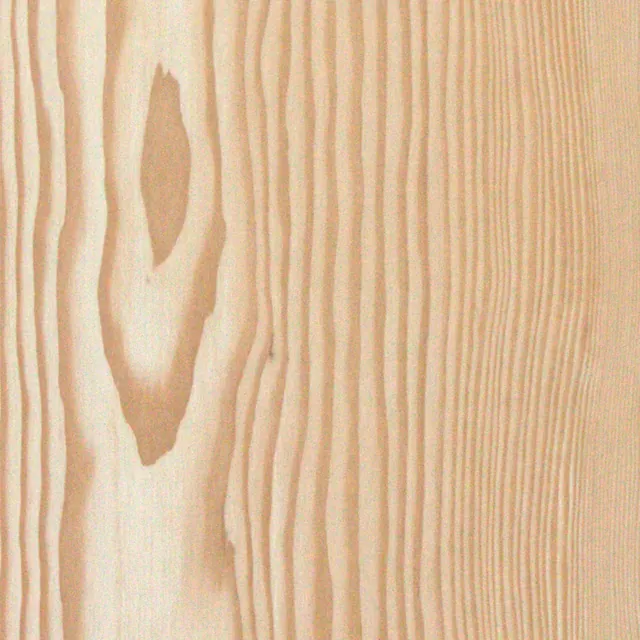
Not every engineered board uses the same core. Most of our oak floors are built on multi-ply birch; our British-made Douglas fir is a two-layer board, a 3.7mm fir wear layer bonded to 12mm hardwood plywood.

06

Where it works and how it is fitted

The layered construction is what makes engineered wood so adaptable.

Concrete and screed

Glued straight down once the screed is dry, or floated over an underlay. Solid wood cannot go directly onto concrete.

Underfloor heating

Every engineered floor we supply suits underfloor heating, and 14mm and 15mm boards let the heat through fastest. See wood flooring for underfloor heating.

Timber floors and joists

20mm boards can be secret-nailed straight to joists; thinner boards go over a plywood deck, or float over existing boards that are sound and flat.

Flats

Floated over an acoustic underlay, or glued with an acoustic system, to meet the sound rules in most leases. See wood flooring for flats.

Kitchens

Lacquered or well-oiled engineered oak copes with everyday spills, as long as standing water is wiped up. See kitchen wood flooring.

Bathrooms and basements

Possible with the right board, finish and preparation, though never in a wet room. Read wood flooring in bathrooms and basement flooring.

Which fixing suits your room is covered in glue-down vs floating, and how our own fitters lay floors is on the installation page.

About this guide

Written by the LIGNORA team. Our in-house fitters have over 11 years’ experience laying engineered oak, parquet and solid wood floors, and this guide reflects how we specify floors on real projects. Last reviewed October 2026.

Engineered Wood,
Answered

The questions we are asked most often.

Ask Us Anything →
Is engineered wood real wood?
Yes. The surface you see and walk on is solid hardwood, usually oak, and the core underneath is plywood, which is wood too. It is not a printed image of wood, as laminate and vinyl are.
What is engineered wood made of?
A top layer of solid hardwood bonded to a core of cross-laid plywood. Most of our oak floors use a birch plywood core; some engineered floors on the market use a softwood or fibreboard core instead.
Is engineered wood better than solid wood?
For most homes, yes. It is more stable, can go over concrete and underfloor heating, and comes in wider boards. Solid wood can be sanded more times and suits sound timber joists. Our engineered vs solid guide compares them in full.
How long does engineered wood flooring last?
A good engineered floor with a 3–6mm oak layer lasts for decades, typically 25 to 40 years or more, and can be sanded and refinished along the way. Our floors carry a 25-year structural warranty.
Can you sand engineered wood flooring?
Yes, if the oak layer is thick enough. A 3mm layer allows two or three full sands, a 4mm layer three or four, and a 5–6mm layer several more. See sanding engineered wood.
Is engineered wood the same as laminate?
No. Laminate is a printed image of wood on a fibreboard core and cannot be sanded. Engineered wood has a real hardwood surface that can be refinished.
Is engineered wood flooring waterproof?
No wood floor is waterproof. With a lacquer or a well-kept oil finish, engineered oak copes with kitchen spills and humidity, but it is not suitable for wet rooms or areas of standing water.
What does engineered hardwood mean?
The same as engineered wood: a board with a hardwood top layer, usually oak or walnut, over a plywood core. The two terms are used interchangeably.

Floors to start with

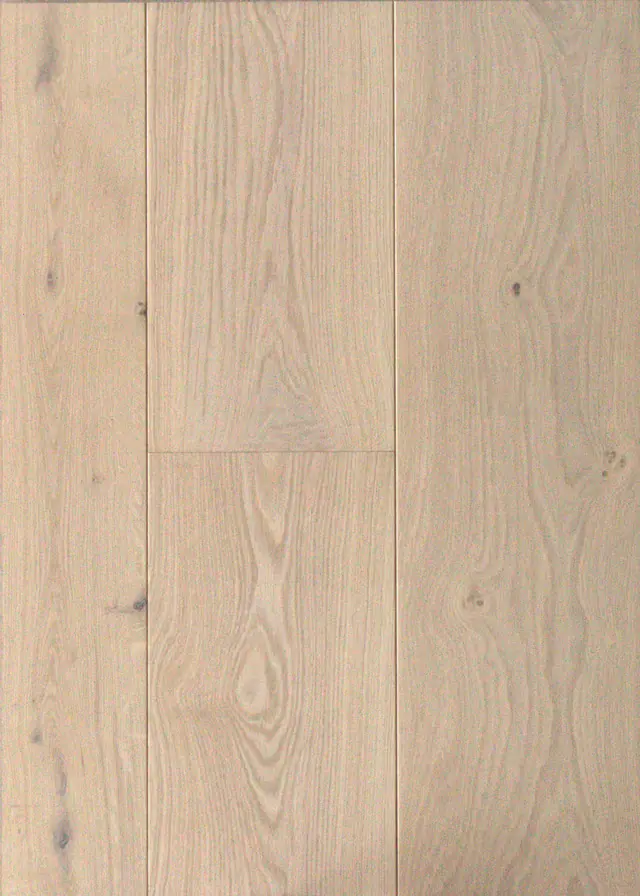
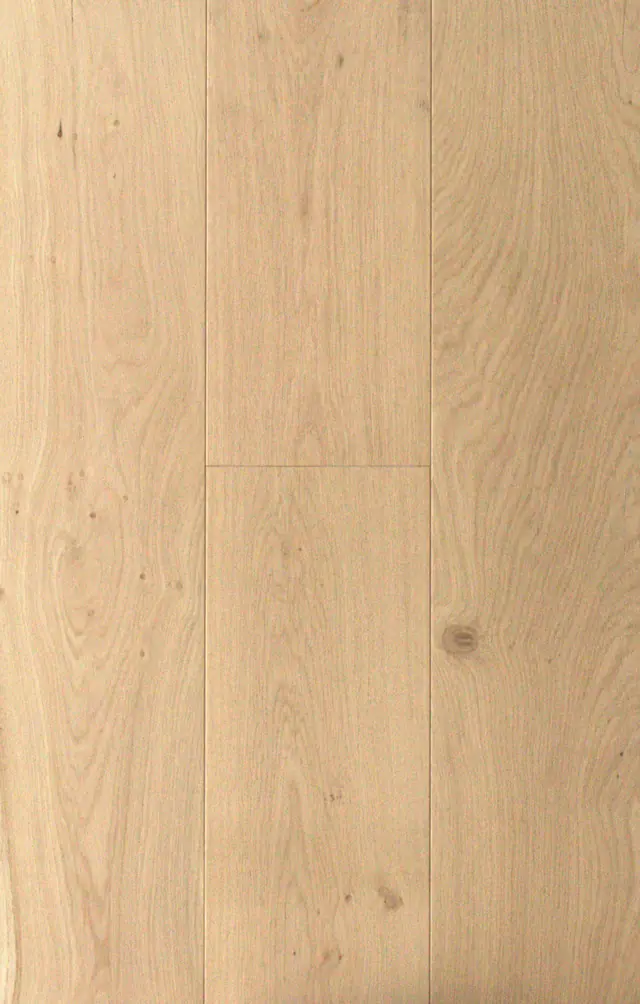
A few engineered floors from the range, from 14mm oak planks to 20mm boards, walnut herringbone and two-layer Douglas fir. Each has its own page with the full specification and a free sample.
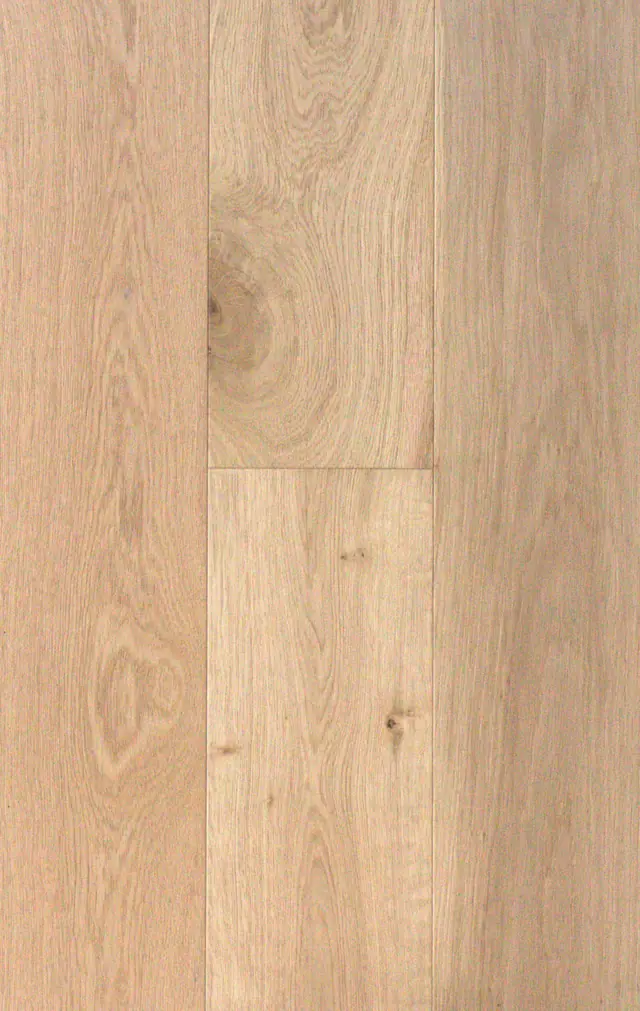
Ready to choose? Browse engineered oak flooring by tone, or go straight to wide plank or oak herringbone floors.

Ask us about
your floor.

Tell us about the room, the subfloor and the heating, and we will recommend the right engineered board. Or order free samples and see the layers for yourself.

Order Free Samples →Get in Touch
From a seed to a legacy — generations of craft with LIGNORA