Most floors that get ripped out should not be. The original boards beneath are almost always in better condition than the surface suggests — worn down to grey, marked by furniture, partially obscured under carpet for decades. Sanding back to clean wood and refinishing correctly transforms them without replacing the material that gives them their character.
Replacement is the easy answer. New boards go down quickly, the room looks clean immediately, and nobody has to think about what was there before. But in a Victorian terrace, an Edwardian semi, a period flat — the original floorboards are part of the fabric of the building. They are old-growth timber that is denser, more stable and more characterful than almost anything available today. Replacing them with new engineered oak is not an upgrade.
Restoration takes more time and more skill than a new installation. Assessing what a floor needs, sanding it in passes without over-cutting into the board thickness, matching repairs so they disappear rather than announce themselves, applying a finish that brings out the grain rather than flattening it — this is craft work. We approach it that way.
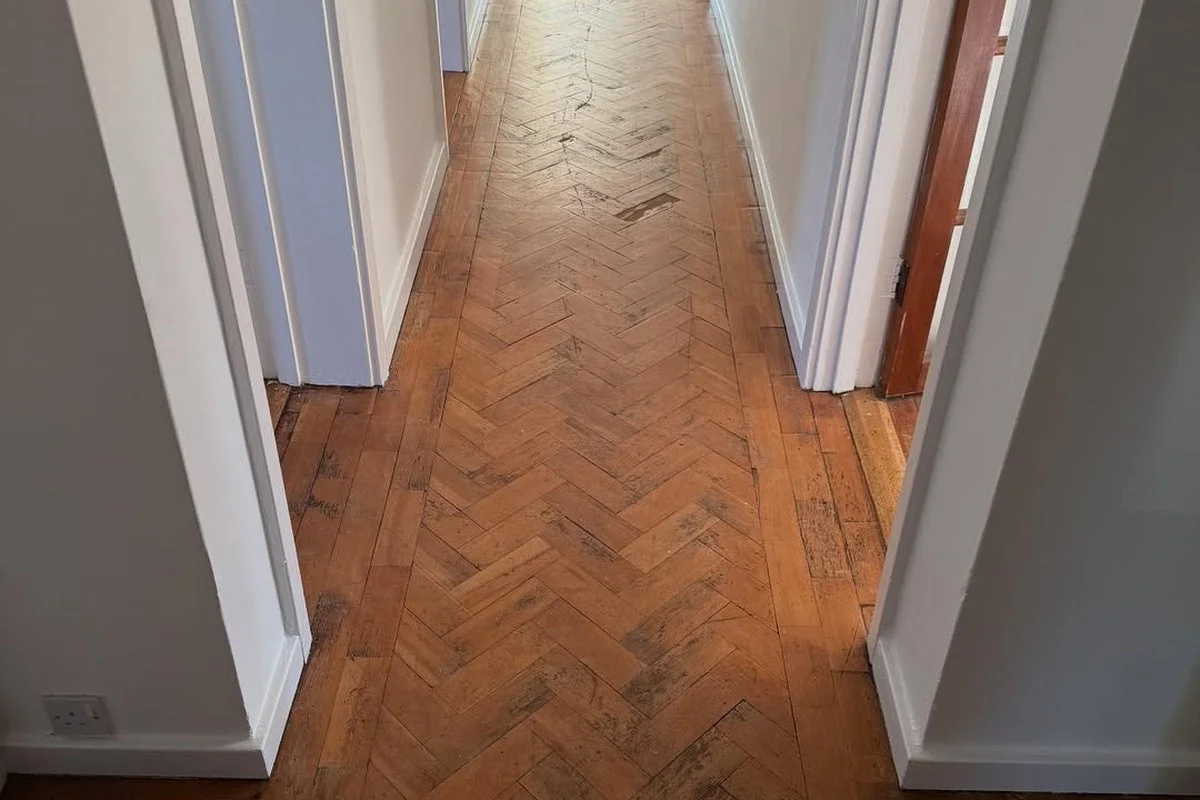
44 square metres of 1930s finger parquet. Approximately a third of the blocks were lifting or loose. The surface was obscured by decades of wax and polish build-up, and the original finish had worn through in the main traffic lines. The client had been quoted for full replacement.
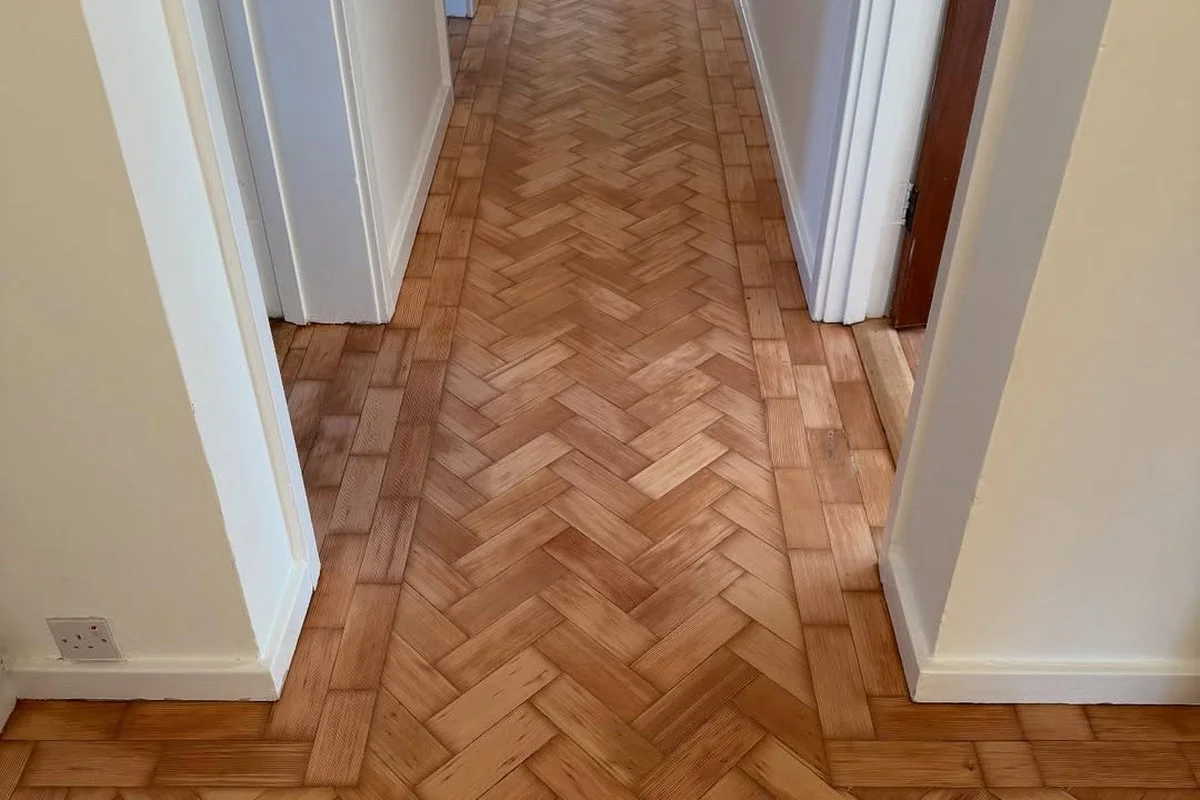
Loose blocks were re-adhered and allowed to cure before sanding began. A coarse-to-fine three-pass sand removed the polish build-up without taking unnecessary material from the blocks. The hardwax oil finish was chosen to match the depth the timber had developed over ninety years. Cost: roughly forty percent of replacement.
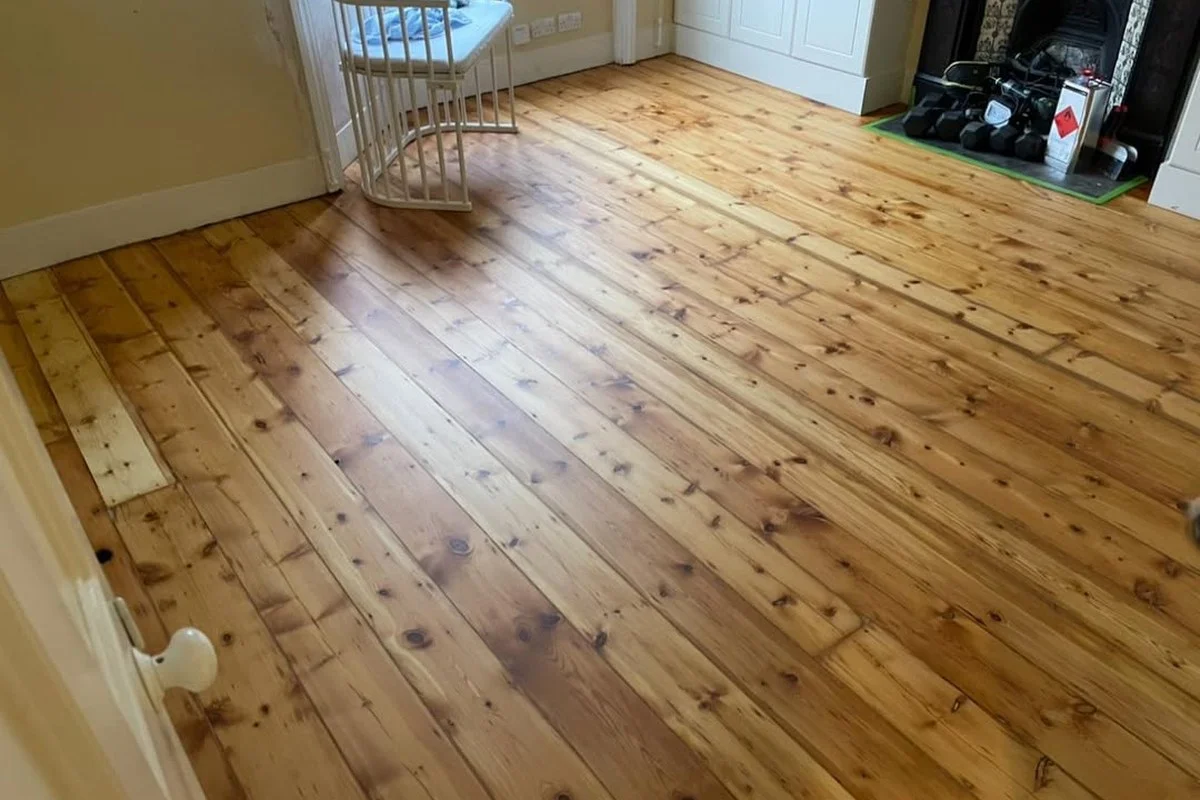
Original Victorian softwood pine boards — typically 100–140mm wide with a characterful grain — are among the most commonly butchered floors in London. They are routinely covered, painted, or replaced unnecessarily. Sanded back, they are warm, distinctive, and genuinely irreplaceable.
Edwardian oak boards — denser, closer-grained than Victorian pine, often laid in narrower widths — respond particularly well to restoration. The grain that emerges after sanding is almost always finer and more interesting than anything available new. These floors were made to last a century and they can last another.
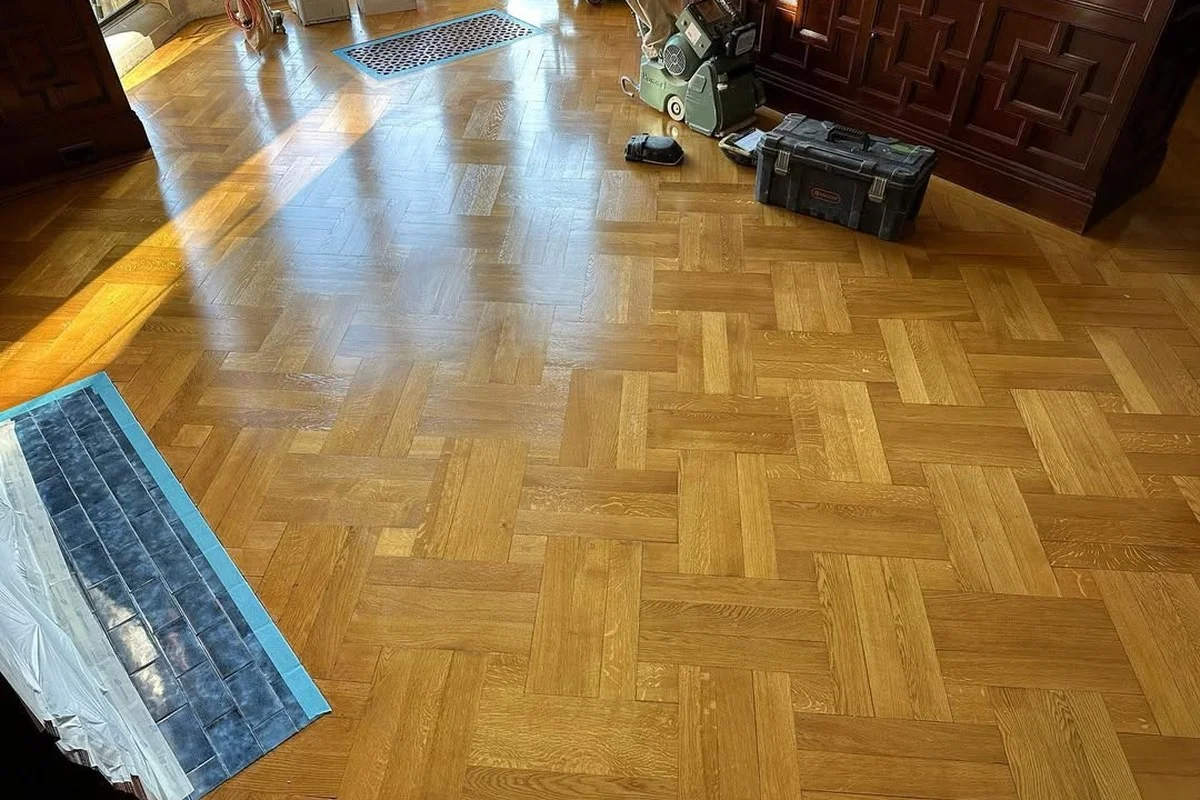
Original parquet — finger block, herringbone, basket weave — is the most technically demanding restoration work we carry out. Blocks that have lifted must be re-adhered before sanding begins. The sanding machine must follow the pattern, not cut across it. The result, when done correctly, is extraordinary.
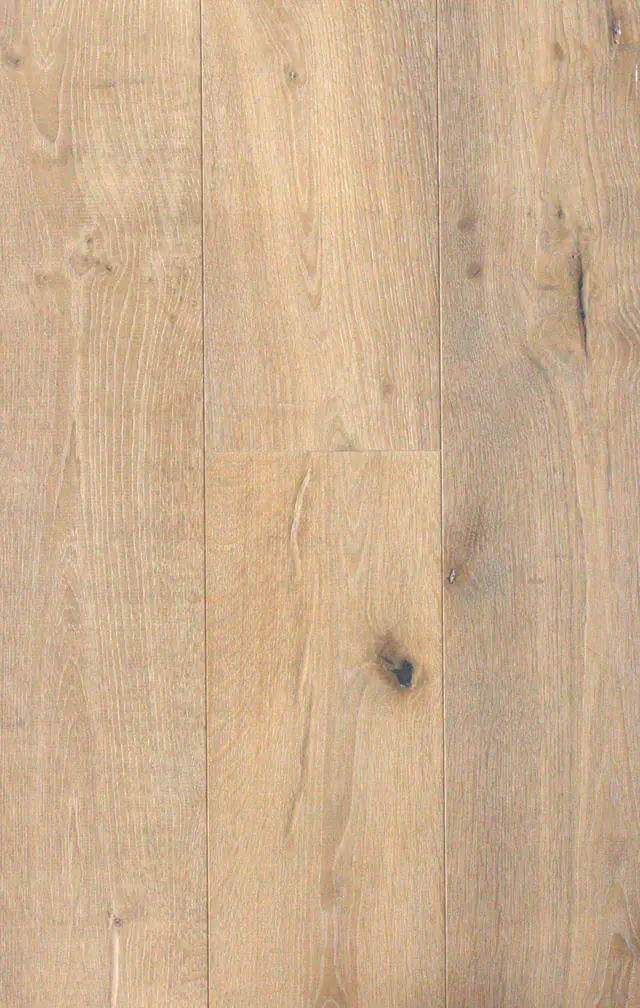
Modern engineered oak floors with a wear layer of 3mm or more can be lightly sanded and refinished — typically once, sometimes twice over the floor's lifetime. The result refreshes the surface, removes surface scratches and scuffs, and allows a finish change. The floor does not need to be lifted or replaced.
A complete restoration — the floor is sanded back to bare wood in three passes and finished to the agreed specification. This is the foundation of everything else.
Gaps between boards are filled with flexible wood filler mixed with the sanding dust from the floor itself — producing a colour match that is specific to your floor rather than generic. Applied after the first sanding pass, before finishing.
Damaged, split or structurally compromised boards are replaced before sanding begins. We source period-matched reclaimed timber for Victorian and Edwardian floors — same species, similar age, similar grain character — so the repair is invisible once the floor is finished.
Changing the colour of an existing floor — or refreshing one that has faded or yellowed — is one of the most transformative things you can do to a room without touching anything else. A stain is applied after the final sanding pass and before the finish coat.
Squeaking floorboards are caused by movement between boards or between boards and the subfloor. In most cases the cause is fixable — screws driven from above before sanding begins, or a flexible lubricant applied between boards. We assess the cause before recommending a method.
Loose and lifting parquet blocks must be re-adhered before any sanding begins — sanding over lifted blocks causes irreparable damage to the pattern. We lift, clean, re-bed with appropriate adhesive and allow full cure time before the first sanding pass.
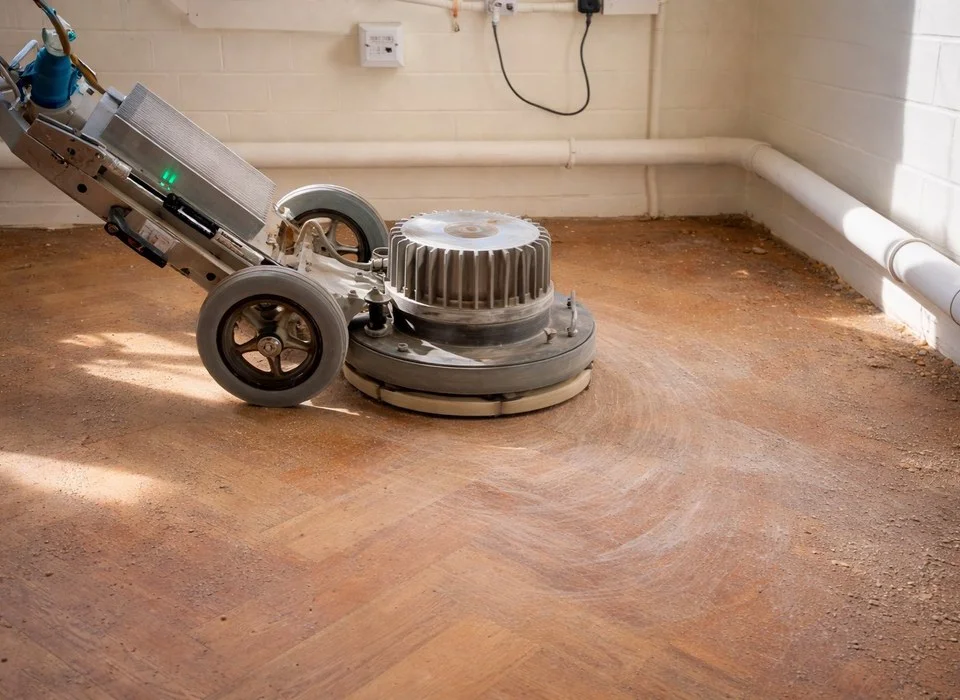
Every LIGNORA restoration uses a three-pass sanding system — coarse, medium, fine — regardless of how worn or how clean the floor appears. Cutting the process to two passes saves an hour. It also leaves a scratch pattern that becomes visible under raking light once the finish is applied. We do not cut it.
The first pass uses a coarse grit — typically 24 or 36 — to remove the old finish, level any unevenness between boards, and cut back to bare wood. This is the most aggressive pass and the one where the most material is removed. Direction follows the grain.
The second pass — 60 or 80 grit — removes the scratch pattern left by the coarse grit. This is the pass most often skipped by operators trying to move quickly. Skipping it means the deep scratches from pass one are visible beneath the finish. We do not skip it.
The final pass — 100 to 120 grit — prepares the surface for finishing. At this stage the wood is clean, flat and open-grained, ready to accept the stain or finish. Gap filler is applied between passes two and three and allowed to cure.
Finish is applied in a minimum of two coats, with a light buff between coats. The second coat is applied once the first is fully cured — not when it appears dry. Cure times vary by product and ambient conditions; we allow the full manufacturer-specified window.
All LIGNORA sanding work uses dustless sanding equipment — a vacuum system connected directly to the sanding machine that contains approximately 99% of the dust generated during the process. This means the job can be carried out in an occupied property with minimal disruption, without the full-house dust contamination that older open-drum sanders produce. We still ask that furniture is removed from the room being sanded and that neighbouring rooms are reasonably clear — but the floor can be sanded and finished while the rest of the house is lived in normally.
Not every floor can or should be restored. Some floors have been sanded too many times and have too little board thickness left. Some have structural damage that makes restoration impractical. Some are simply the wrong product for the room.
We visit the property, assess the floor in person, and give an honest recommendation — including, where relevant, whether restoration is the right choice or whether replacement would serve the client better in the long run. We do not quote for work we do not think will produce a good result.
We measure remaining board thickness before advising on sanding. Boards below 8mm remaining above the joist level may not be suitable for a full sand-back. We advise accordingly.
The subfloor is walked and assessed for movement, soft spots and any signs of rot or infestation. If structural work is required before sanding, we include it in the quote rather than discovering it mid-project.
Old wax, oil, lacquer and paint respond differently to sanding. Identifying what is on the floor before starting determines grit selection, sanding speed and whether any chemical stripping is required before mechanical sanding begins.
If restoration is the right answer, we quote for it. If it is not — if the floor has been over-sanded, if the boards are too thin, if the material is not worth saving — we say so and discuss alternatives.
See also: Parquet restoration London →
See also: Best flooring for Victorian houses →
See also: Restoration cost guide →
Send us a description and a photograph. We will tell you honestly whether restoration is the right answer — and if it is, we will come and see it in person before we quote.