"FINISH"
Decision Guide

Oiled, Lacquered
or Wax — Which Finish?

The finish on a wood floor determines how it looks, how it feels underfoot, and how easy it is to maintain. It is one of the most consequential decisions you will make — and one that many buyers make without enough information. This guide explains the four main finish types, what they look like, and which suits different uses and households.

Hardwax Oil UV Lacquer Invisible Finish Wax Oil Brushed Finishes
The Four Finish Types
What Each Finish
Actually Does
Most Common · Open Grain
Hardwax Oil

Hardwax oil penetrates the wood surface rather than sitting on top of it. The oil fills the grain, hardens within the cell structure, and leaves the wood surface feeling like wood — not like it has been coated. The result is a natural, matte appearance with the grain visible and tactile.

Hardwax oil is the most repairable finish available. Localised damage — a scratch, a stain — can be addressed in that area alone without refinishing the whole floor. Annual re-oiling with a maintenance oil keeps the floor in condition and refreshes the surface. Dusty microfibre mopping between oils.

Best for: kitchens, living rooms, bedrooms. Any room where a natural wood appearance matters more than low maintenance. Families with children tolerate it well because repairs are easy and localised.

Most natural • Most repairable • Annual maintenance required
Most Durable · Closed Grain
UV Lacquer

UV lacquer is cured by ultraviolet light during manufacture, creating a hard, transparent coating on the surface of the board. The coating sits above the wood grain rather than penetrating it — the surface is smooth, slightly reflective, and sealed against moisture and most everyday damage.

Lacquered floors are low maintenance — sweep, damp mop, done. They do not require annual oiling and are more resistant to water ingress in the short term. The trade-off is repairability: when a lacquered floor is damaged, the damage is more visible (scratches show as white marks in the coating) and localised repair is very difficult without professional sanding.

Best for: rental properties, high footfall areas, anyone who wants minimal day-to-day maintenance and is prepared to sand and refinish eventually rather than oil annually.

Low maintenance • Durable • Harder to repair locally
Most Subtle · Near-Natural
Invisible / Natural Oil

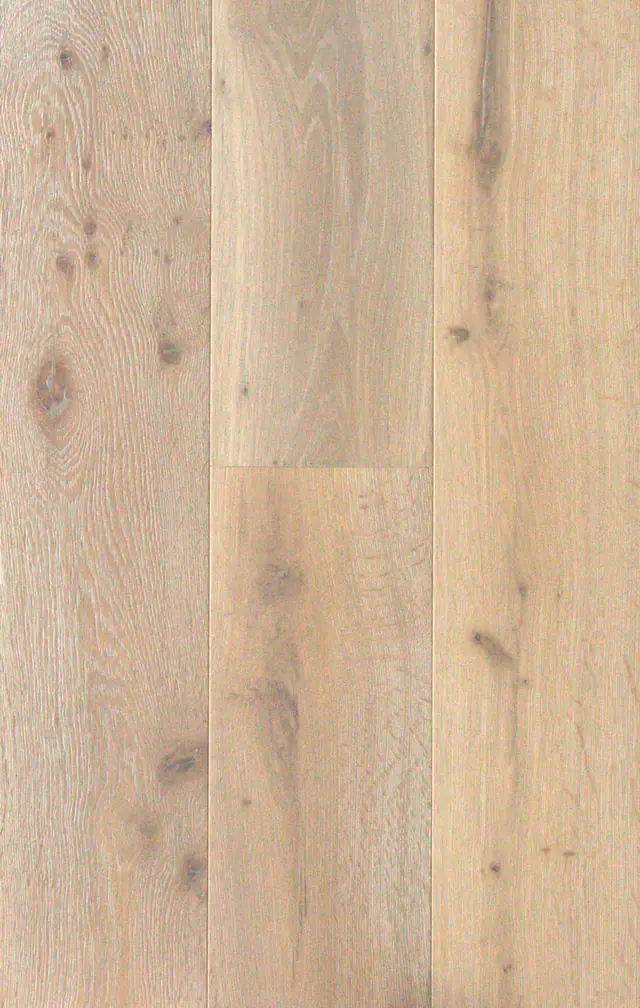
Invisible finish and natural oil treatments are hardwax oils applied to leave no visible colour shift — the oak looks as close to raw, unfinished timber as a protected floor can. There is no sheen, no yellowing, no amber tone. The boards look as they came from the tree.

This finish is particularly effective with pale oak species — American oak, Scandinavian pale oak — where a warm oil would change the tone significantly. It is also the finish of choice in Scandi-influenced interiors where the floor is meant to disappear into the background.

Maintenance is the same as hardwax oil — annual re-oiling with a compatible maintenance product. The boards remain more sensitive to moisture than lacquered alternatives and benefit from prompt wipe-up of spills.

Most natural appearance • No colour shift • Annual maintenance
Warmest Tone · Traditional
Wax Oil

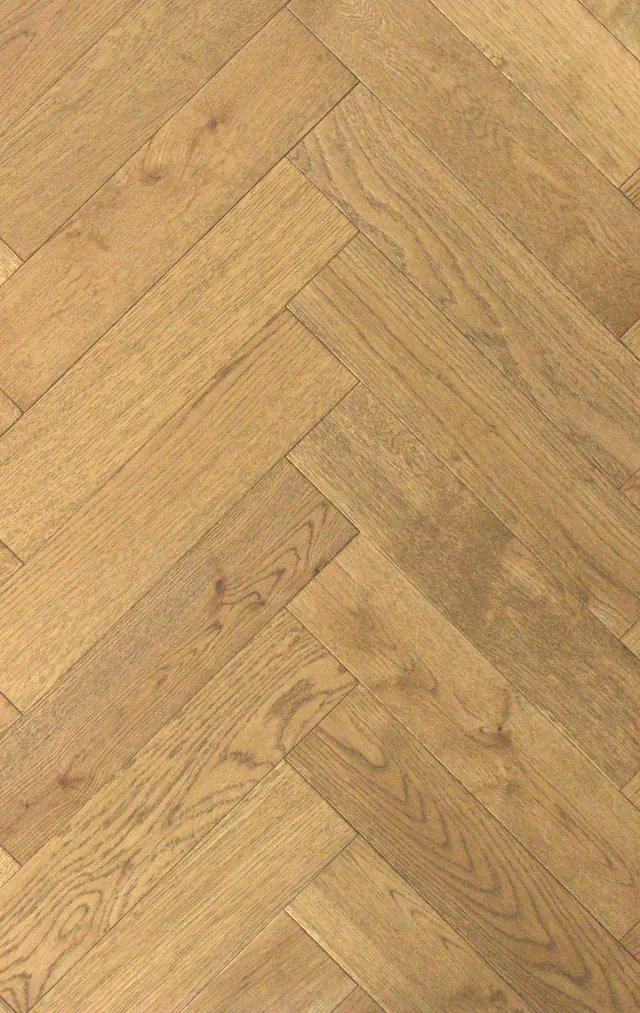
Wax oil combines beeswax and plant oils to create a finish that penetrates deeply and imparts a warm, golden tone to the oak. It is the finish closest to the traditional linseed and beeswax treatments used on antique and reclaimed floors — it feeds the wood rather than simply protecting it.

Wax oil has a slight sheen — not a gloss, but a quiet lustre that changes with the light. It suits antique and reclaimed floors particularly well because it enhances the character rather than sanitising it. Our Antique Bronx Golden Oak and Antique Brown Oak both use wax oil finishes.

Maintenance is the same rhythm as hardwax oil. Periodic application of a compatible wax maintenance product keeps the floor in condition and deepens the tone over time.

Warmest tone • Traditional feel • Best for antique floors
Surface Texture
Brushed, Smooth, or
Sawn Mark — What It Means
01
Smooth

The surface is sanded flat and finished — the grain is visible but the surface is even. Smooth boards suit contemporary interiors and are slightly easier to maintain because dirt does not collect in surface texture. This is the standard surface treatment for lacquered floors.

Contemporary • Easy to maintain
02
Brushed

Wire brushing removes the softer earlywood between the growth rings, leaving the harder latewood slightly raised and the grain dramatically visible. The surface has texture — you can feel the grain under foot. Brushed boards suit period and rustic interiors and handle daily wear well because minor surface marks are hidden in the texture.

Traditional • Hides wear • Most of our range
03
Sawn Mark

Sawn mark boards retain the circular saw marks from the milling process — shallow ridges running across the board face. This is a deliberate aesthetic treatment that references antique sawn timber. Our American Oak Afternoon Haze and Untamed Grain products both feature sawn mark surfaces.

Antique reference • Distinctive texture
Choosing by Room & Lifestyle
Which Finish for
Your Situation
Families with Children

Hardwax oil is more practical than lacquer for family homes. Scratches and localised damage can be spot-repaired without professional sanding. Annual oiling becomes routine maintenance rather than a burden. Brushed surface hides day-to-day marks.

Recommend: Hardwax Oil · Brushed
Rental Properties

Lacquer is the lower-maintenance option for rental scenarios — it requires no annual oiling and is resistant to the kind of short-term neglect that happens between tenancies. When it does require refinishing, it needs professional sanding — budget for this at the 10–15 year mark.

Recommend: UV Lacquer · Smooth
Period & Antique Floors

Wax oil or hardwax oil in a warm tone suits period floors. Lacquer on a reclaimed or antique board looks incongruous — the sheen conflicts with the age of the timber. Original or reclaimed oak is almost always better served by a penetrating finish.

Recommend: Wax Oil · Hardwax Oil
Scandi & Pale Interiors

Invisible finish or natural oil preserves the pale, cool tone of light oak species. A warm hardwax oil applied to a pale oak floor shifts the colour significantly toward amber — often undesirably in a pared-back, neutral interior scheme.

Recommend: Invisible Finish · Natural Oil
Related Guides
More Decision
Guides
"FINISH"
Free Home Visit · No Obligation

See Every Finish
in Your Property.

The only honest way to choose a finish is to see it in your actual light, on your floor, with your furniture. We bring samples of every finish type to your property — free, no obligation.

Book Your Free Home Visit → Browse All Products