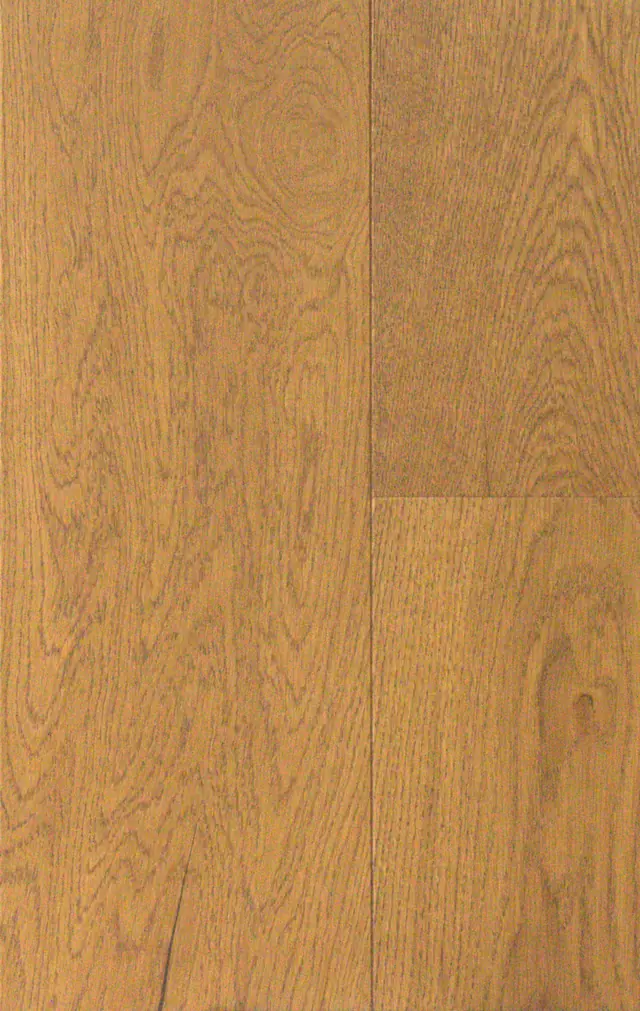
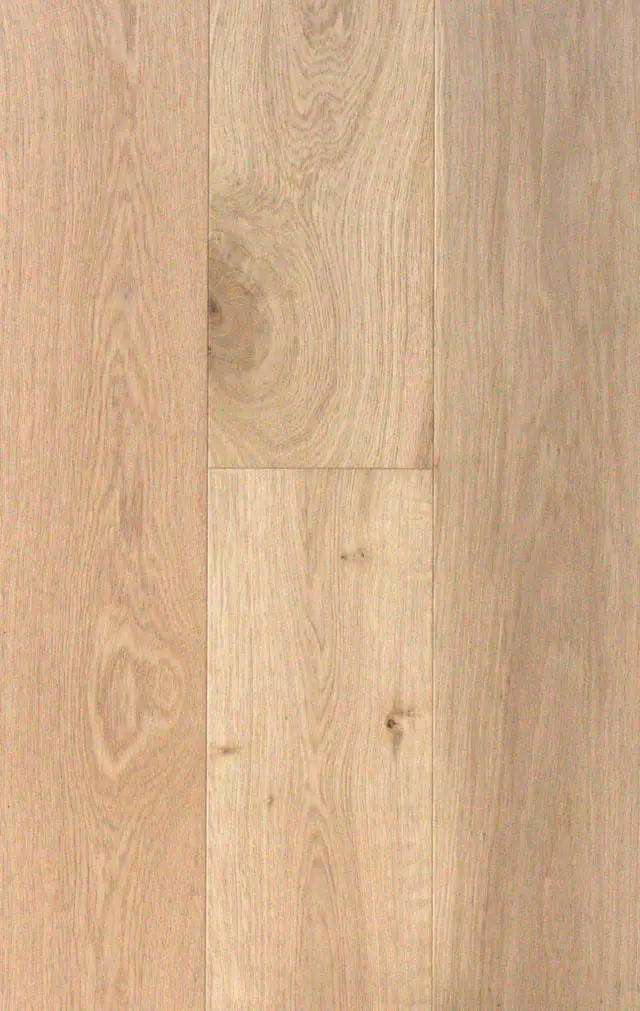
Kitchens are the hardest room to floor correctly — and the most rewarding when done well. Humidity variation, temperature cycling, heavy traffic, and spills — engineered oak handles all of it. The right specification starts with finish choice, not product choice. LIGNORA installs kitchen wood floors across London and the South East.
Hardwax oil penetrates the wood surface rather than sitting on top of it. A spill left for ten minutes will wipe clean without marking. A scratch or dent can be repaired in that area alone — re-oil the affected board without touching the rest of the floor. This is the most practical finish for a family kitchen.
Annual re-oiling with a maintenance oil takes 30–45 minutes and refreshes the surface. Our maintenance guide covers the exact process. Every brushed oak product in our Signature and Timeless Line collections is available in hardwax oil.
Most repairable • Best for families • Annual maintenanceUV lacquer sits on the surface of the board as a hard, transparent coating. It is easier to clean day-to-day — sweep and damp mop — and requires no annual maintenance product. For kitchens in rental properties, or rooms where maintenance routine compliance cannot be guaranteed, lacquer is the lower-friction choice.
The trade-off: scratches show as white marks in the coating and are difficult to repair locally. When a lacquered kitchen floor eventually needs attention, it needs a professional sand and refinish rather than a spot repair.
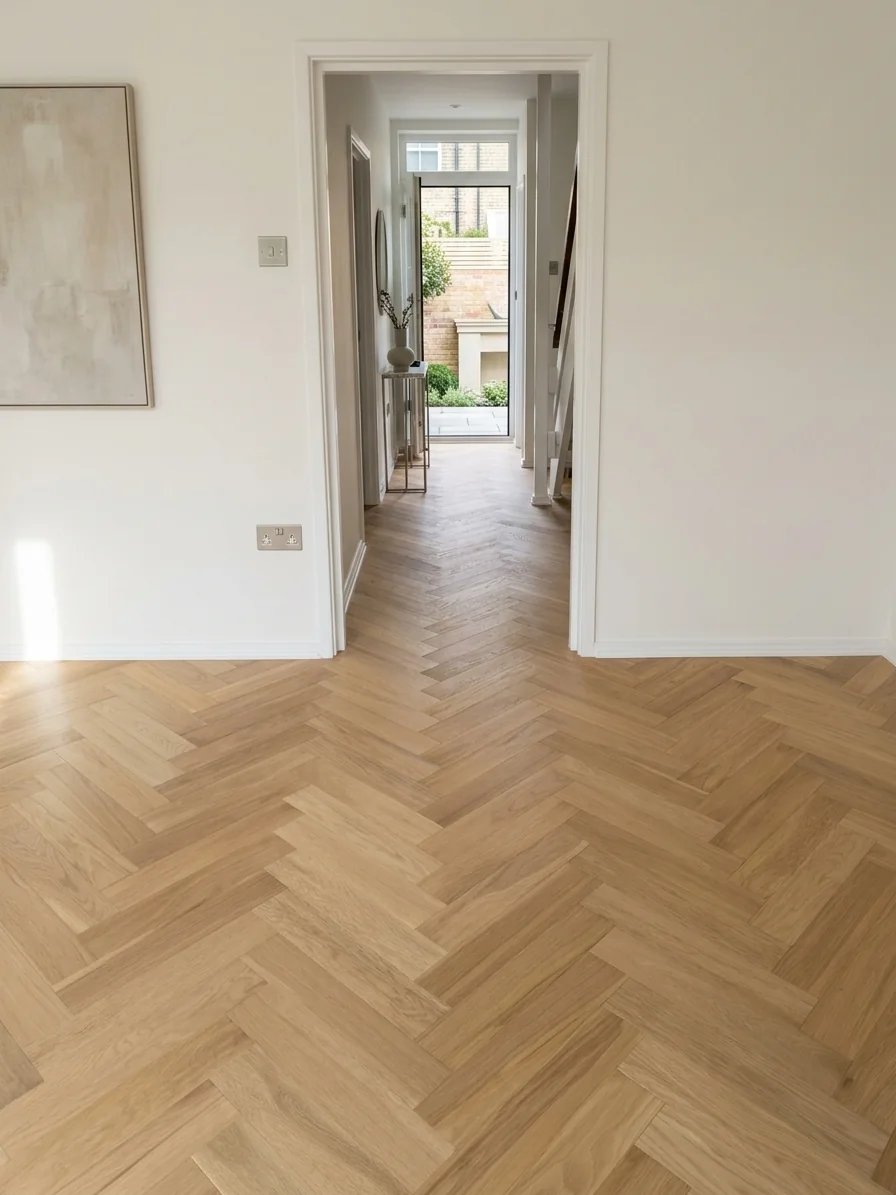
Easiest day-to-day • Less repairable • No annual oilingThe most popular kitchen floor format we install. Herringbone defines the kitchen zone clearly in open-plan layouts, reads cleanly with both shaker and handleless cabinetry, and the pattern gives the floor visual authority without competing with the room above bench height. Glue-down only — which is the correct specification for most kitchen installations regardless of pattern.
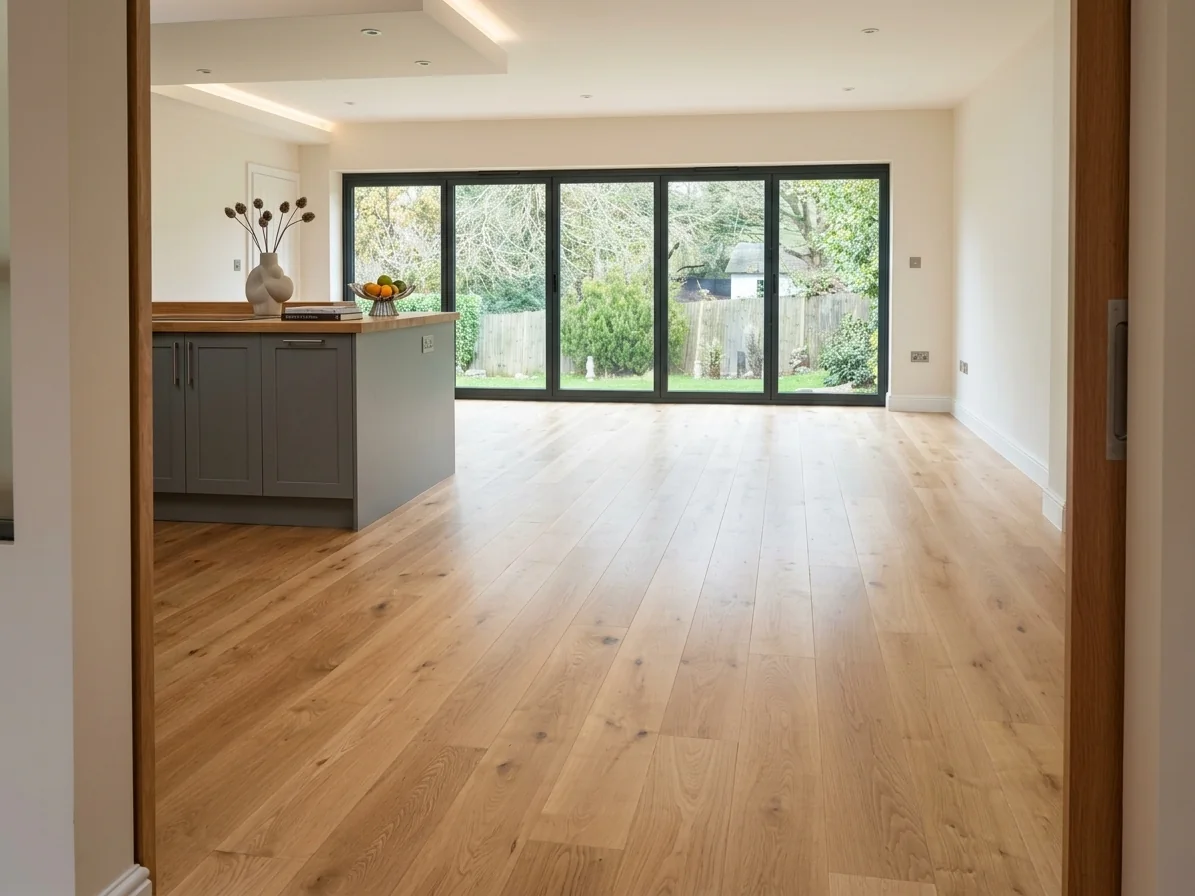
Herringbone Flooring London →In larger kitchens and open-plan kitchen-diners, wide plank at 190mm or 220mm creates a calm, generous floor that scales correctly to the space. Fewer joints than a narrow board, more grain visible. Works particularly well in kitchens with pale cabinetry and stone worktops where the floor is a primary material in the room.
Wide Plank Flooring →Boards laid parallel to the longest wall — the simplest format and often the right one. In kitchens where the floor continues into an adjacent dining room or hallway, straight lay creates continuity without the additional cost of a patterned installation. The board direction determines how the room reads — running away from the entrance draws you in, running across creates width.
Engineered Oak Flooring →Kitchen subfloors are often irregular — previous tiles removed, adhesive residue, level changes at appliance positions. We assess and prepare the subfloor as part of every installation. A kitchen floor laid over an uneven subfloor will move and creak regardless of product quality.
All engineered oak in our collection is UFH compatible. In kitchens with electric UFH — increasingly common in London refurbishments — we confirm the adhesive specification is rated for the system present and that the UFH has been commissioned before installation begins.
Dishwashers and washing machines require a threshold detail at the appliance recess — the floor runs under the plinth but not under the appliance. We plan and detail every appliance position at survey stage so the installation is clean and the appliances can be serviced without damaging the floor.
In open-plan layouts where the kitchen continues into a dining room or living space, we lay the floor as a single continuous installation rather than two separate ones. The product, finish, and laying direction are agreed for the whole area at survey stage — transitions mid-room are avoided wherever possible.
One visit covers everything — samples in your actual light, subfloor assessment, finish recommendation, and an itemised quote. No pressure, no separate appointments.