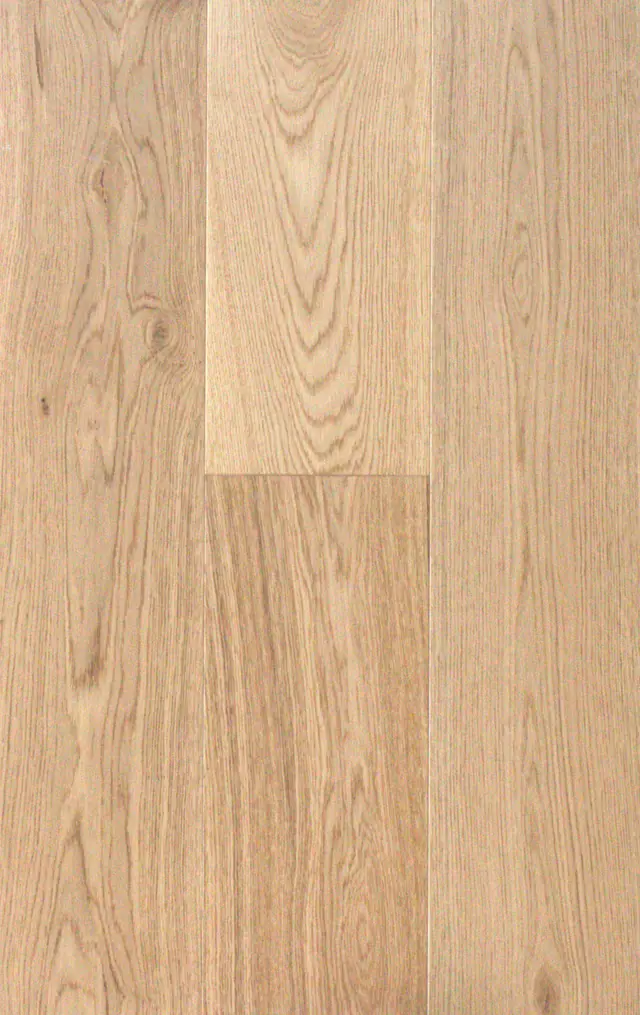
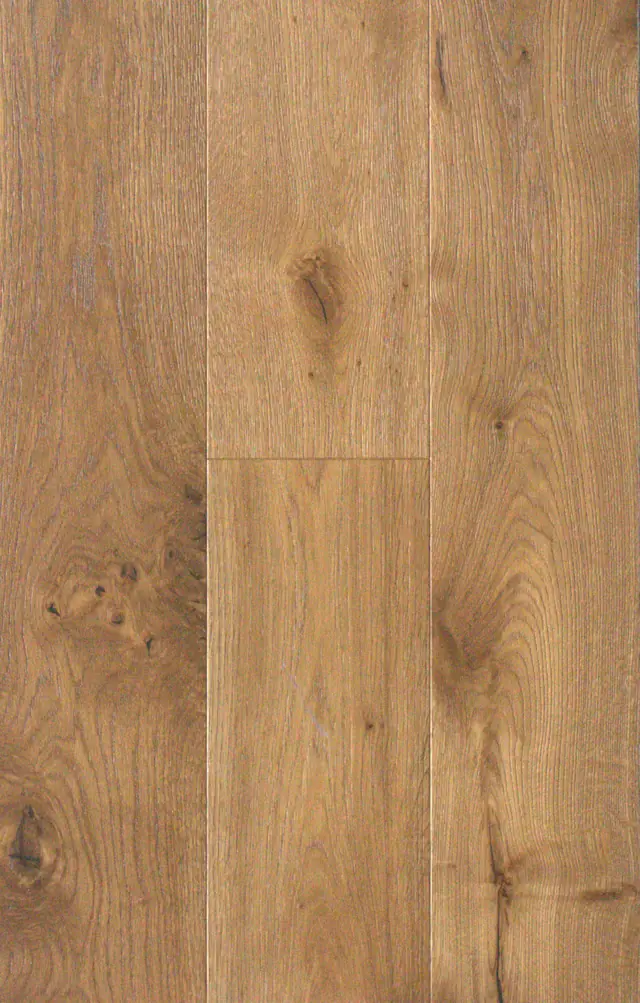
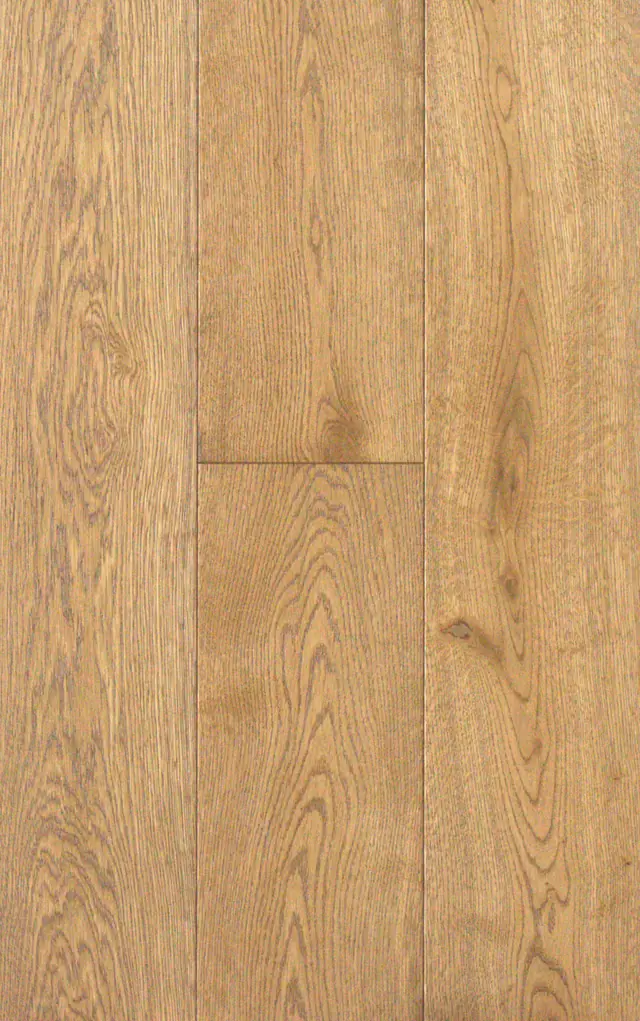
LVT has been aggressively marketed as a wood flooring alternative for the past decade. Some of that marketing is honest. A lot of it isn't. We sell real wood. We don't sell LVT. So here is a genuinely unbiased breakdown of where LVT makes sense — and where it doesn't.
| Category | LVT | Engineered Oak |
|---|---|---|
| Material | PVC / plastic composite with printed wood image | Real oak — sawn, dried, milled. No printing. |
| Feel underfoot | Harder and colder than real wood. Hollow sound when walked on. | Warm, solid, quiet. Sounds and feels like the material it is. |
| Entry cost | Lower. From ~£20–35/m² supply only. | Higher. From ~£45–80/m² supply only depending on grade. |
| Installation cost | Often click-fit — cheaper to install. | Glue-down or float — comparable installation cost per m². |
| Realistic lifespan | 8–15 years before wear layer degrades or product is discontinued. | 25–40+ years. Can be sanded and refinished multiple times. |
| Repairability | Cannot be repaired — damaged boards must be replaced. Colour matching discontinued ranges is difficult. | Can be spot-repaired (oiled finish) or fully sanded and refinished. |
| Property value | Treated as mid-range practical finish by estate agents and valuers. | Treated as premium finish — increases asking price and sale speed in London. |
| UFH compatibility | Compatible. PVC expands less than wood. | All engineered oak is UFH compatible when correctly specified. |
| Wet areas | Fully waterproof — suitable for bathrooms and wet rooms. | Not suitable for bathrooms, wet rooms, or areas of standing water. |
| Environmental | PVC — petroleum-derived, difficult to recycle. | Natural material. FSC-certified sources available. Biodegradable. |
| 20-year cost | Lower upfront, but likely one or two replacements — total cost rises. | Higher upfront, but one installation for 25+ years. Lower cost per year. |
This is where LVT has a genuine, uncontested advantage. It is fully waterproof — suitable for installation in bathrooms, en-suites, wet rooms, and around shower trays. Real wood is not. If you need a wood-look floor in a bathroom, LVT is the correct product and we will tell you that directly.
For landlords who need a durable, low-maintenance floor that withstands tenant turnover without costly repairs, LVT is a practical choice. It is harder to damage than a lower-grade wood floor, and damaged sections can be replaced individually. For high-end rental properties, however, real wood commands significantly higher rents.
If the budget genuinely cannot stretch to engineered oak and the alternative is carpet or nothing, LVT provides a reasonable mid-range finish. We would always recommend stretching to real wood where possible — but we would rather give an honest answer than push a product that doesn't suit the circumstances.
The hollow sound. Walk across a click-fit LVT floor and it produces a hollow, plastic sound underfoot. This is not something a photograph or a showroom sample conveys — it is only apparent when you are living in the space. A real wood floor, correctly installed, is quiet and solid underfoot.
The discontinued range problem. LVT products have short production cycles. If a board is damaged five years after installation, finding a matching replacement from the same batch is often impossible. The entire floor may need replacing to achieve a consistent appearance. A real wood floor can be spot-repaired or sanded and refinished in its entirety.
The 20-year calculation. LVT marketed at £25/m² supply-only, installed twice over 20 years, costs more than engineered oak installed once and maintained correctly. The upfront saving disappears when the lifecycle cost is calculated honestly.
The value gap at sale. In London, buyers and tenants recognise real wood. They do not recognise LVT in the same way — and valuers and estate agents reflect this in their assessments. A real wood floor in a reception room, hallway, or master bedroom is a quantifiable addition to a property's value in a way LVT is not.
One of the most common things we hear when people call us after pricing LVT is that they assumed real wood would be out of reach. In many cases, the difference is smaller than expected — particularly when installation cost is factored in alongside product cost.
Our Timeless Line collection starts at a price point that competes directly with mid-range LVT on a total installed basis. We are happy to give you a straight comparison figure for your specific project — no obligation, no pressure.
If real wood is genuinely not the right choice for your project, we will tell you. We would rather give you an honest answer than a sale that leads to regret.
Get a Straight Price →Tell us your project, your budget, and what you are trying to achieve. We will give you a straight answer on whether real wood makes sense — and if it does, what it would cost. One call, no obligation.