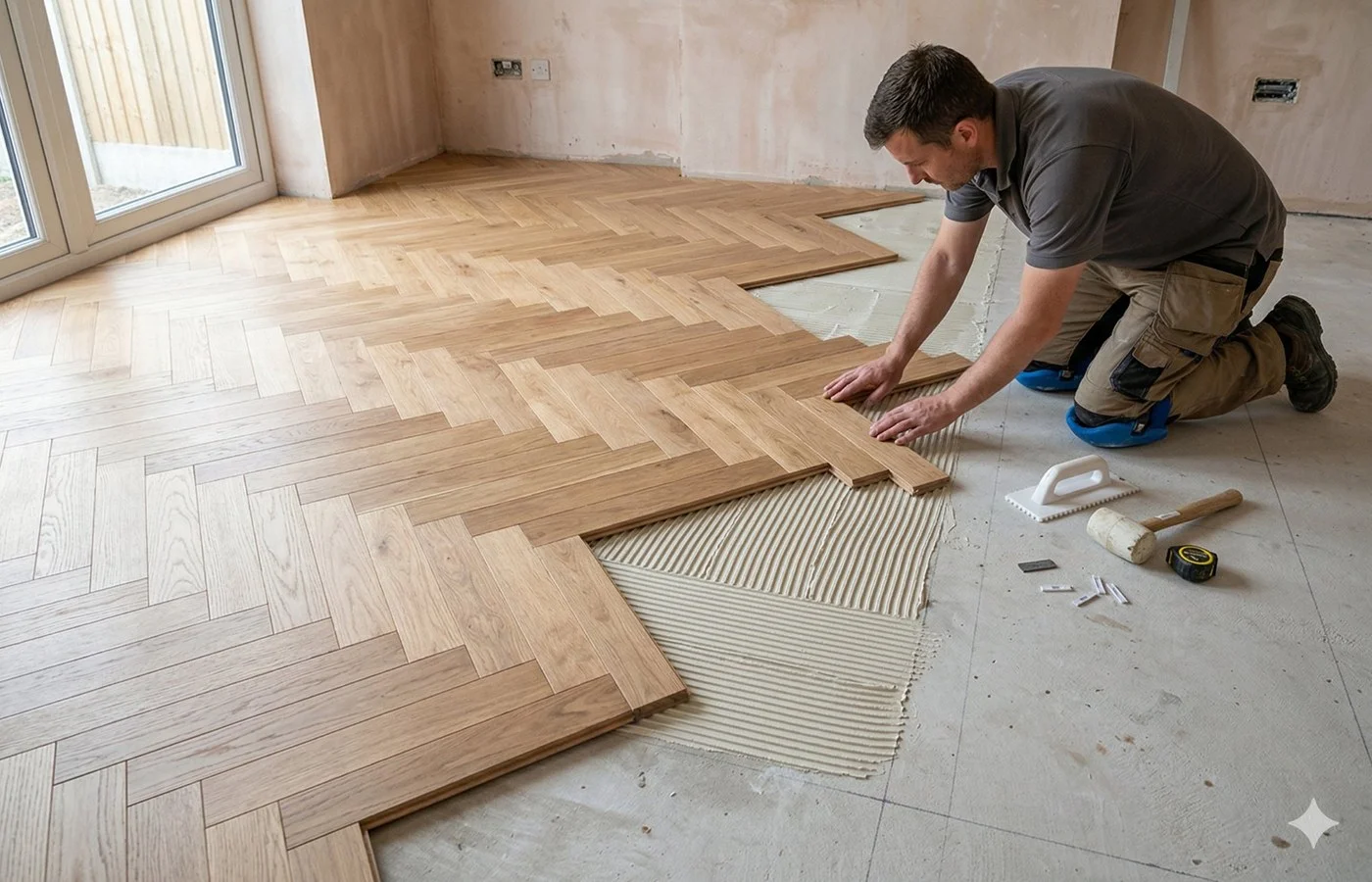
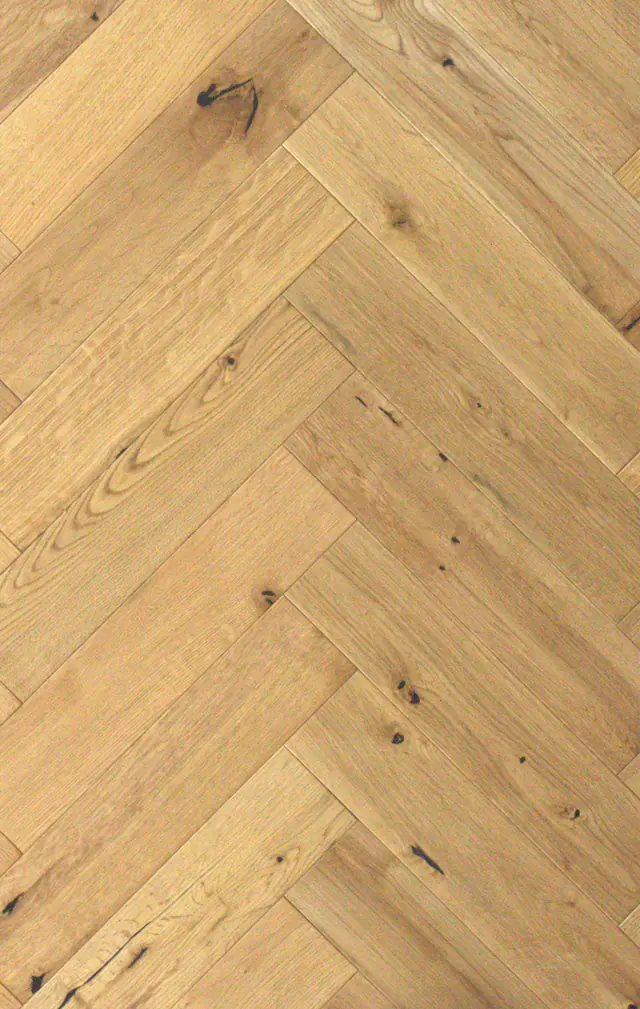
Herringbone Glue-Down · Chelsea
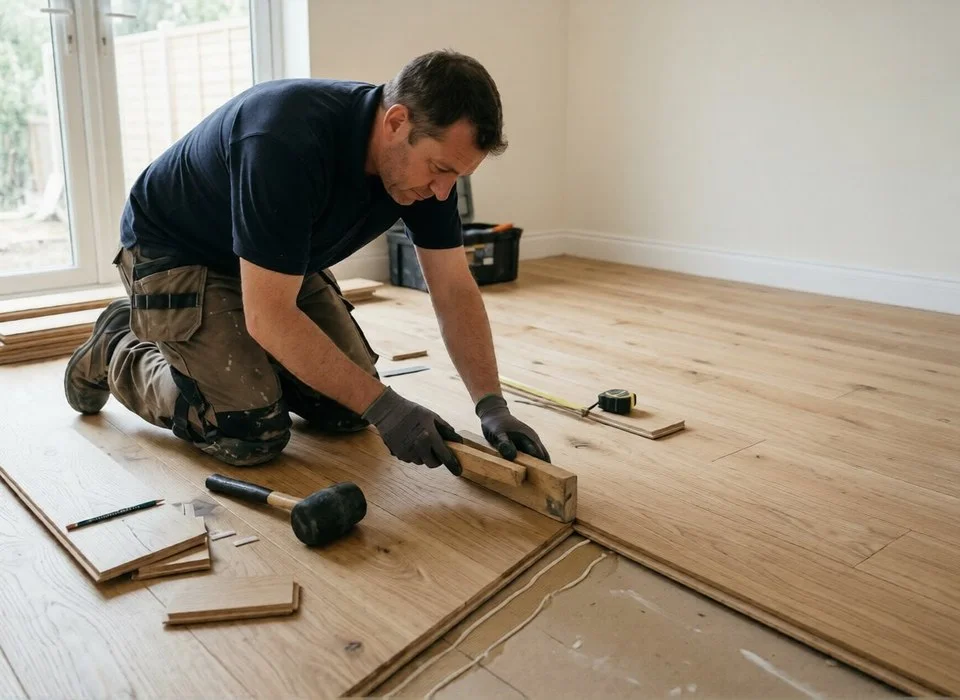
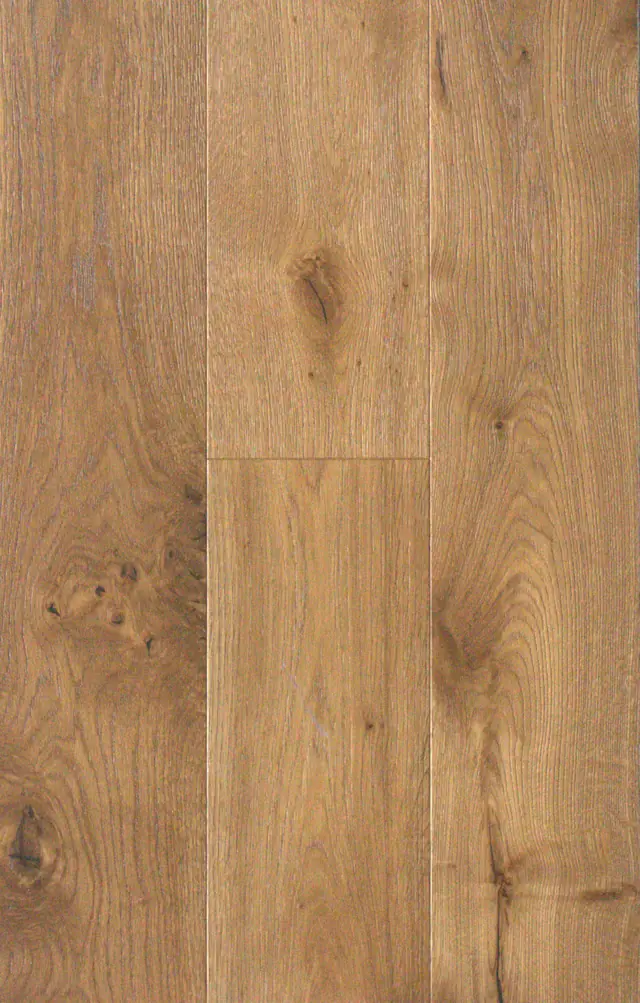
Wide Plank · Richmond
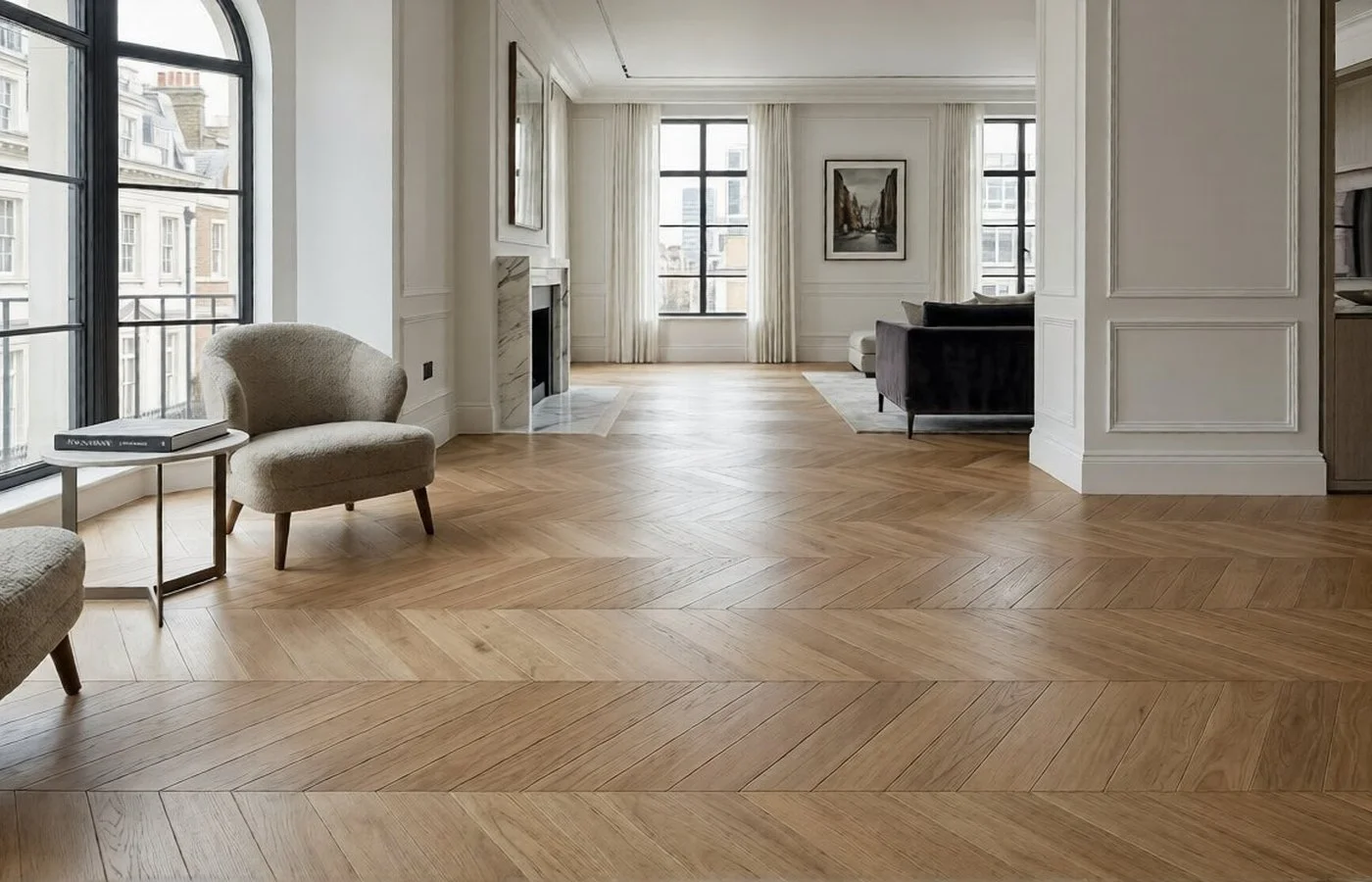
Chevron · Mayfair
Every LIGNORA installation is carried out by our own team. No subcontractors, no split responsibility, no compromises in how the job is done. We handle the full scope — from subfloor assessment and preparation through to the final finish coat — across London and the South East.
Choosing the right floor is the first decision. Having it installed correctly is the one that determines whether it performs for decades or starts causing problems within years. The two decisions are not equally difficult to reverse.
LIGNORA's installation team works across herringbone and chevron patterns, wide plank flooring and straight lay, solid hardwood and engineered oak — in all laying configurations. Every installation begins with a thorough subfloor assessment and ends with an on-site finish that matches the exact specification agreed at the start.
The most requested pattern in London residential renovations — and the one most dependent on precision in execution. A herringbone laid even slightly off-square will compound across the room. We set the datum line before a single board is fixed.
A more restrained geometry than herringbone — the V-point runs continuously down the room rather than breaking at each board end. Boards are cut to a specific angle at the mill rather than squared off, which means the pattern relies entirely on the precision of the installation rather than the cut of the timber.
Wide plank floors — typically 180mm and above — require more careful acclimatisation and more considered fixing than narrow-board installations. The board has more mass, moves more with seasonal humidity change, and exposes any subfloor irregularity more readily. We assess and prepare accordingly.
The most versatile laying pattern — boards run parallel to the longest wall, or to the direction of light entry. Simple in appearance, unforgiving in execution. The first board sets the line for every board that follows. We spend proportionally more time on the first row than any other.
Medallions, borders, feature inlays and mixed-pattern floors — designed as part of our bespoke service and installed to the same standard as any other LIGNORA project. Pattern installations require additional planning time and a confirmed layout drawing before installation begins.
Solid oak requires secret-nailing to a timber subfloor — it cannot be glued or floated. This limits where it can be used, but where the subfloor is suitable, solid hardwood is the most enduring installation we carry out. It can be sanded and refinished multiple times over its lifetime.
The subfloor is the part of the installation no one sees — and the part that determines whether the floor you do see stays flat, silent and stable for decades. We assess every subfloor before quoting and include all necessary preparation in the project scope. There are no surprises billed after the floor is down.
The most common issues we find: moisture in concrete subfloors that was never addressed; timber subfloors with localised movement or rot at the perimeter; screeds that are flat to the eye but out of tolerance for a glue-down installation. Each is dealt with before a board is fixed.
Concrete subfloors are tested for moisture content before any fixing method is selected. A reading above 75% RH requires a moisture barrier or DPM. We test, report, and include remediation in the quote.
Glue-down installations require a subfloor flat to within 3mm over 1.8m. We use self-levelling compound where required and include this in the project price, not as a day-rate addition.
Existing timber floors are walked, tested for movement, and any localised soft spots or rot-affected boards are replaced before the new floor goes down. This is especially relevant in Victorian and Edwardian properties.
UFH systems require specific product selection and a managed warm-up protocol after installation. We advise on compatible products, install the appropriate moisture barrier, and provide a written warm-up schedule at handover.
The most stable fixing method for engineered oak on concrete or screeded subfloors. Full-spread adhesive is applied to the subfloor using a notched trowel. Every board is bedded into the adhesive and held under pressure while it cures. No movement, no creaking, maximum stability — particularly important for herringbone and chevron.
Engineered oak · Concrete & screed subfloorsUsed for solid hardwood and some engineered products on timber subfloors. Each board is nailed through the tongue at an angle, concealing the fixing completely. The method allows for natural seasonal movement while keeping every board firmly anchored. The subfloor must be structurally sound and flat — we assess this before any nailing begins.
Solid hardwood · Timber subfloorsBoards are clicked or glued together at the joints but not fixed to the subfloor — the floor moves as a single unit. Used where the subfloor cannot be glued or nailed to, or where underfloor heating requires a degree of flex. Floating installations require a precise expansion gap around the perimeter and correct underlay selection.
Engineered oak · All subfloor typesMost pre-finished floors arrive from the manufacturer with a factory finish already applied. For the majority of installations, this is what goes down — factory-finished engineered oak in the agreed sheen level. Where the specification calls for a site-applied finish — whether to match an existing floor, achieve a specific tone, or apply a bespoke stain — we finish on-site after installation.
Site finishing is slower and more involved than laying pre-finished boards, but it produces results that factory finishing cannot: consistent tone across every board, a finish level that matches the light and conditions of the actual room, and a surface that integrates with the space rather than arriving as a pre-determined product.
A penetrating finish that feeds into the wood rather than sitting on the surface. Produces a natural, matte appearance. Easy to spot-repair — affected boards can be re-oiled in situ without sanding back. The finish of choice for clients who want the floor to feel like wood rather than look lacquered.
A surface coating that cures to a hard, durable film. Available in matte, satin and gloss sheens. More resistant to liquid ingress than oil. Requires full sanding back to repair — but in a household without heavy foot traffic, a lacquered floor can go decades without intervention.
For clients who want a specific colour — developed and sampled on their timber before the installation begins. Stain is applied in controlled coats, assessed in the property's light at different times of day, and sealed with the agreed finish once the tone is confirmed. No guessing on the day.
For most installations, the manufacturer's factory finish is the right answer. Applied under controlled UV-curing conditions, factory finishes are harder and more consistent than any site-applied equivalent. Where the specification is met by a pre-finished product, we say so.
Every installation follows the same steps. No shortcuts in preparation, no handoffs to other trades, no surprises at the end of the job.
We visit the property, walk the subfloor, assess moisture, measure the space and understand the brief. We bring sample candidates where relevant. Nothing is quoted without seeing the job.
An itemised quote covering material, subfloor preparation, installation, and finishing. Lead times confirmed: 2–3 weeks for pre-finished stock; 8 weeks from production for bespoke. No bundled estimates.
The floor is delivered to site and acclimatised in your home — typically 48 hours to 7 days depending on product and conditions. Moisture readings are taken from the subfloor again before any fixing begins.
Our team installs, finishes and cleans up. You receive written aftercare guidance appropriate to the finish. We follow up after installation to confirm everything is as it should be.
Every LIGNORA floor is acclimatised in your home before a single board is fixed. The timber adjusts to the actual temperature and humidity of your specific property — not a warehouse average. This is the most important thing we do to ensure the floor performs over its lifetime, and it is built into every project timeline without exception. Read more about our process
See also: Herringbone flooring in London →
See also: Chevron flooring in London →
See also: Wood flooring cost guide →
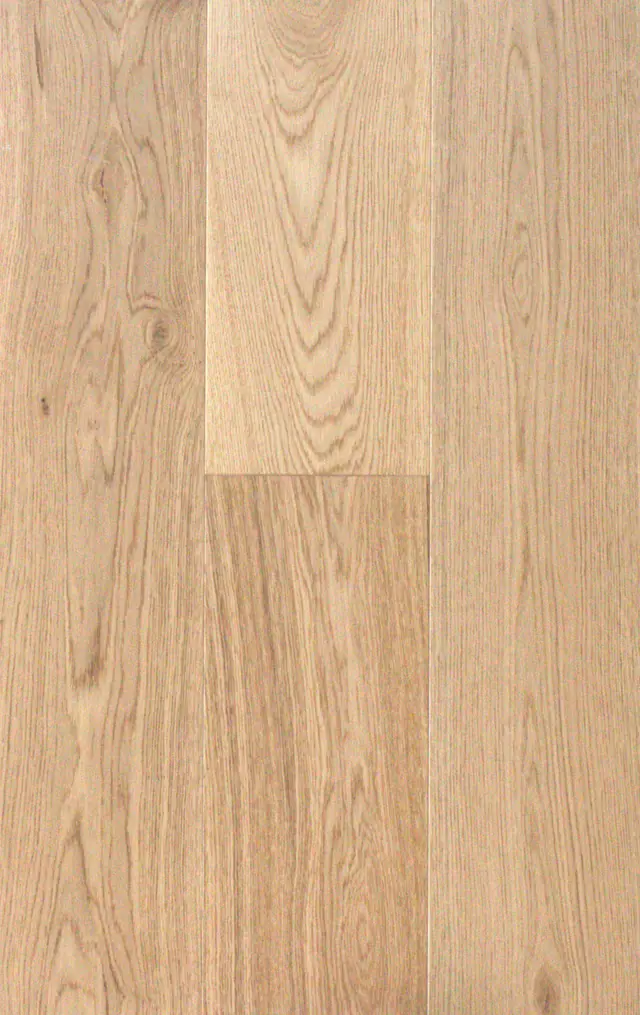
A few floors from the range. Each has its own page with the full specification, a spec sheet and a free sample posted to you.



Send us a few photos of the floor or the room and we will tell you honestly what is possible, and what it will involve.
