A promo code hides in plain sight — find it on our contact pageLuxury engineered oak — supplied, fitted & finishedFree swatch samples posted anywhere in the UKEvery enquiry answered within 24 hoursA promo code hides in plain sight — find it on our contact pageLuxury engineered oak — supplied, fitted & finishedFree swatch samples posted anywhere in the UKEvery enquiry answered within 24 hours
"ENGINEERED"
Engineered Wood Flooring — London

Engineered
Wood Flooring
London.

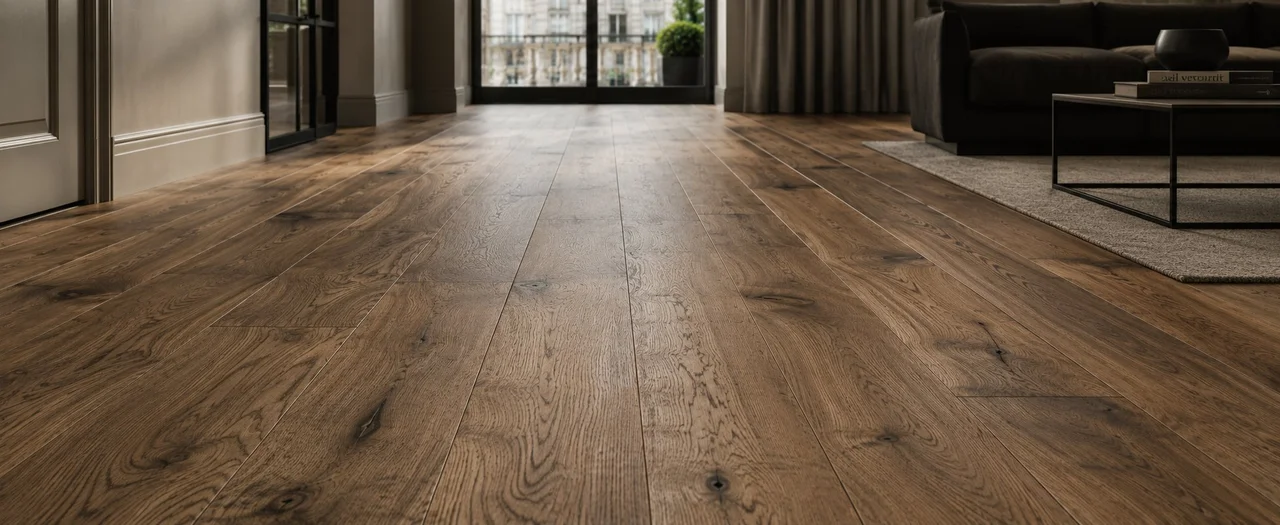
Engineered oak is the correct specification for the majority of London homes — compatible with all subfloors, all underfloor heating systems, and available in every laying pattern from herringbone to wide plank. LIGNORA supplies and installs engineered wood flooring across all London boroughs and throughout the South East, with our own team on every job.

AllLondon Boroughs
UFHCompatible
0Subcontractors
Why Engineered Oak
The Right Material for
London Homes

Engineered oak is a real oak wear layer bonded to a plywood or HDF core. The core gives the board a dimensional stability that solid wood does not have — it resists the moisture-related expansion and contraction that causes solid floors to gap, cup, and fail when installed on concrete subfloors or above underfloor heating. For the majority of London properties — where ground floors are concrete, basement conversions are common, and UFH is increasingly standard — engineered oak is not a compromise, it is the correct specification.

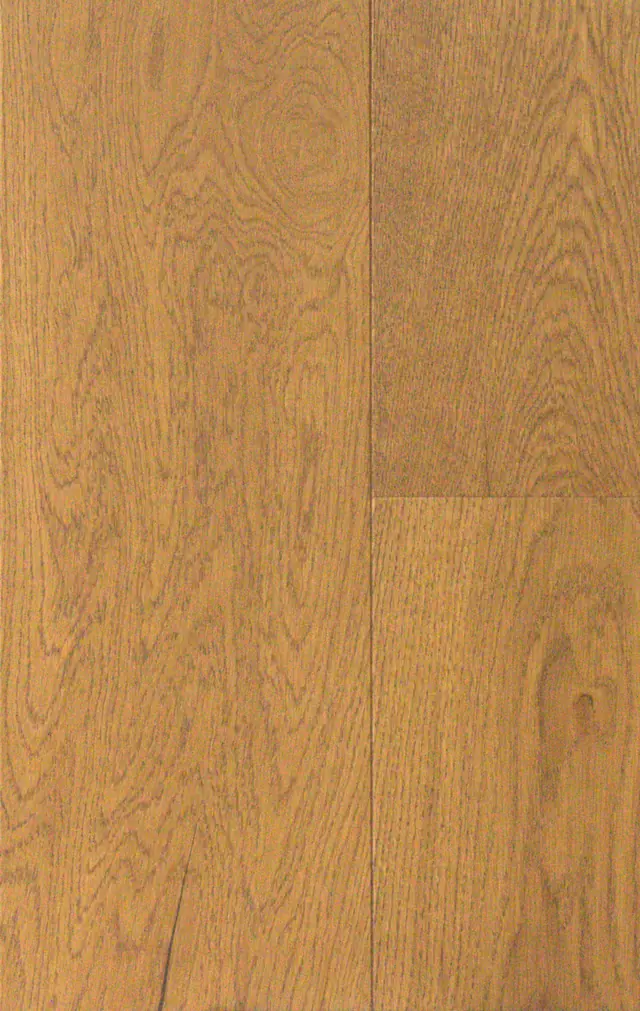
The wear layer — the real oak surface you see, walk on, and eventually sand — ranges from 2mm to 6mm depending on the product. LIGNORA specifies a minimum 3mm wear layer on all installations, ensuring the floor can be sanded and refinished at least once in its lifetime. Thicker wear layers give more sanding life; the trade-off is slightly higher thermal resistance above underfloor heating.

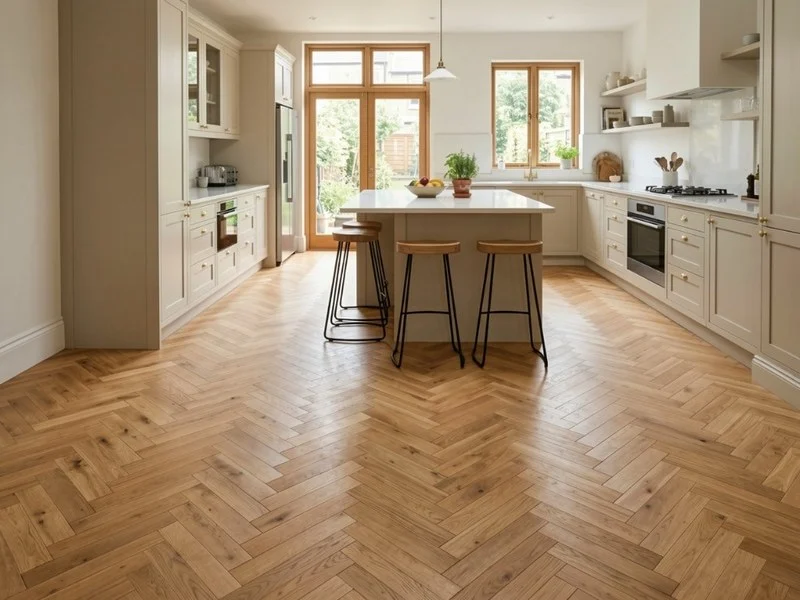
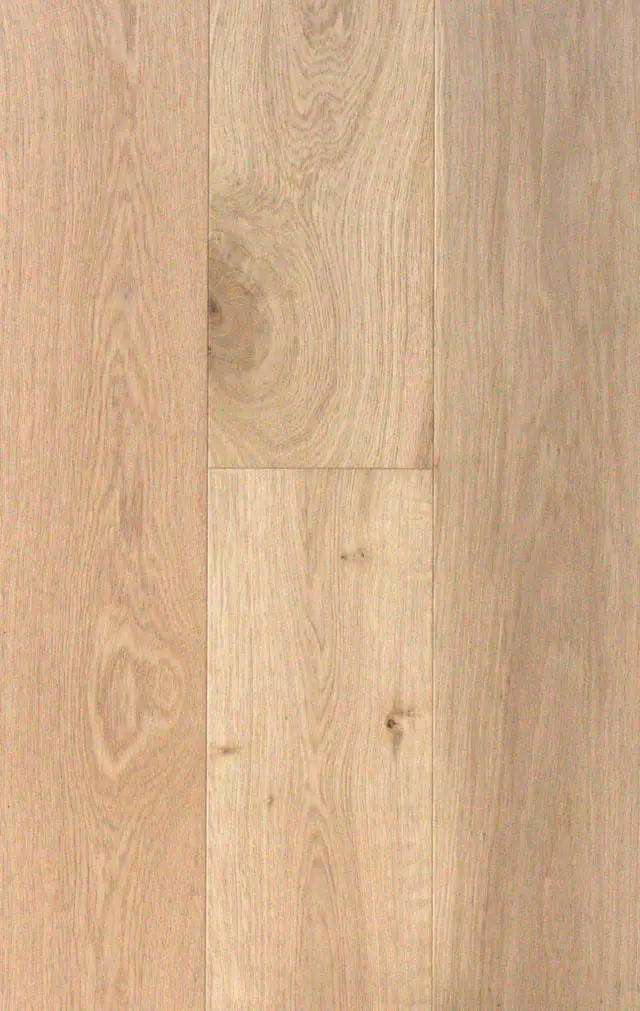
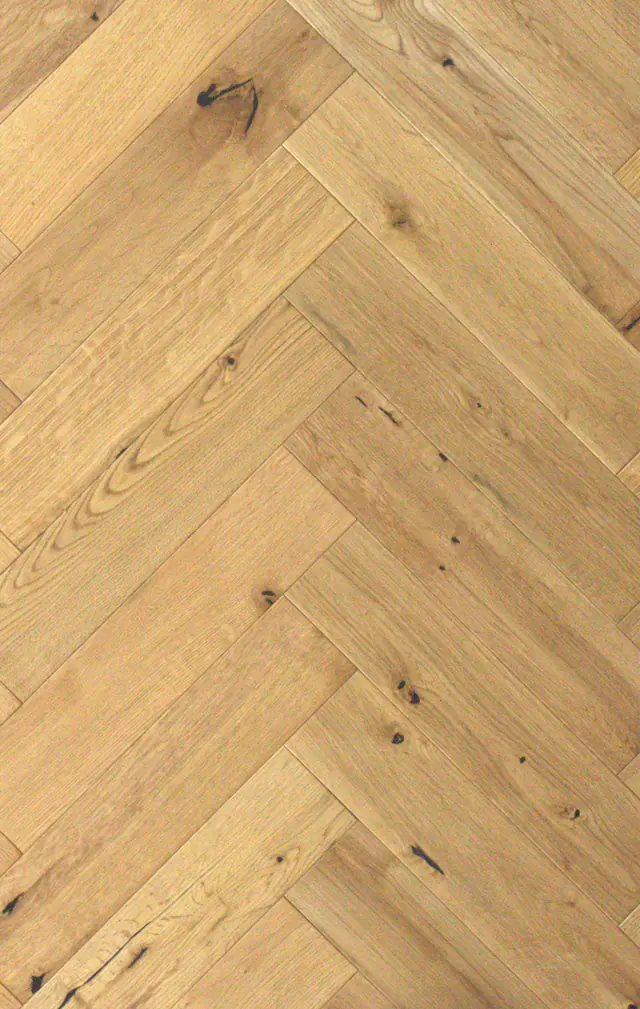
Available in every laying pattern — herringbone, chevron, wide plank, straight lay, and bespoke — and in grades from prime (minimal character markings) to rustic (significant knots and grain variation). The grade is a purely aesthetic choice; durability is the same across grades.

Engineered vs Solid — When to Choose Which

The Specification
Decision

Choose engineered oak when:

  • Subfloor is concrete or screeded — solid oak cannot be used
  • Underfloor heating is present or planned — engineered is compatible
  • Floating or glue-down installation is needed
  • The property has variable humidity (basement, ground floor extension)
  • Budget requires a 2–3 week lead time from stocked range

Choose solid oak when:

  • Timber subfloor is confirmed structurally sound
  • No underfloor heating is installed or planned
  • Maximum sanding life over the floor's lifetime is the priority
  • Secret-nail installation is the preferred method
Laying Patterns
Every Pattern,
One Material

Engineered oak works across all laying patterns — the same material, installed differently, produces very different results. The pattern decision should be made alongside the grade and finish decision.

Herringbone & Chevron

The most popular patterns for London period properties. Herringbone suits hallways, reception rooms, and formal spaces. Chevron is a more contemporary take on the same geometric logic, better suited to larger rooms. Both are glue-down on concrete. Herringbone guide →

Wide Plank Straight Lay

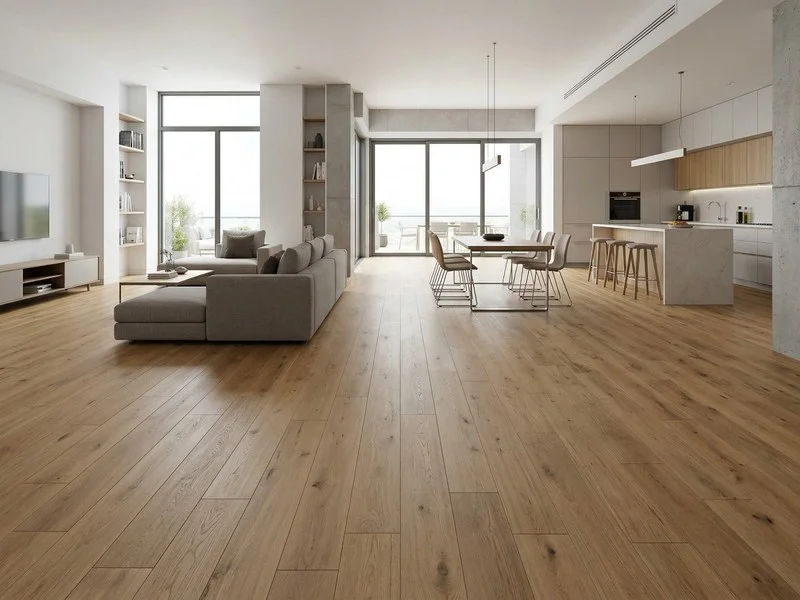
The most versatile specification — boards 150mm and above, running parallel to the longest wall. Suits open-plan spaces, family kitchens, and contemporary interiors equally well. Wide plank feels generous in a way that narrow boards do not, and reads well in properties with good ceiling height.

Bespoke & Custom

Custom widths, bespoke stain colours, and unusual grades are available as made-to-order products. Lead time is 8 weeks from confirmed specification. We specify bespoke floors as part of the home visit — assessing the grain character, width proportion, and finish appropriate to the brief before recommending a direction.

Our Process
Supply & Install
London & South East

Every LIGNORA engineered oak installation follows the same process regardless of location or scale. The home visit establishes the subfloor type, the room dimensions, the correct product, and the fixing method. The floor is then ordered, delivered to the property, and acclimatised in the actual conditions of the home for the full required period before a single board is fixed.

Acclimatisation is not optional and is never shortened. Wood responds to the temperature and humidity of the environment it lives in — and if it has not adjusted to those conditions before installation, it will continue to adjust afterwards. The results are gapping, cupping, and joint failure. Every LIGNORA floor is acclimatised in the property, not in a warehouse average.

Lead times for pre-finished engineered oak from our stocked London and Nottingham warehouses: 2–3 weeks from confirmed order. For bespoke and made-to-order: 8 weeks from production. We confirm exact timelines at the point of enquiry.

Related
Also From LIGNORA
"ENGINEERED"
Home Consultation

Get a Quote for Your
London Property.

We visit the property, assess the subfloor, and show you samples before writing an itemised quote. No commitment, no charge.

Book a Home Consultation →Full Installation Service
FAQ

Common Questions
About Engineered Wood
in London

Engineered wood is what we fit in the majority of London properties. These are the questions that come up on almost every consultation.

Ask Us Anything →
Is engineered wood real wood?
Yes. The surface is a solid sawn layer of real hardwood — on our boards, 4mm of oak. Beneath it sits a cross-bonded plywood core that gives the board its stability. Once fitted and finished, an engineered floor is visually indistinguishable from solid wood, because the part you see and walk on is solid wood.
Why choose engineered over solid wood?
London conditions. Older housing stock, central heating running hard through winter, and humidity that swings across the year all cause solid boards to expand, contract, gap and occasionally cup. The cross-bonded core in engineered board resists that movement. It is also the only option over underfloor heating, and it can be fitted at lower build-ups where floor height is tight.
How many times can an engineered floor be sanded?
With a 4mm wear layer, three to four times across the floor's life — which in practice is decades of domestic use. Each full sand removes well under a millimetre. Most floors need it far less often than people expect, because a well-applied oil or hardwax finish can usually be refreshed in place without sanding back.
What thickness should I specify?
It usually comes down to floor height. Our standard is a 15mm board with a 4mm wear layer, which suits most projects. Where floor levels are already set — a poured screed, or matching into existing thresholds — a 20mm board may be needed instead. This is worth settling before ordering, because it is the one specification that cannot be adjusted on site.
Can engineered boards be glued down, or do they float?
Both are possible, and the right answer depends on the subfloor and the room. We glue down over screed and wherever underfloor heating is present, because full contact gives better heat transfer and a more solid feel underfoot. Floating over an acoustic underlay suits some flats and timber subfloors. We advise on this after seeing the substrate.
What is the lead time on an engineered floor?
For stocked ranges, typically two to three weeks from confirmation to delivery, which allows for allocation, transport and getting the boards on site ahead of the acclimatisation period. Bespoke colours and non-standard dimensions take longer. We confirm actual availability at the time of enquiry rather than quoting a generic lead time.
From a seed to a legacy — generations of craft with LIGNORA