Free samples posted anywhere in the UK✦25-year structural warranty✦The same in-house fitters for over 11 years✦Every enquiry answered within 24 hours✦Free samples posted anywhere in the UK✦25-year structural warranty✦The same in-house fitters for over 11 years✦Every enquiry answered within 24 hours✦

Carpet vs Wood Flooring

Most homes end up with both. Here is how they compare on cost, comfort, noise, cleaning and value, and where each one works best.

Short answer: Wood flooring costs more to buy and fit than most carpet, but a good engineered oak floor lasts for decades and can be sanded back to new, while most carpet needs replacing within 10 to 15 years. Wood is easier to keep clean and is the better choice for allergies, hallways, kitchens and living rooms. Carpet is warmer, softer and quieter underfoot, which is why many homes keep it on the stairs or in some bedrooms. Updated October 2026 by the LIGNORA flooring team

01

Side by side

How the two compare on the things that matter.

CarpetWood flooring
Upfront costLower. Most carpet and underlay costs less per square metre than engineered oak, and it is quicker to fit.Higher. Engineered oak starts from £65.99 per m² including VAT for supply, with fitting quoted on your rooms. See the cost guide.
LifespanUsually 10 to 15 years before it looks tired or needs replacing.Decades. The oak layer can be sanded and refinished when it wears.
WarmthWarm and soft underfoot, especially first thing in the morning.Cooler without heating, but works very well with underfloor heating, and a rug adds softness.
NoiseAbsorbs footsteps and echo.Needs a good underlay in flats and upstairs rooms, and rugs in large rooms. See underlay for engineered wood.
CleaningHolds dust, hair and spills; needs regular vacuuming and occasional deep cleaning.A vacuum and a damp mop. Spills wipe off a sealed finish. See the maintenance guide.
AllergiesFibres hold dust mites, pet dander and pollen.Hard floors are generally recommended for people with dust mite allergies, because allergens have nowhere to settle.
Pets and childrenStains easily and holds smells.Easy to clean, and a brushed finish hides scratches. See wood flooring with pets and children.
ValueRarely a selling point; new owners often replace it.Usually helps a home sell or let, though no one can promise a figure. See whether wood flooring adds value.

Weighing up man-made floors as well? See laminate vs real wood and LVT vs real wood.

02

Room by room

Where each one works best.

Hallway

Hallways

Wood. It copes with outdoor shoes, grit and wet weather far better than carpet, and it is the floor visitors see first. Herringbone is a favourite here; see hallway flooring.

Kitchen

Kitchens and open-plan rooms

Wood, with a lacquered or hardwax-oiled finish. Carpet is not practical anywhere near food and water. See kitchen flooring.

Living room

Living rooms

Wood with a large rug is the most common choice: easy to clean, and soft where you sit. See living room flooring.

Bedroom

Bedrooms

Either works. Carpet is warmer and softer; wood with a rug by the bed is better for allergies and lasts far longer. See bedroom flooring.

Stairs

Stairs

A carpet runner over oak treads gives grip and quiet with the look of wood at the edges, or fully clad oak stair treads give a cleaner finish.

Flats

Flats

Wood is fine in most flats, but check the lease first: many set an acoustic standard for the underlay, and a few still insist on carpet. See wood flooring for flats.

03

Joining carpet and wood

Where the two floors meet.

Where carpet meets wood, usually in a doorway, a threshold strip covers the join and protects the edge of the carpet. The neatest is a low strip that grips the carpet and sits over the edge of the wood; where the two floors are at different heights, a ramped strip takes up the step.

Plan the heights before the floor goes down. Boards of 14 to 20mm with underlay can finish higher or lower than carpet and its underlay, so we set the thresholds as we fit and nobody trips over the join. See trims, skirting and thresholds.

04

When carpet is still the better choice

We supply wood floors, but carpet is sometimes right.

Comfort

Bedrooms you want soft

If you would rather step onto something soft every morning, carpet in the bedrooms and wood everywhere else is a sensible split.

Lease

Leases that require it

Some flat leases still insist on carpet in upstairs rooms. Always check before you buy any hard floor.

Stairs

Busy family stairs

Carpet gives grip and deadens noise on the stairs, which matters with young children and dogs.

About this guide

Written by the LIGNORA team. Our in-house fitters have over 11 years' experience laying engineered oak, parquet and solid wood floors in London homes, often next to carpet, and this guide reflects what we see on real projects. Last reviewed October 2026.

Carpet or Wood,
Answered

The questions we are asked most often.

Ask Us Anything →
Is wood flooring cheaper than carpet?
Not to buy. Most carpet costs less per square metre than engineered oak, and it is quicker to fit. Over 20 or 30 years wood often works out cheaper, because it is refinished rather than replaced.
Is wood flooring better than carpet for allergies?
Generally, yes. Carpet fibres hold dust mites, pet dander and pollen, while a hard floor can be kept clean with a vacuum and a damp mop, so hard floors are the usual recommendation for people with dust mite allergies.
Should I choose carpet or wood for a bedroom?
Both work well. Carpet feels warmer and softer, while wood with a rug by the bed is better for allergies and lasts far longer. It comes down to whether comfort or practicality matters more to you in that room.
Is carpet or wood flooring quieter?
Carpet, because it absorbs footsteps and echo. A wood floor over a good acoustic underlay, with rugs in large rooms, is quiet enough for most homes and meets the acoustic rules in most flat leases.
Can you lay carpet over a wood floor?
Yes, but carpet gripper is nailed or glued along the edges of the room, which marks the boards underneath. If you may want the wood floor back later, use rugs instead, or ask the carpet fitter to glue the gripper rather than nail it.
How do you join carpet to wood flooring?
With a threshold strip in the doorway that grips the carpet and covers the edge of the wood. Where the two floors are at different heights, a ramped strip takes up the step.
Does wood flooring add more value than carpet?
Usually. Buyers tend to see a good wood floor as one less thing to replace, while carpet is often replaced by new owners. No one can promise a fixed figure, though.

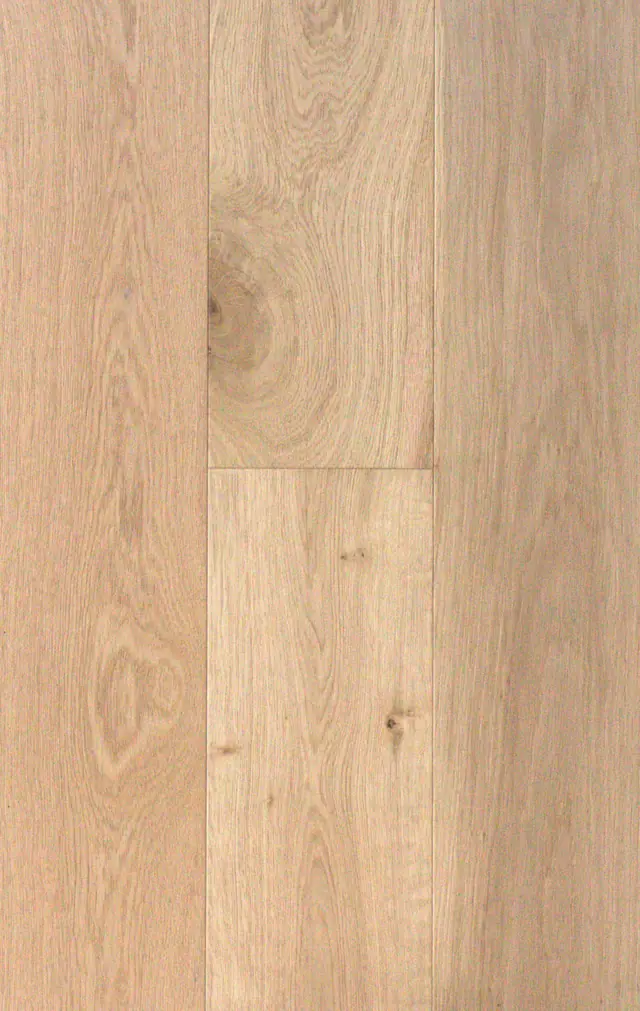
Floors to start with

Warm, easy-going oak floors that suit bedrooms, living rooms and hallways. Each has its own page with the full specification, a spec sheet and a free sample posted to you.

Ask us about
your rooms.

Tell us which rooms you are thinking of changing and we will tell you honestly where wood will work, or order free samples to see them at home.

Order Free Samples →Get in Touch
From a seed to a legacy — generations of craft with LIGNORA