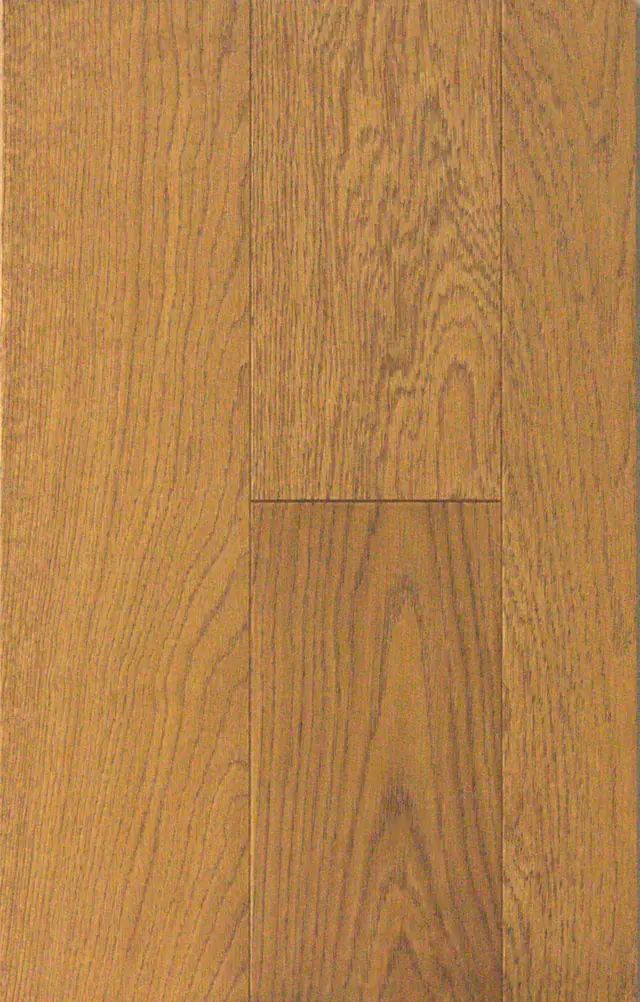
Conservatories swing from cold to hot in a single day, and the sun is strong. Real wood can work well — if you choose the right board and protect it from the extremes.
Short answer: Engineered oak can work in a modern, insulated conservatory with a solid roof and heating; avoid old single-glazed conservatories that overheat and freeze. Use blinds or UV-filtering glass to limit fading, choose a mid or light tone, and allow for movement with the right expansion gaps. Updated October 2026 by the LIGNORA flooring team
Yes, with the right floor and a stable room.
Engineered oak is the better choice in a conservatory: its multi-layer core moves far less than solid oak when temperature and humidity change. The room itself matters most — a modern, insulated conservatory or garden room with a solid roof and heating is very different from an old, single-glazed one that bakes in summer and freezes in winter.
Strong sunlight changes every natural floor.
What copes best.
Choose engineered oak in a mid width — 150–190mm is more forgiving than very wide boards — and a natural or lightly smoked tone that will age gracefully in the light. Over underfloor heating, glue the floor down. See wood over underfloor heating and oiled vs lacquered.
Written by the LIGNORA team. Our in-house fitters have over 11 years’ experience laying engineered oak, parquet and solid wood floors, and this guide reflects how we specify floors on real projects. Last reviewed October 2026.
A few floors from the range. Each has its own page with the full specification, a spec sheet and a free sample posted to you.


Send us a photo of the room and tell us about the subfloor and heating, and we will recommend the right board. Or order free samples to see them at home.