Extensions and rear additions present a specific flooring challenge — matching what is already there, or starting fresh in a way that creates unity across the whole ground floor. Get it right and the extension disappears into the house. Get it wrong and the join is visible forever. LIGNORA installs wood flooring in extensions across London and the South East.
If the existing house has herringbone — or you want the extension to be a statement — herringbone throughout the ground floor creates a unified, considered feel. The key decision is whether the pattern runs continuously through the extension join or changes direction at the junction. We advise on this at survey stage based on the room geometry.
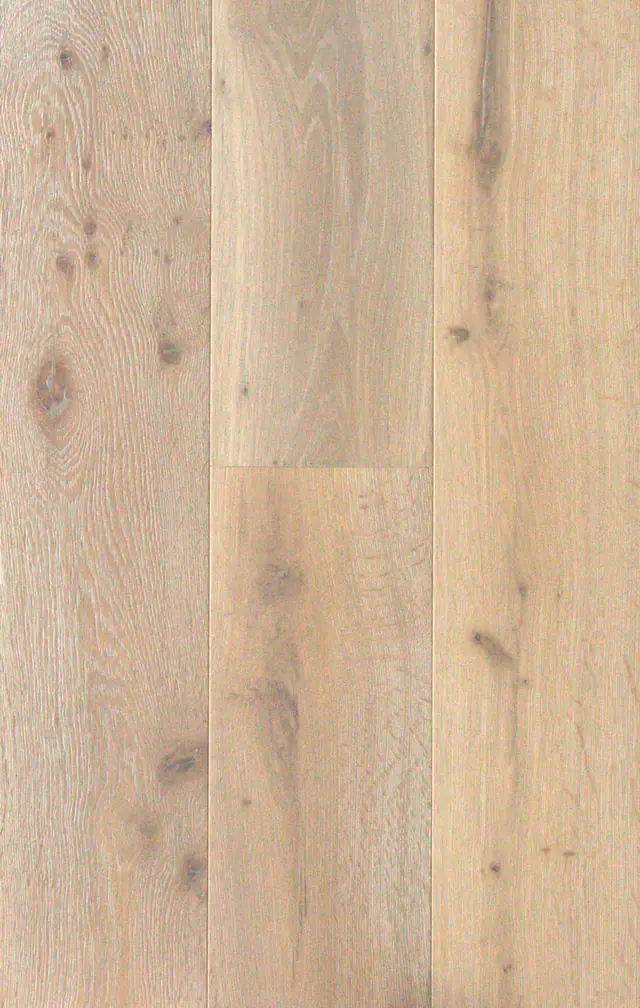
Herringbone Flooring London →For extensions designed to feel open, calm, and contemporary — particularly those with bifold or sliding doors to the garden — wide plank at 190mm or 220mm running the length of the space and continuing into the house creates a sense of continuity and scale. The boards draw the eye toward the garden and make the internal space feel larger.
Wide Plank Flooring →If the extension connects to an existing floor that must be matched — whether engineered oak, solid oak, or parquet — we assess the existing product specification and source the closest available match. Where an exact match is not possible, we advise on how to handle the junction cleanly, whether through a threshold detail, a change of pattern, or a colour-matched transition strip.
Chevron Flooring London →The junction between an existing floor and an extension addition is where most extension flooring projects fail. The subfloor heights rarely match exactly. The existing floor has settled. The new screed or concrete slab has different moisture characteristics. All of this must be resolved before a board is laid.
Subfloor height matching. The extension subfloor is almost always at a different height to the existing floor. We assess the differential at survey, specify the correct build-up — whether self-levelling compound, isolation board, or a combination — and confirm that the finished floor height matches at the junction without a step or a visible transition bar.
Underfloor heating compatibility. Most extensions are designed with wet UFH in the screed — it is the most efficient heating method for a ground-floor extension. All engineered oak in our collection is UFH compatible. We confirm the adhesive specification is rated for the system temperature range at survey stage.
Bifold door thresholds. Where bifold or sliding doors open onto the garden, the external threshold detail requires specific attention — the floor must terminate cleanly at the door sill, be protected against weather ingress, and handle the slight moisture variation at the external opening. We detail this junction correctly as a standard part of every extension installation.
Build programme timing. Wood flooring should be the last trade in an extension — after plastering, decorating, kitchen installation, and UFH commissioning. We work with your project manager or architect to confirm the correct installation window and ensure the extension environment is ready before we begin.
Moisture testing. New concrete slabs and screeds require a minimum drying period before wood flooring can be installed — typically 6–8 weeks per 25mm depth. We test relative humidity and moisture content before installation begins. Installing over a slab that has not dried is the single most common cause of extension floor failure.
Matching the existing floor. If the extension connects to an existing oak floor, we assess the existing product at survey stage and advise on matching options. An exact match is not always possible — particularly with older or discontinued products — but a well-chosen complement is often a better result than a poor match.
Free samples visit included with every surveyWe assess the extension subfloor — type, height relative to the existing floor, moisture content, and UFH system present. We then assess the existing floor and advise on matching, complementing, or separating the two areas with a defined junction detail.
Extension subfloors are typically new concrete or screed — and require specific preparation before wood flooring can be installed. We check moisture content, assess the need for priming or levelling compound, and confirm the build-up specification before quoting.
The junction between the extension and the main house is planned at survey stage — not decided on installation day. We specify whether it will be a continuous run, a threshold bar, a change of pattern, or a level change detail, and price this as part of the original quote.
After the visit, you receive an itemised written quote covering product, underlay, adhesive where applicable, installation, and any threshold or door trimming required. No hidden costs, no day-rate surprises. The price agreed is the price on invoice.
One visit covers the extension subfloor, the existing floor assessment, UFH confirmation, bifold threshold planning, and a fixed written quote. No return visits to price up complications — we find them at survey.