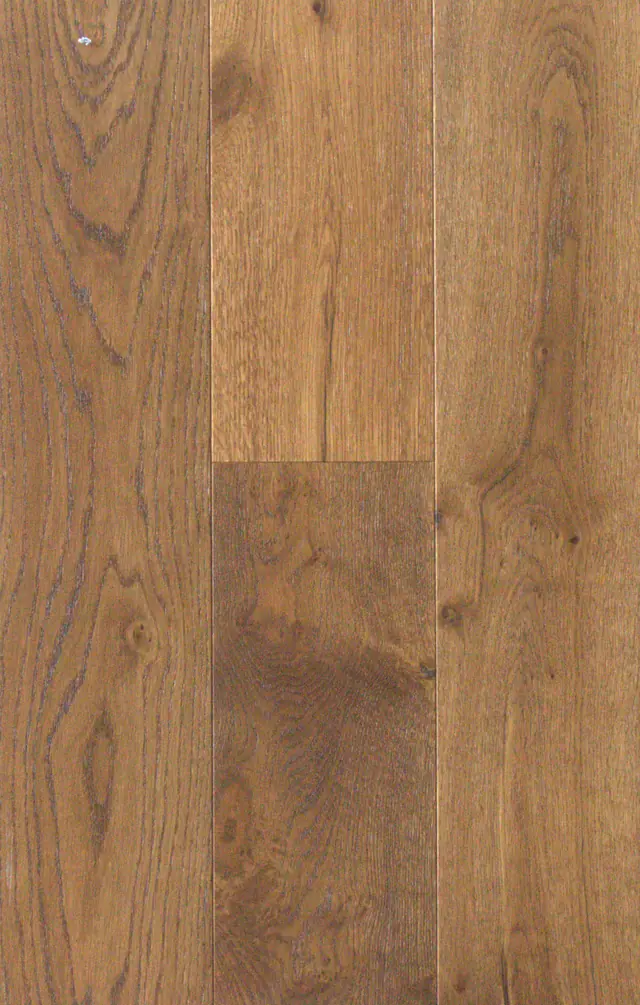
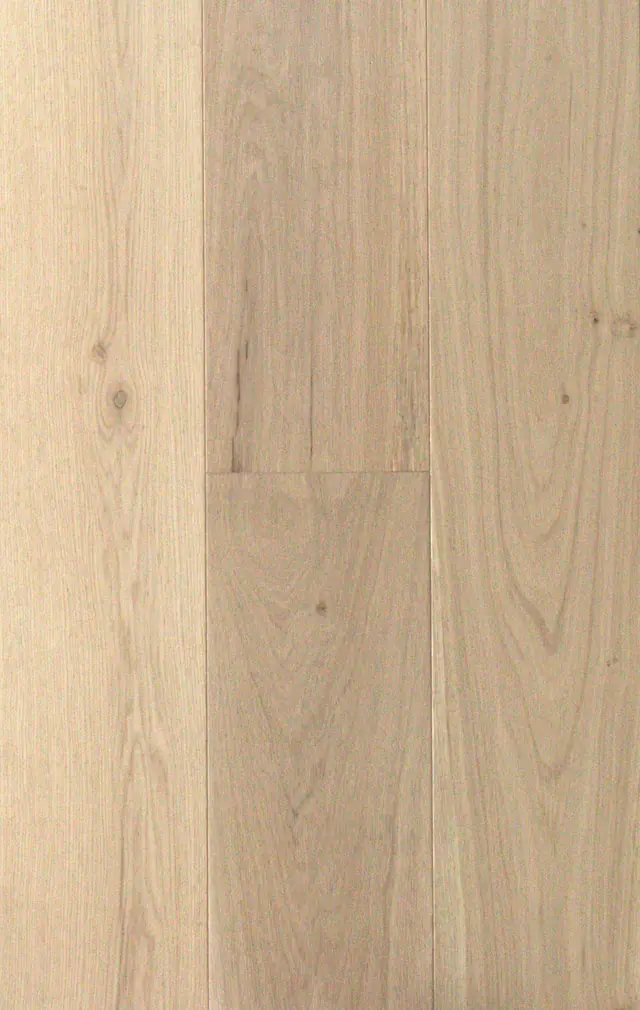
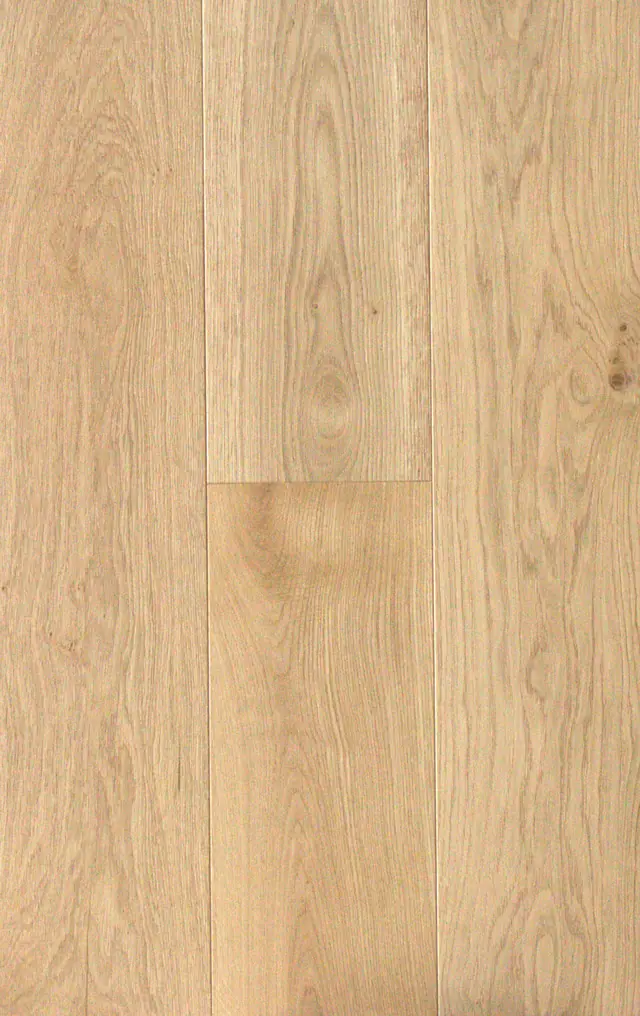
Raw engineered oak, sanded and finished after it is laid. The choice when the finish has to be matched exactly, when stairs and floors must read as one, or when a designer wants a colour of their own.
Short answer: Unfinished engineered oak is supplied raw, then sanded and finished after it is laid. It gives one seamless surface without bevels, lets you choose any oil, lacquer or stain on site, and allows floors, stairs and joinery to be finished together. It takes longer to fit than prefinished oak because of the on-site finishing. Updated October 2026 by the LIGNORA flooring team
The finish is applied in the room, not the factory.
Sanded after laying, the floor has no bevels or factory edges, and the finish runs across every joint.
Oil, hardwax oil, lacquer or stain, mixed and tested on site against the room, the joinery and the light.
Treads, nosings and thresholds can be finished in the same pass, so everything matches exactly.
A wide unfinished range, in stock formats and long lengths.
Long-length boards typically take four to six weeks; other lead times are confirmed on your quote. Compare thicknesses in our thickness guide.
Plan the finish before the floor goes down.
Unfinished boards should be laid, sanded and finished before decorators and other trades finish in the room, then protected until handover. Choose an oil for a natural, repairable surface, or a lacquer for the lowest upkeep — our oiled vs lacquered guide explains the difference.
Supplying to your own fitter? We send the technical sheets with the order. Want it fitted too? Tell us about your project and we'll talk you through the options.
A few floors from the range. Each has its own page with the full specification, a spec sheet and a free sample posted to you.


Send us a photo of the room and tell us about the subfloor and heating, and we will recommend the right board. Or order free samples to see them at home.