"IDEAS"
Design Guidance — London Homes

Wood Flooring
Ideas for
London Homes.

The decisions that define a wood floor — pattern, tone, finish, board direction — are easier to make when you understand what each choice does to a room. This guide covers the ideas we discuss on every home visit: which pattern suits which space, how to choose a tone, when to restore rather than replace, and what finish makes the difference.

Herringbone Chevron Wide Plank Tone & Finish Restore or Replace
Start With Pattern
Four Pattern Directions

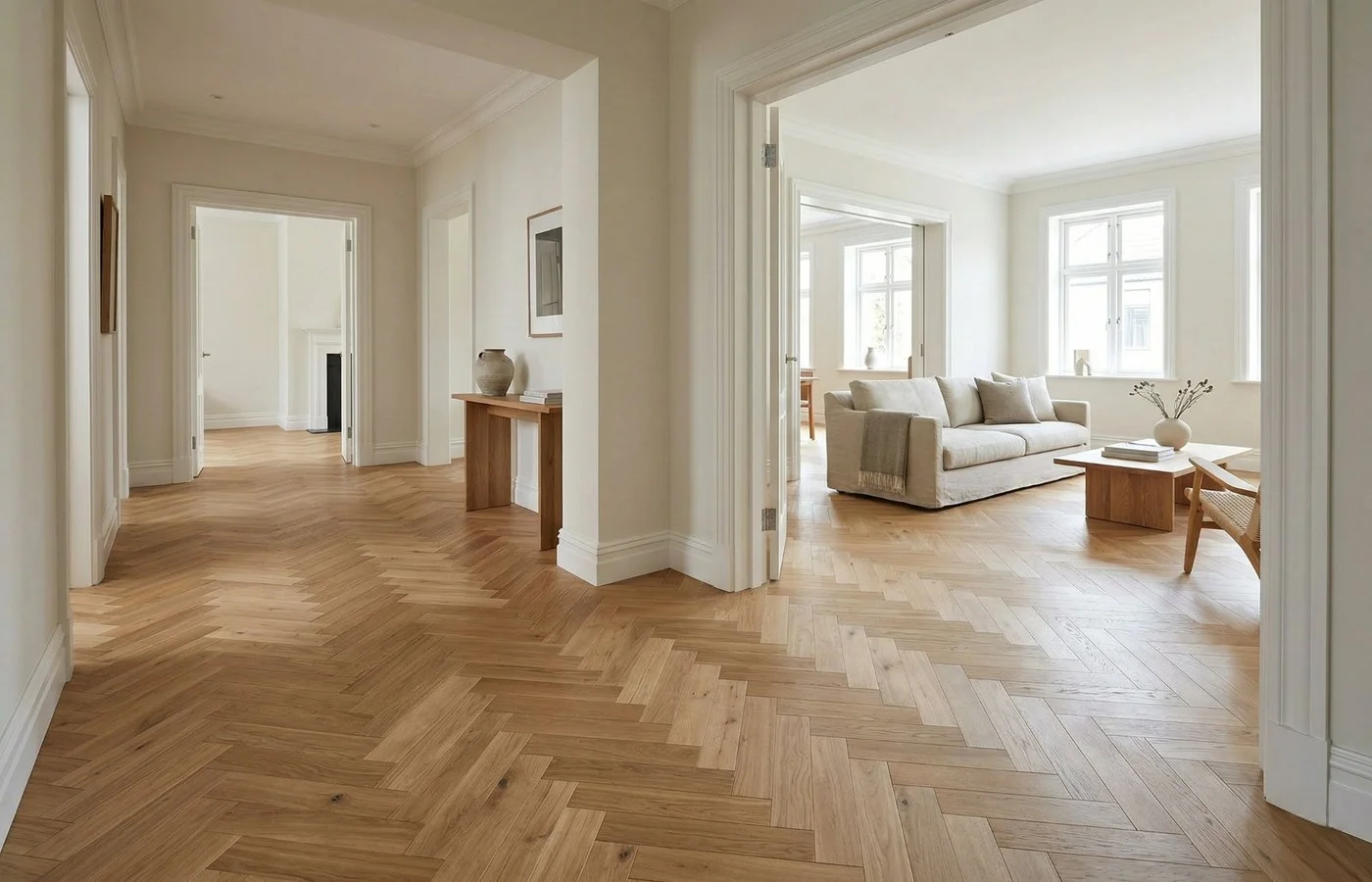
Pattern sets the tone of a room before tone, finish, or furniture is considered. Each pattern answers a different brief and suits a different kind of space. The right choice comes from the room, not from a trend.

Choosing a Tone
What Tone Does
to a Room

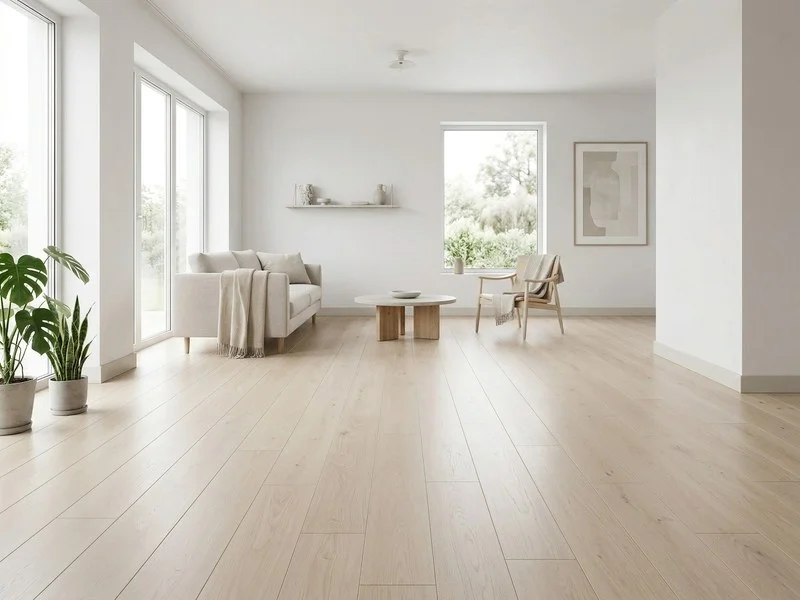
Tone is the most consequential decision after pattern. A pale floor makes a room larger and lighter. A dark floor creates warmth and depth but shows dust readily. A natural mid-tone sits between both. The right choice depends on the natural light, wall palette, and the character the room needs.

Pale Oak

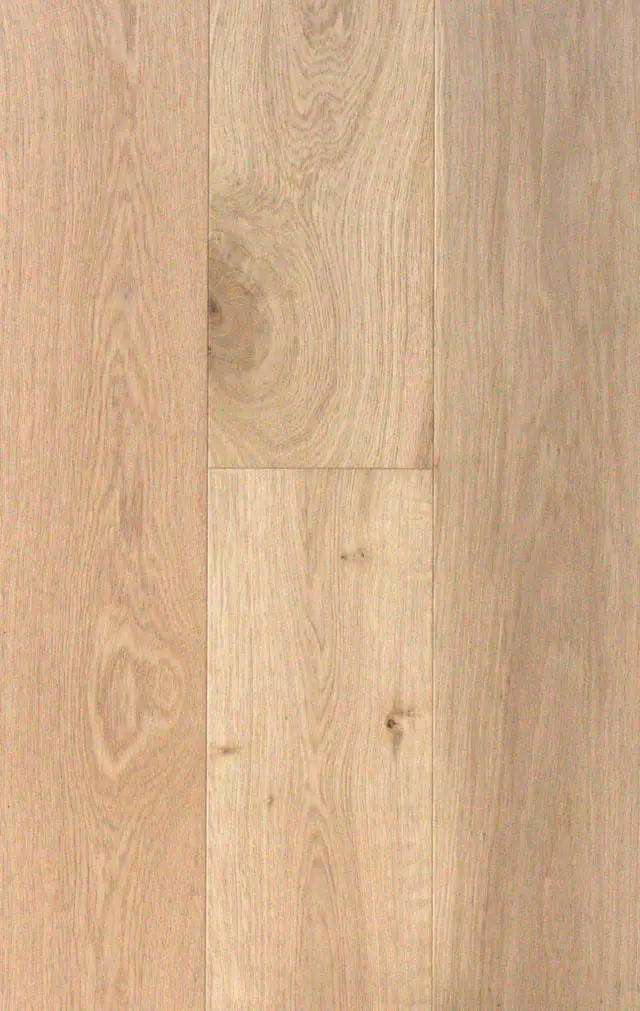
Reflects light upward — effective in north-facing rooms and basements. Shows dust readily. Works best with linen, stone and white walls. Pale oak guide →

Natural Oak

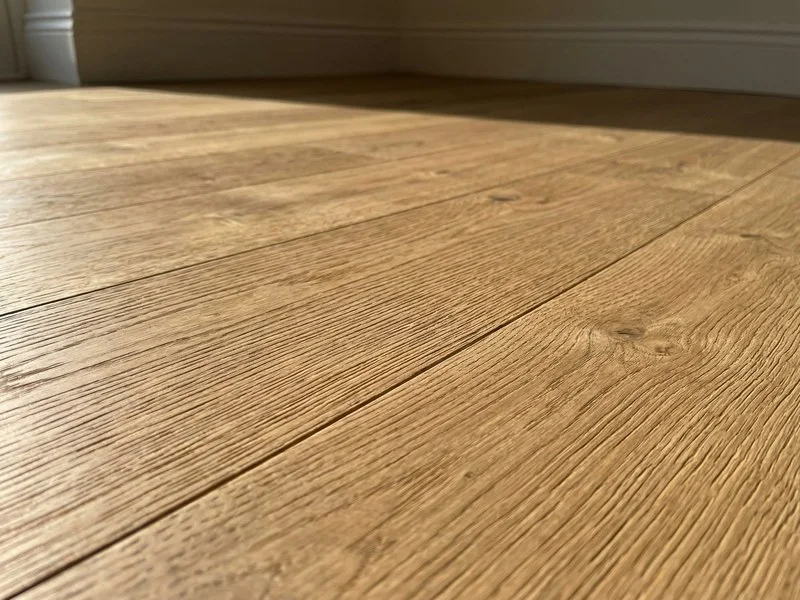
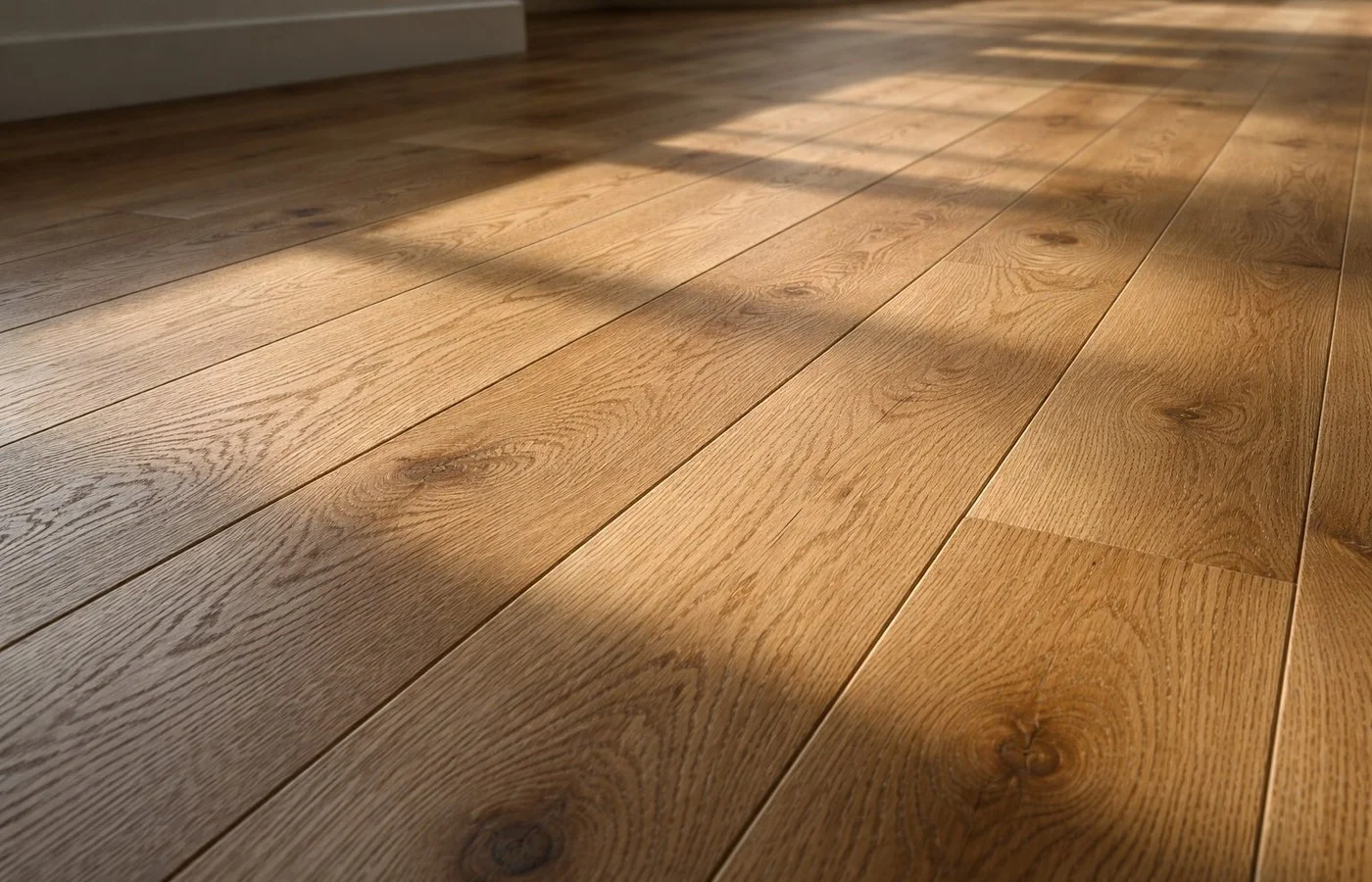
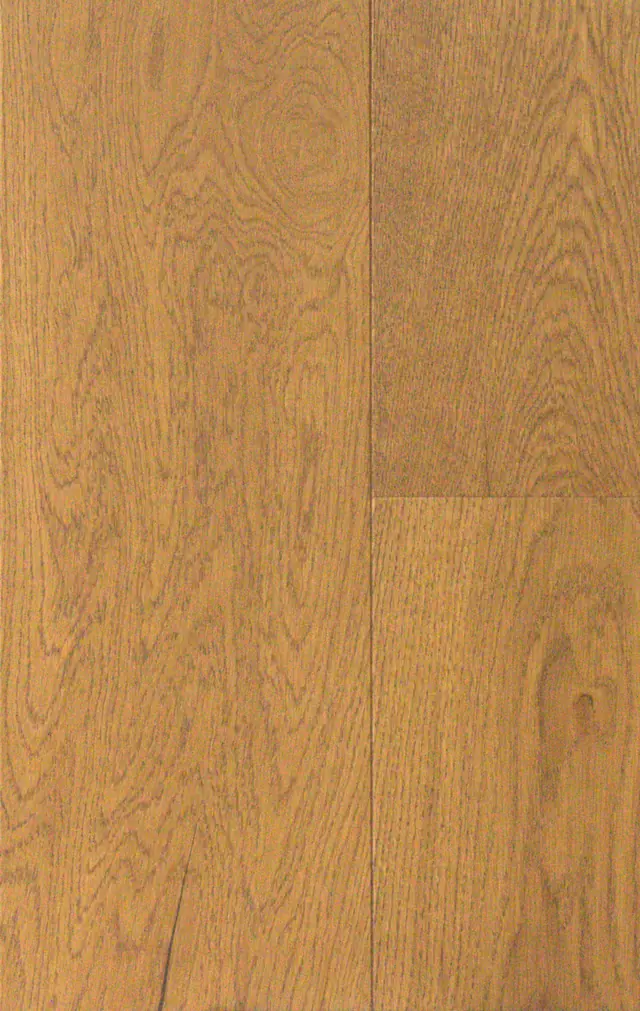
Warm amber — suits period and contemporary equally. The most commonly specified tone across London. Works with most wall colours and most interior styles.

Smoked Oak

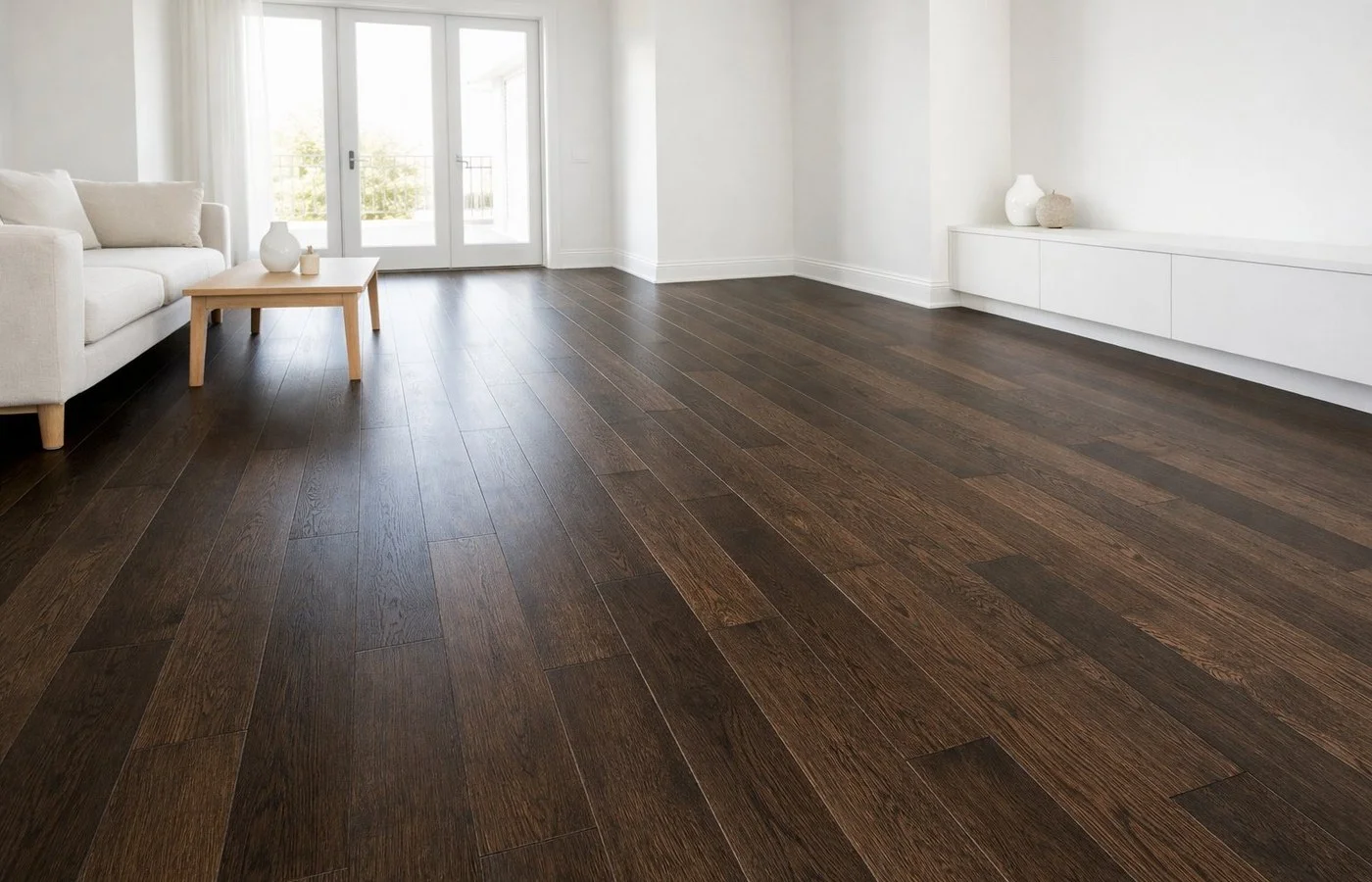
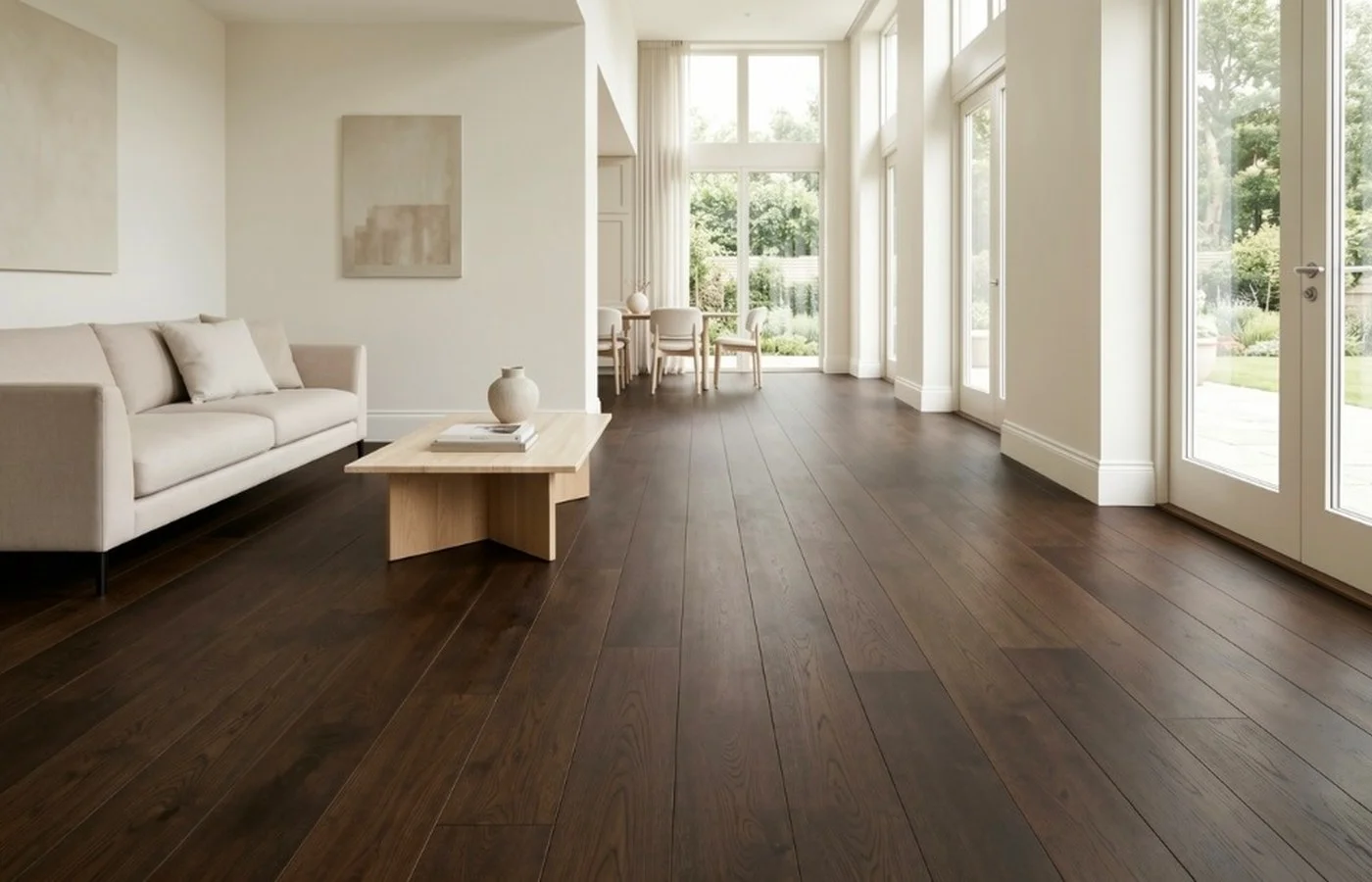
Deep colour from the smoking process, not stain — grain remains visible through the tone. Works in pale interiors as the tonal anchor. Most popular in Chelsea, Kensington and Islington. Dark oak guide →

Dark Stained

Walnut-tone or near-black stain over oak. High drama in the right room — oppressive in the wrong one. Needs strong natural light and good ceiling height. Assess in the actual room before committing.

Then Finish
How Surface Finish
Changes the Floor
Most natural — penetrating
Hardwax Oil

Penetrates the wood rather than forming a surface film. The floor feels like wood underfoot. Requires periodic re-oiling in busy households but allows spot repairs in situ without sanding. The correct finish for most period properties, all smoked oak specifications, and anywhere the brief prioritises character over convenience.

Surface finish guide
Most durable — surface film
Lacquer

Forms a protective film over the surface. More resistant to liquid and heavy wear than oil. Appropriate in kitchens and high-traffic areas where durability matters most. Available in matt, satin or semi-gloss — satin is the most sympathetic to most residential floors. Harder to spot-repair than oil but requires no periodic maintenance.

Factory applied
Pre-Finished

Boards finished at the factory before delivery. Consistent and practical — the floor is ready immediately with no drying time after installation. Slightly less control over the exact sheen level than on-site finishing, and harder to match adjacent surfaces precisely. The practical choice when on-site finishing is not feasible.

Room by Room
Matching the Idea
to the Space
Victorian & Edwardian Hallways

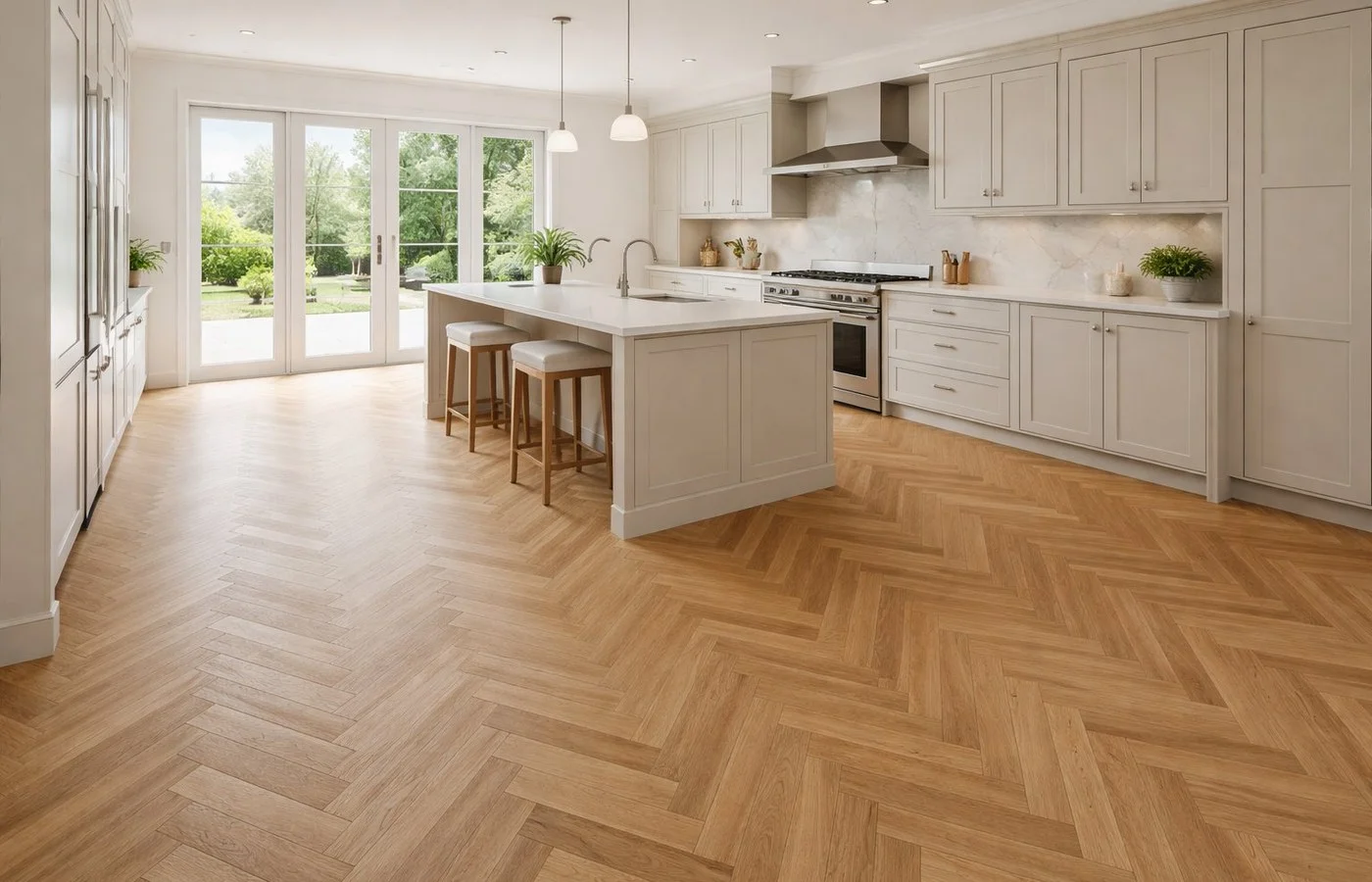
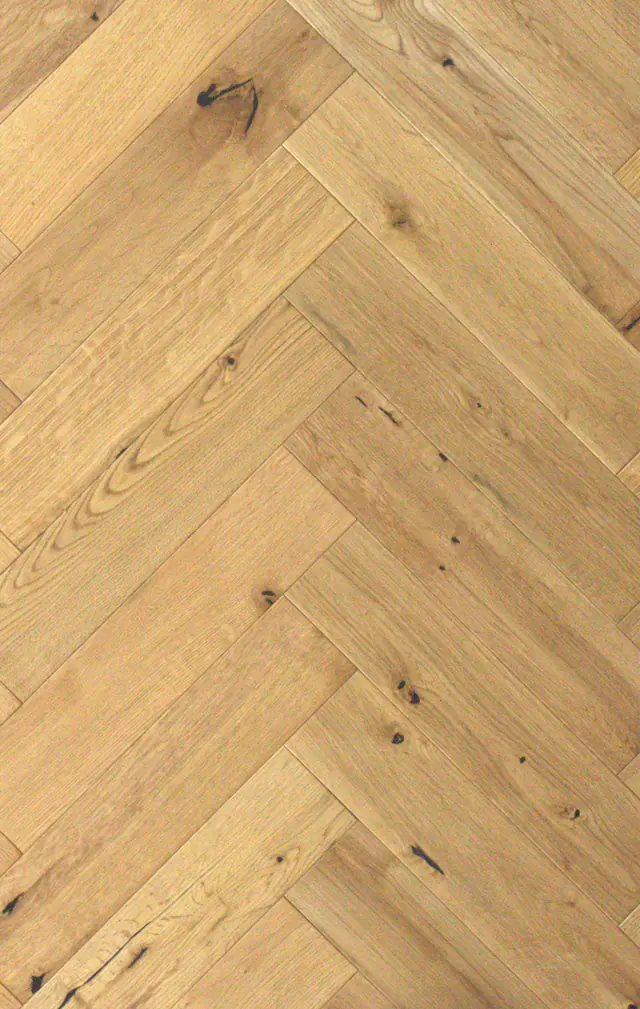
Herringbone is the most appropriate pattern — the most historically grounded and the one that makes the strongest first impression. Smoked or natural oak in 70×280mm. The datum line should run symmetrically with the hallway width. Glue-down if the subfloor is concrete; floating or secret-nail if original timber remains. Herringbone guide →

Open-Plan Kitchen-Diners

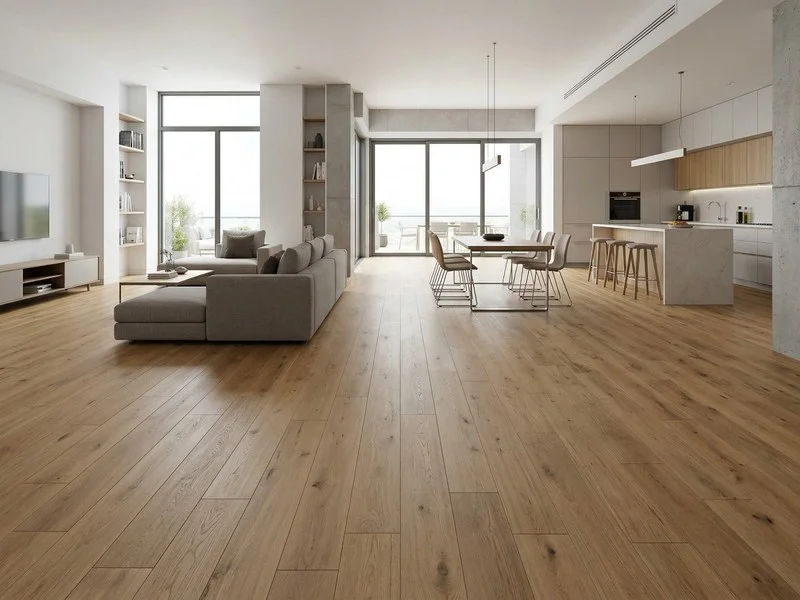
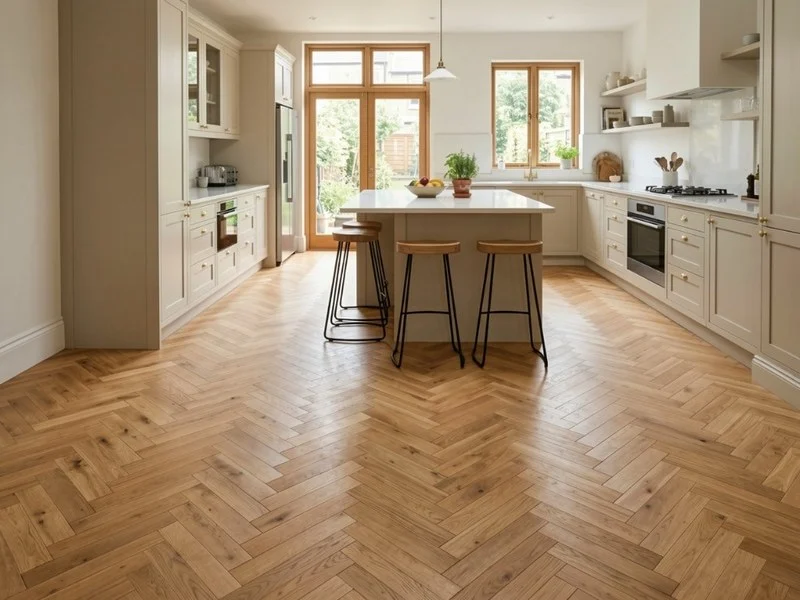
A continuous floor from hallway through kitchen — same board, no threshold strip — makes the property feel significantly larger and removes the visual break that used to define each room. Wide plank straight lay in natural or mid-tone oak. Lacquer in the kitchen zone for durability; oil elsewhere if preferred. Engineered oak →

Formal Reception Rooms

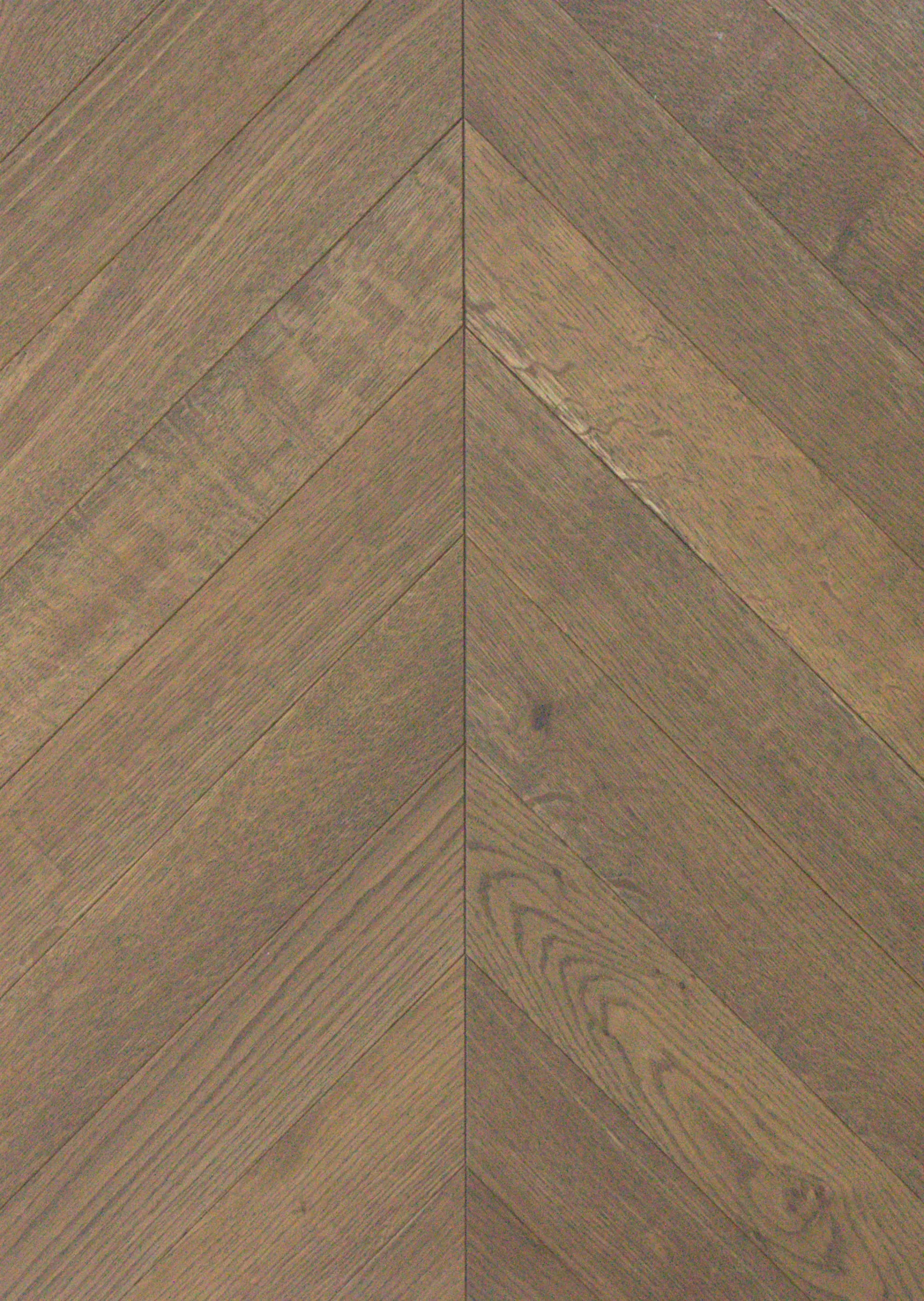
The room where the floor can carry the most presence. Herringbone or chevron in smoked or prime-grade oak. The datum line matters most here — set relative to the fireplace or the primary sightline from the door, not from the walls. On-site oil finish to the exact sheen level specified. Chelsea herringbone project →

Contemporary Apartments

Concrete subfloors and UFH are near-universal in London's new-build and converted apartment stock. Engineered oak glue-down is the only appropriate specification. Pale or natural tones work well in compact floorplates — they read as more spacious. All LIGNORA engineered oak is UFH compatible. UFH guide →

Properties with Original Boards

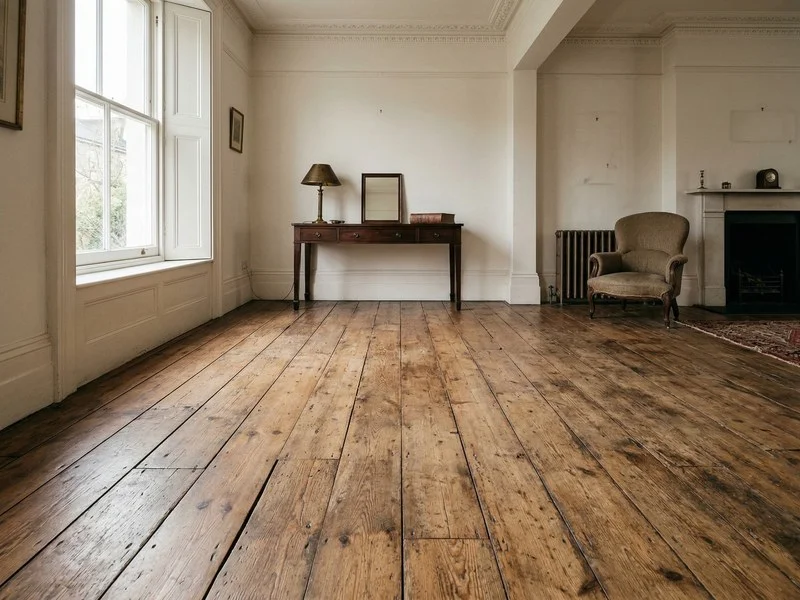
The most common mistake in period properties is replacing original boards before assessing what is there. Victorian pine that looks tired often sands back to a warm, characterful surface more appropriate to the property than any new installation. We assess original boards on every home visit. Victorian house guide →

Staircases and Landings

The floor and staircase need to be specified together, not independently. Oak treads that match the floor in species, grade and finish connect the two levels as a single material intention. Where the floor already exists, we assess it in person before specifying the treads — a catalogue match is rarely a visual match. Staircase service →
Further Reading
Articles from the
LIGNORA Archive
Related
Also From LIGNORA
"IDEAS"
Free Home Visit

Bring the Ideas
to Your Home.

We visit with the full sample range, show you patterns and tones in your actual light, and give honest guidance on what will work — before you commit to anything.

Book Free Home Visit →Our Installation Service