Two decisions that are often made quickly — the direction in which boards are laid and the finish applied to them — have more influence on how a floor looks and feels than almost any other factor. They determine how light moves across the surface, and light is what makes a floor alive.
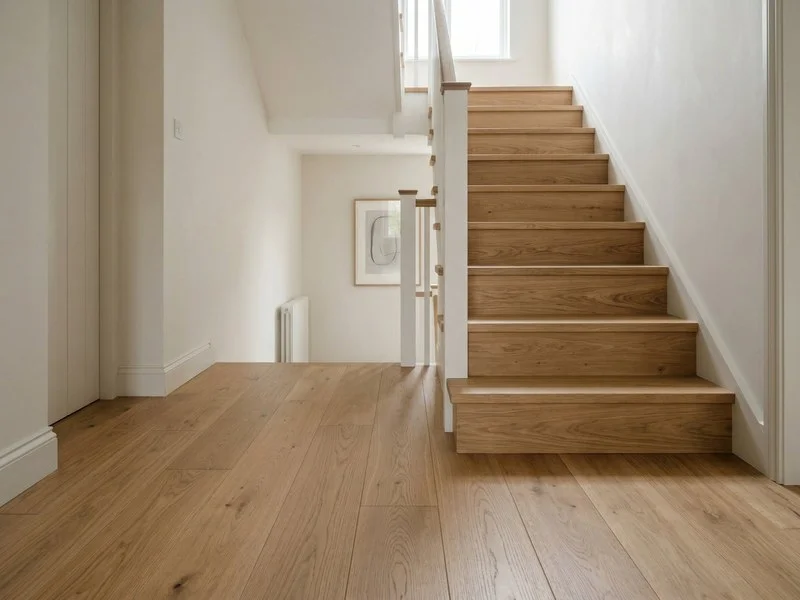
The conventional guidance is to lay boards parallel to the longest wall or the primary light source. This is sound advice, but it is a starting point rather than a rule. In a narrow room, laying boards across the short axis — perpendicular to the longest wall — visually widens the space. In a hallway, boards laid diagonally introduce movement and make the corridor feel more dynamic.
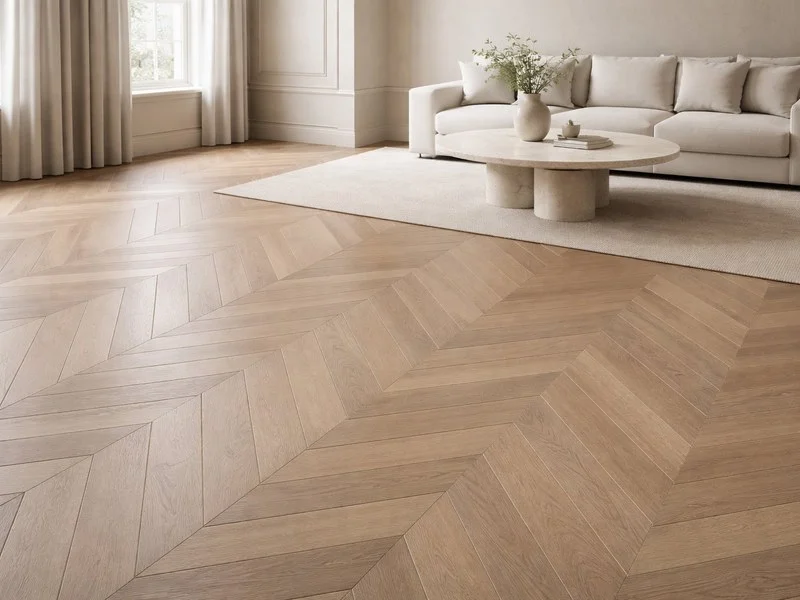
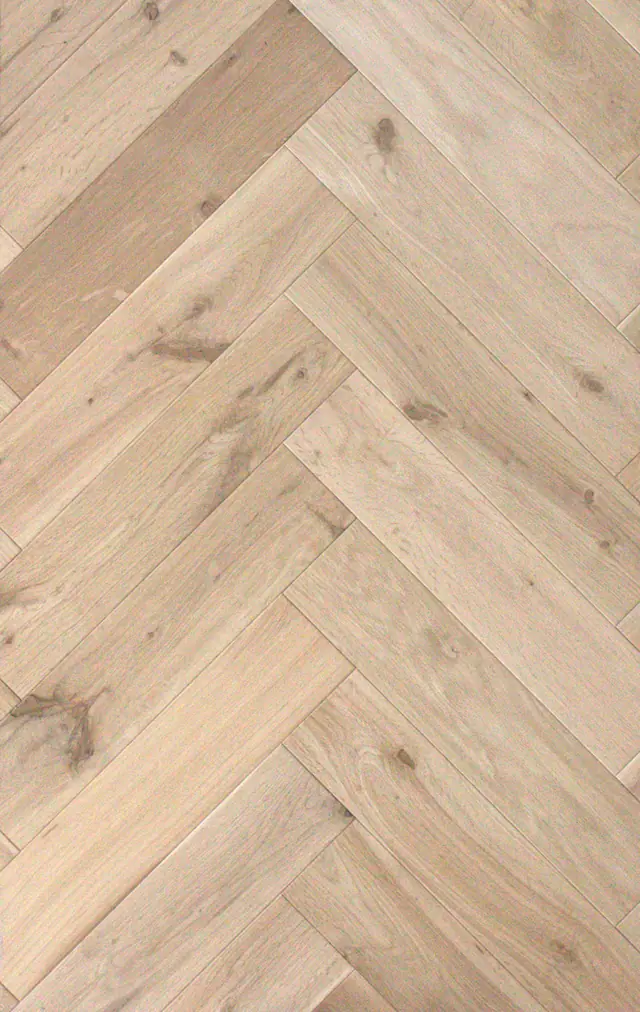
Herringbone and chevron patterns sidestep the laying-direction question entirely, which is one of the reasons they work so well in rooms where the geometry is complex or the light sources are multiple and varied.
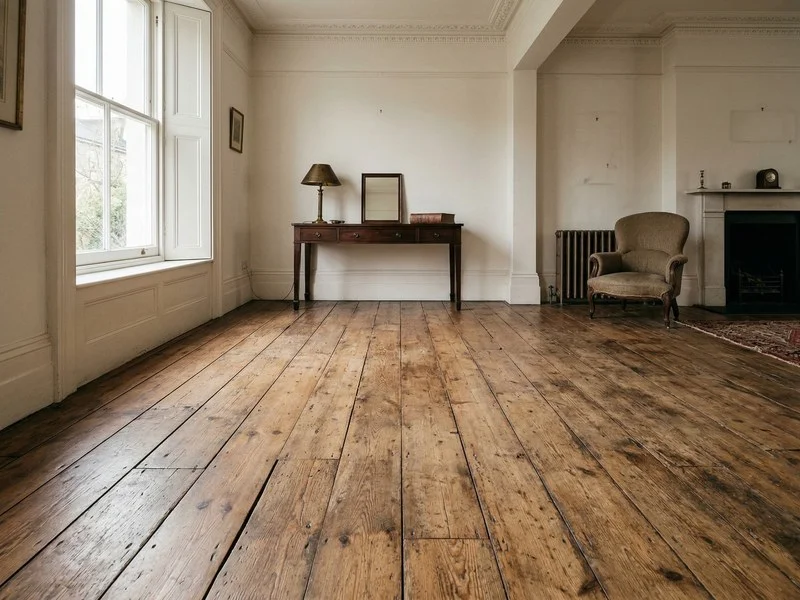
The grain pattern of an individual plank — straight, cathedral, wild — determines how the surface reflects and absorbs light. Straight-grained boards give a quiet, even surface. Cathedral grain introduces movement and variation. Wild grain with prominent figuring creates a surface that changes dramatically depending on the angle of view and the quality of the light.
A floor graded for uniformity — which many commercial ranges aim for — will look consistent but flat. A floor selected for natural variation will be more demanding to live with in some respects, but it will also be more interesting for decades.
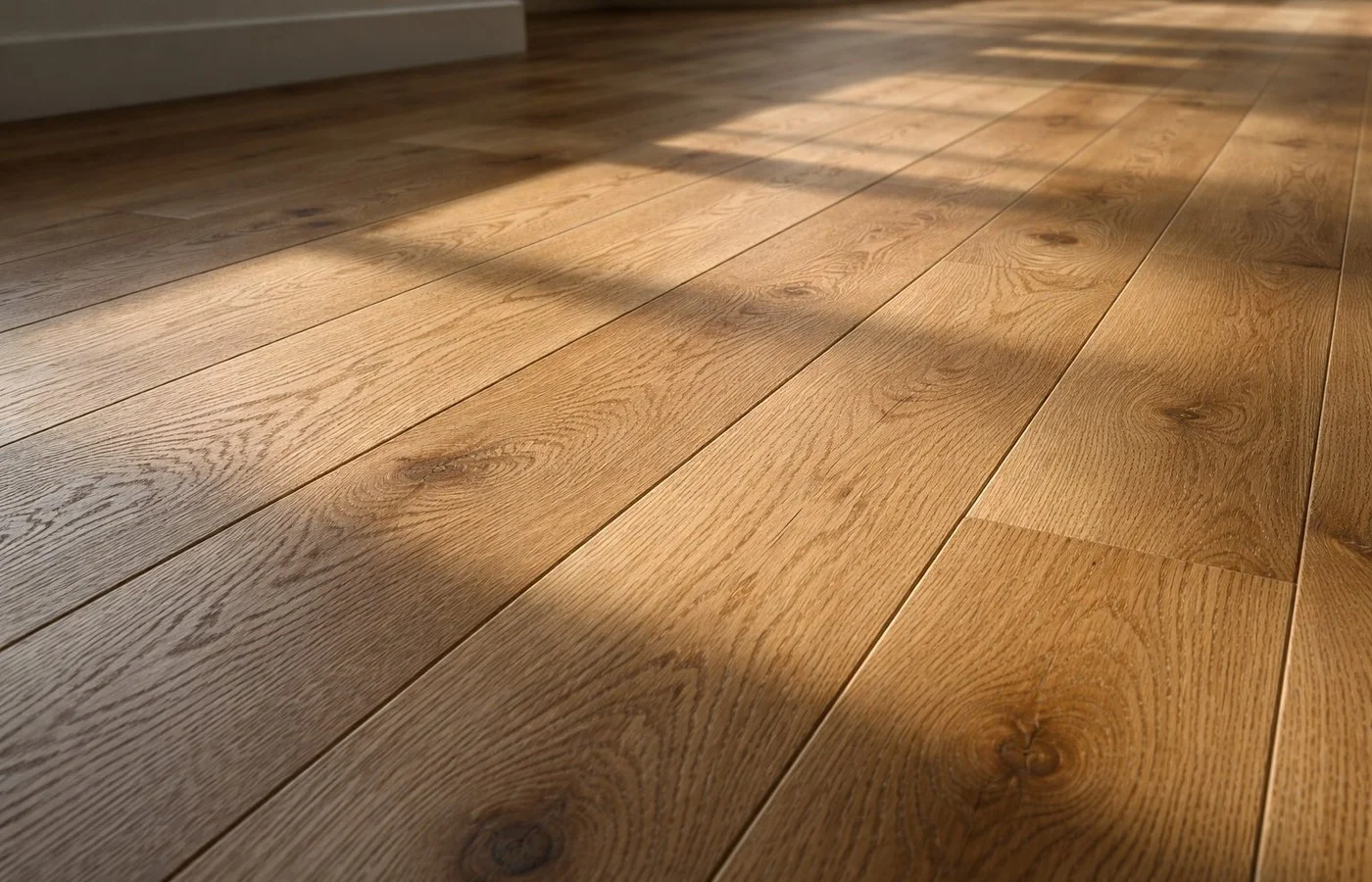
How light moves across a floor is determined as much by the finish as by the wood beneath it. A gloss lacquer reflects light from the surface — the floor reads as a mirror, and the grain is seen through that reflected layer. An oiled or hardwax-oiled finish absorbs into the wood and enhances the grain directly, giving a matte or satin surface where the texture of the wood is what catches the light rather than a coating over it.
In domestic interiors, the latter is almost always preferable. The floor feels more like wood and less like a photograph of wood.
The standard advice is to run boards parallel to the longest wall of the room. This is correct in most cases — it draws the eye down the length of the space and makes the room feel proportionate. But it is not always the right answer. In a narrow hallway that leads to a wider reception, running boards down the length of the hallway and turning them across the reception at a break point creates a spatial progression. In an open-plan space where light enters from one side only, running boards toward the light source eliminates the shadow-line effect that occurs when grain runs across the light.
For herringbone and chevron, board direction is replaced by pattern orientation — the angle at which the V-pattern points. In most installations the V points toward the primary entry point of the room, creating a welcoming directional quality. In larger rooms where there is no dominant entry point, the V can point toward a fireplace or central feature instead.
We discuss board direction as part of every home visit — it is one of the decisions that affects the character of the room most, and one of the decisions that is hardest to change once the floor is down.
A few floors from the range. Each has its own page with the full specification, a spec sheet and a free sample posted to you.




We would rather understand your room before recommending anything. Order free samples, or send us a photo and tell us about it.