The decision to run the same floor throughout an entire home — every room, every level, without change of material or tone — is not always the right one. But when it is right, it creates a spatial quality that is very difficult to achieve any other way: a sense that the house is a single connected thing rather than a collection of rooms.
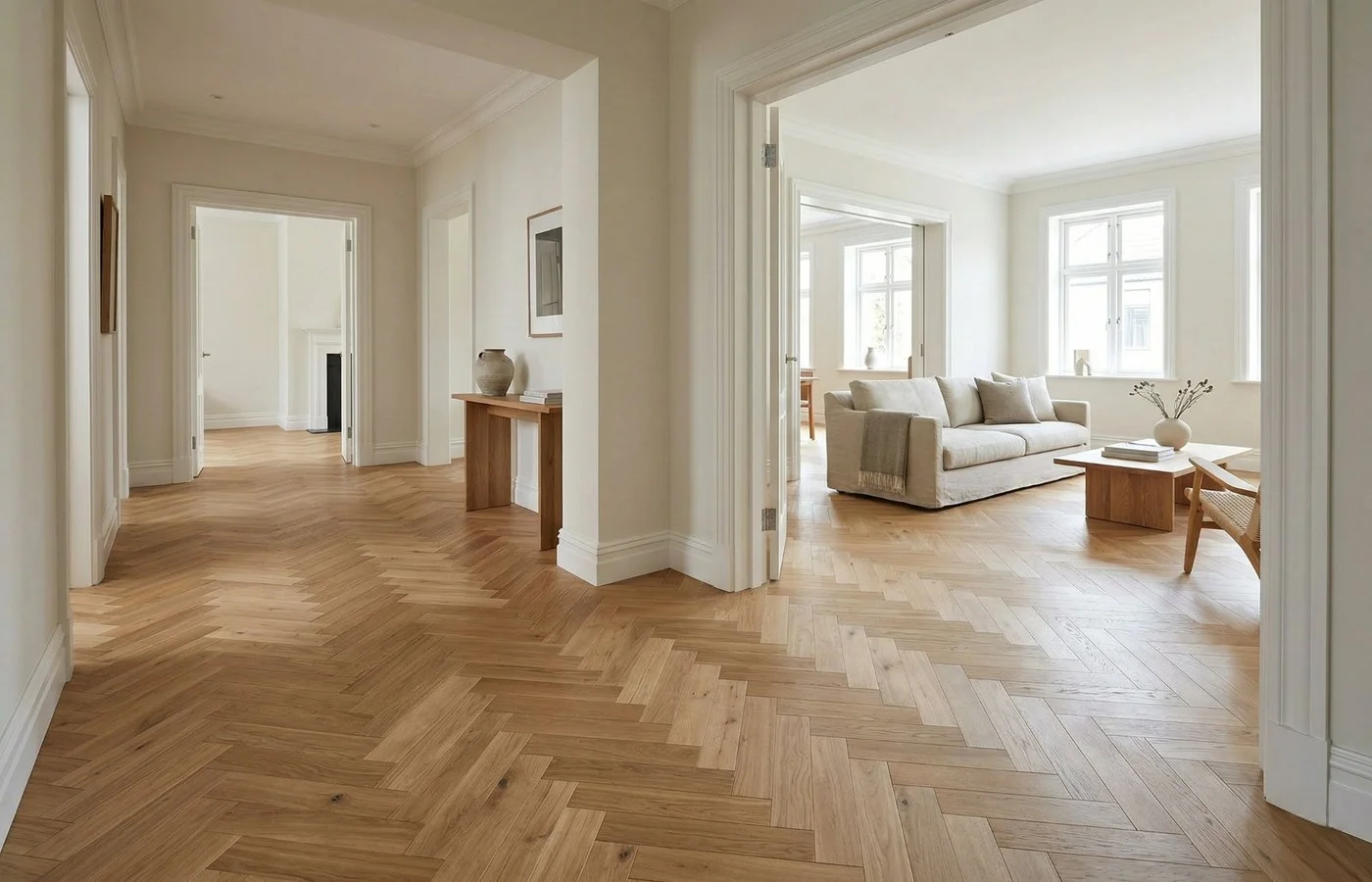
When the eye is not interrupted by a change of flooring material at a threshold, the brain reads the two spaces as one continuous volume. This makes rooms feel larger, hallways feel more generous, and the transition between spaces feel more considered. In open-plan arrangements — which now dominate new build and extension design in London — this is an obvious choice. But it works equally well in houses where the rooms remain distinct, because the floor becomes the thread that connects them.
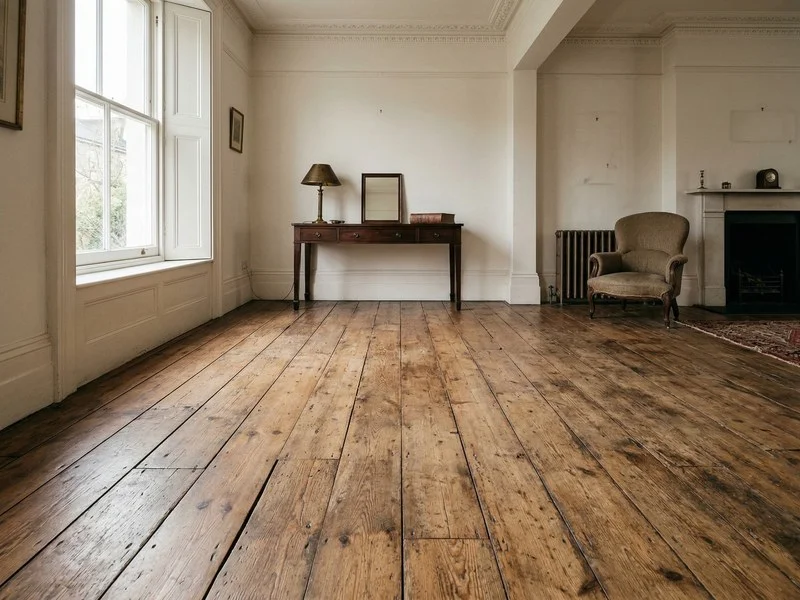
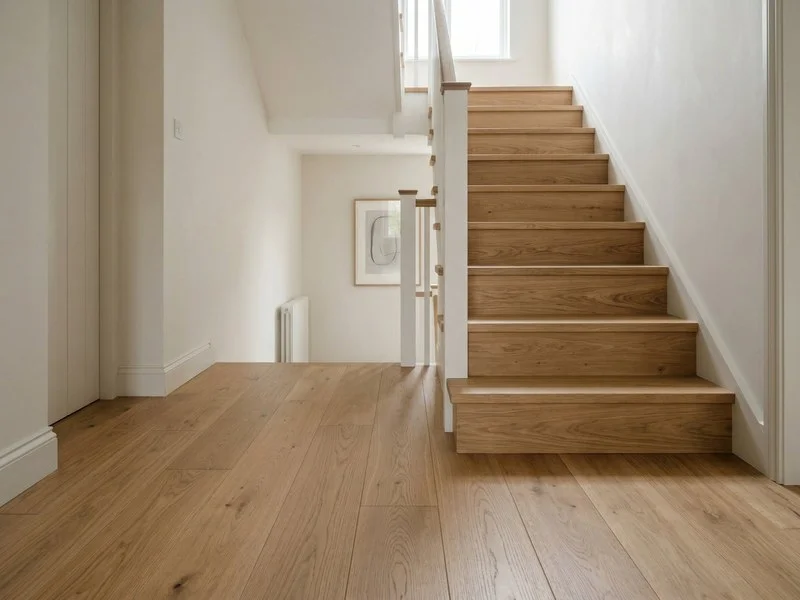
In a four-storey Victorian terrace where the same engineered oak runs from the basement kitchen up through the ground floor reception rooms, up the staircase, and into the first-floor bedrooms, the house tells a coherent visual story. The floor is the spine of it.
Beyond aesthetics, running one floor throughout a property simplifies decisions considerably. There are no questions about how materials meet at thresholds. No transition strips to plan. No discussions about whether the hallway should be different from the living room. The decisions are made once, and they compound in effect across the whole house.
It also simplifies future maintenance: you are matching one material, not three.
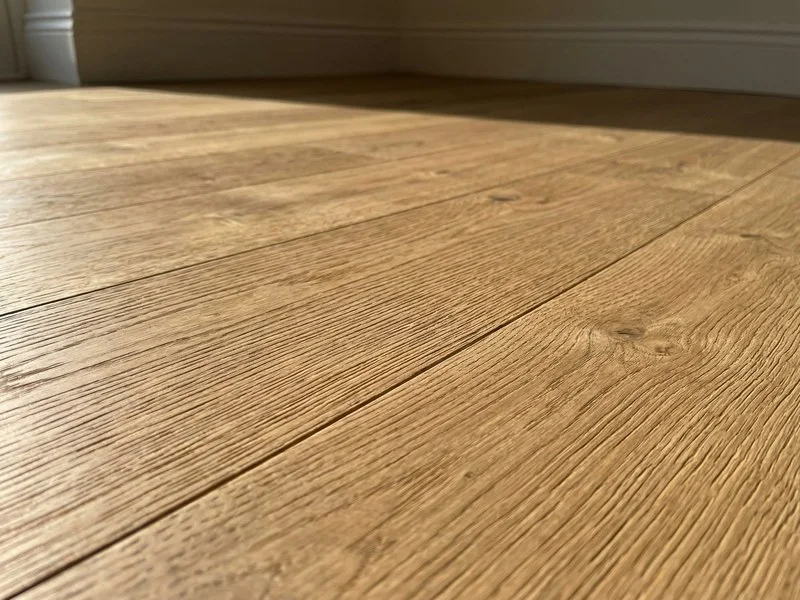
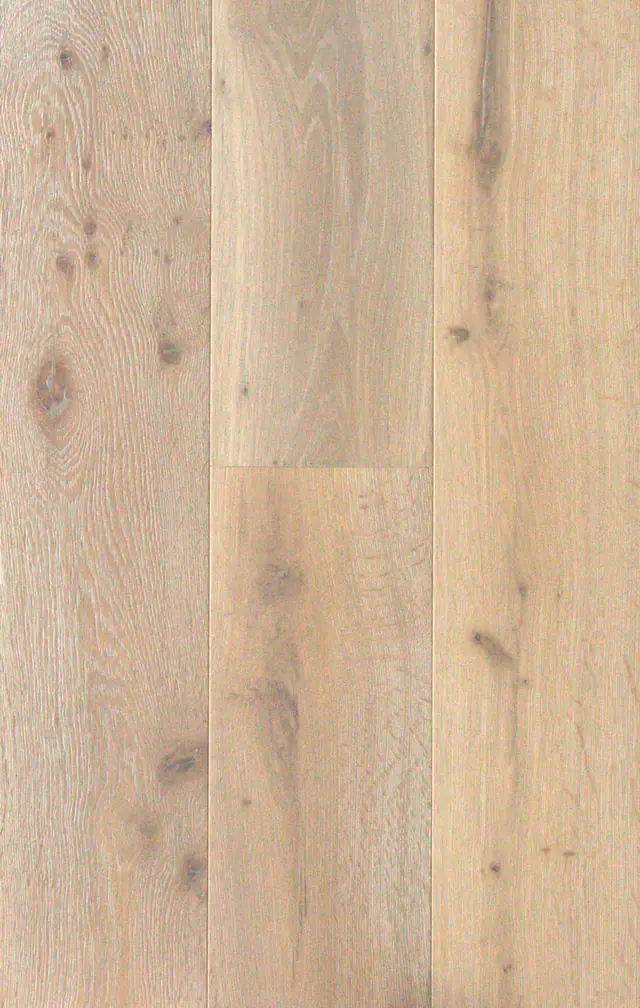
Continuity works best with floors that have enough character to be interesting across different room types — a lightly smoked oak with visible grain and natural variation, for example, reads differently in a bright south-facing living room than it does in a north-facing bedroom, and that difference is part of its richness. A very uniform, heavily processed floor in a single tone can become monotonous across an entire house.
Bathrooms and utility spaces are generally the right place to break the floor — not because continuity does not work there, but because the practical demands of those spaces often call for a different solution.
Running a single floor continuously from front door through to rear extension requires more planning than a single-room installation. The subfloor is rarely the same throughout — Victorian terraces typically have timber joists at the front of the house and a concrete screed in the rear kitchen extension. Two different subfloors require two different fixing methods but must produce a consistent result.
Where the specification changes at the subfloor boundary — from secret-nail on timber to glue-down on concrete — the visual result should not. We select product, thickness, and grain grade that will be consistent in appearance regardless of which fixing method is used, and the finish is applied across both areas in the same pass.
For staircase and first-floor continuity, see our staircase and joinery service — we specify the full material scheme from ground floor through to the first-floor landing as a single brief.
A few floors from the range. Each has its own page with the full specification, a spec sheet and a free sample posted to you.


We would rather understand your room before recommending anything. Order free samples, or send us a photo and tell us about it.