There is a persistent anxiety among homeowners choosing dark floors: will the room feel smaller? Darker? Heavier? It is an understandable hesitation — but one that misunderstands how dark wood actually behaves in a well-considered interior.
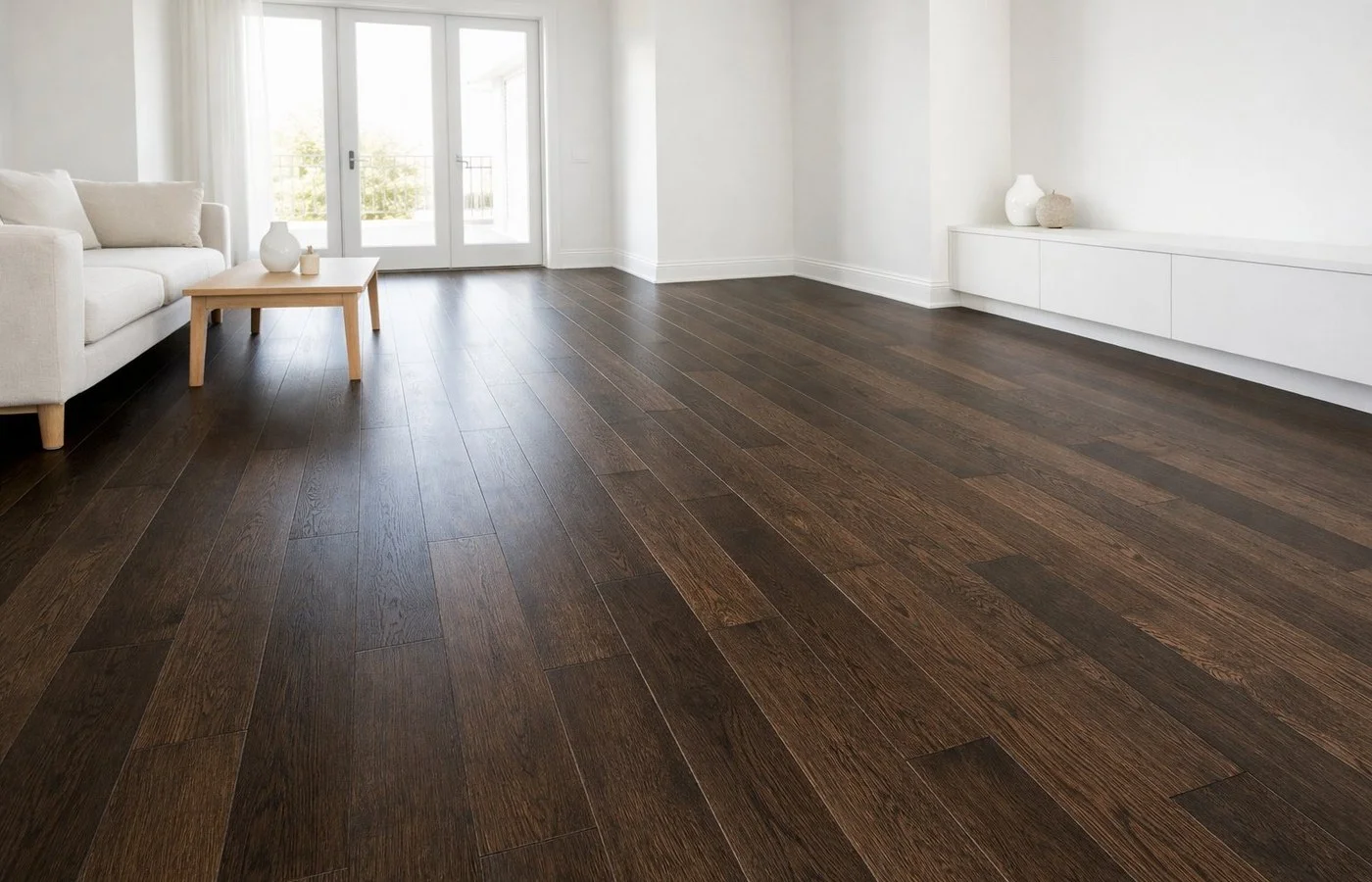
The tension between a deep, smoked oak floor and walls washed in off-white, pale linen, or cool stone does something that matched tones cannot: it creates visual depth. The room appears to have layers. The floor grounds the space rather than blending into it, and the pale walls seem to lift in response.
This is the same principle used in fine furniture and cabinet making — the interplay of light and dark surfaces makes each more vivid. A pale room on pale floors can feel flat. The same room on a dark floor feels considered.
Not all dark floors are equal. A floor that reads as simply brown or muddy will fight against pale walls rather than complement them. The tones to look for in a dark oak are those with grey or green undertones — smoked, fumed, or brushed finishes that sit in the charcoal-warm zone rather than the chocolate-warm zone.
Wire-brushed smoked oak is particularly effective: the brushing opens the grain and gives the surface a texture that catches light differently across the day, so the floor never reads as a flat, heavy block of colour.
The most successful pairings for dark oak floors in pale interiors tend to share one quality: they have warmth without saturation. Off-whites with a yellow or green base rather than a blue one. Natural linens and undyed wools. Raw plaster, limewash, or matte emulsion rather than gloss. Aged brass and unlacquered bronze rather than polished chrome.
The floor provides the drama. Everything else should be quiet.
Dark oak in a pale interior is at its strongest in rooms with good natural light and a degree of visual complexity — open-plan kitchen-diners, double-reception rooms, entrance halls with height. In smaller, lower rooms, the same combination can still work, but the key is keeping the ceiling and upper walls as light as possible, and ensuring the floor tone has enough warmth to prevent the room feeling cold.
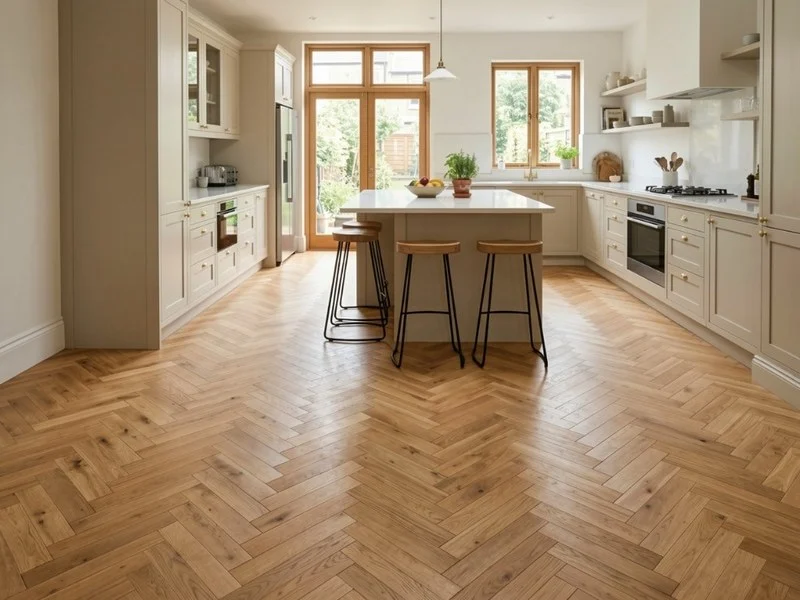
A narrow hallway in a Victorian terrace with smoked oak herringbone and white-painted panelling is one of the most quietly satisfying combinations in domestic interiors. The floor earns its place.
Dark oak floors are almost always specified in smoked rather than stained finishes. Smoking — a process applied to the timber before any finish coat — gives the wood a depth of colour that penetrates the grain rather than sitting on the surface. A stained dark floor looks dark. A smoked floor looks aged, complex, and specific in a way that stain cannot replicate.
The finish over a smoked floor is almost always hardwax oil rather than lacquer. Lacquer adds a film that flattens the smoked character of the wood — oil brings it out. The sheen level matters: satin rather than matt for smoked oak in pale interiors, as the slight reflectivity creates the light-catching quality that makes the contrast with pale walls effective.
Always assess a smoked oak sample in the actual room, at different times of day. Smoked oak reads differently under north light versus south light, and the palette of the room changes what the floor appears to be doing. A sample that looks right in a showroom may look different in a west-facing Chelsea kitchen at 4pm in November. We bring samples to every home visit for exactly this reason.
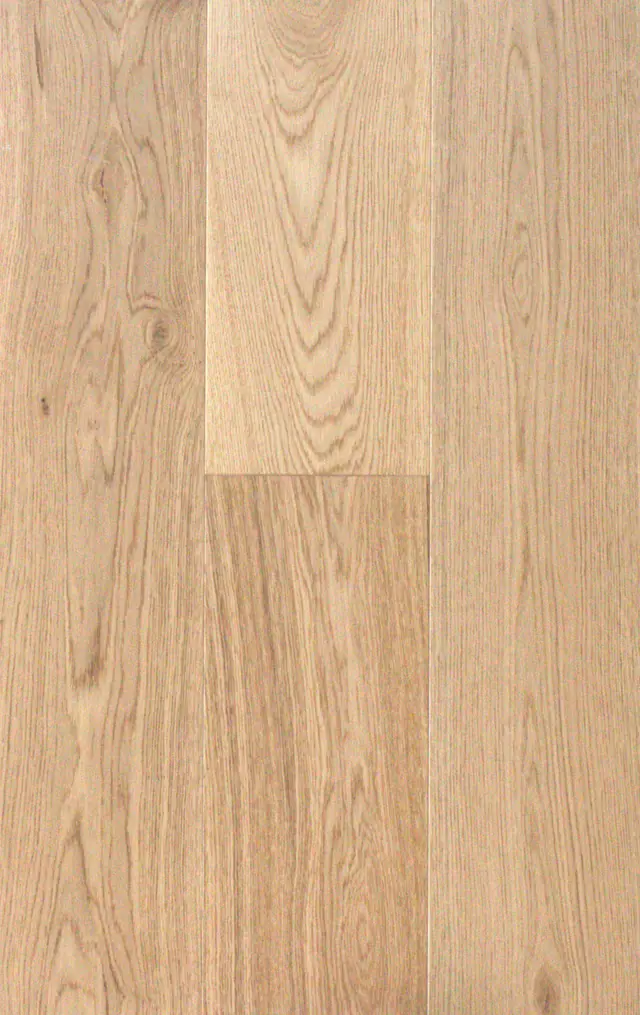
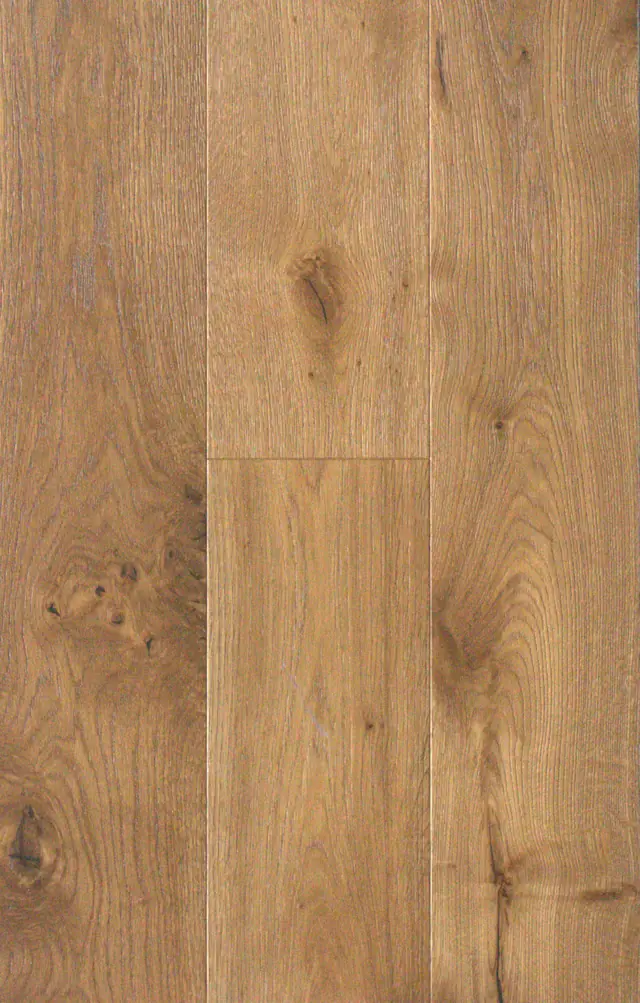
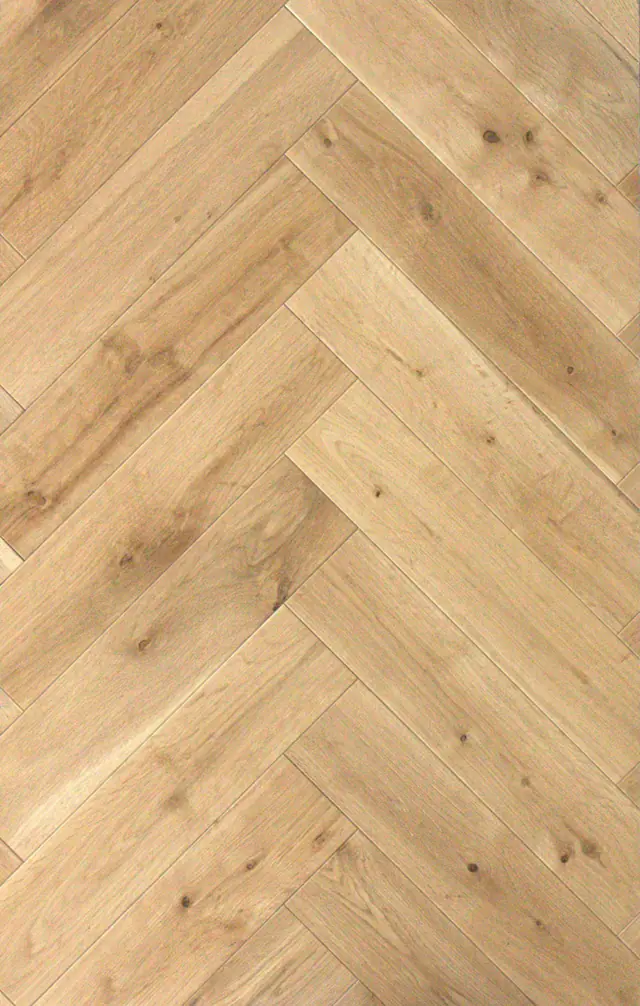
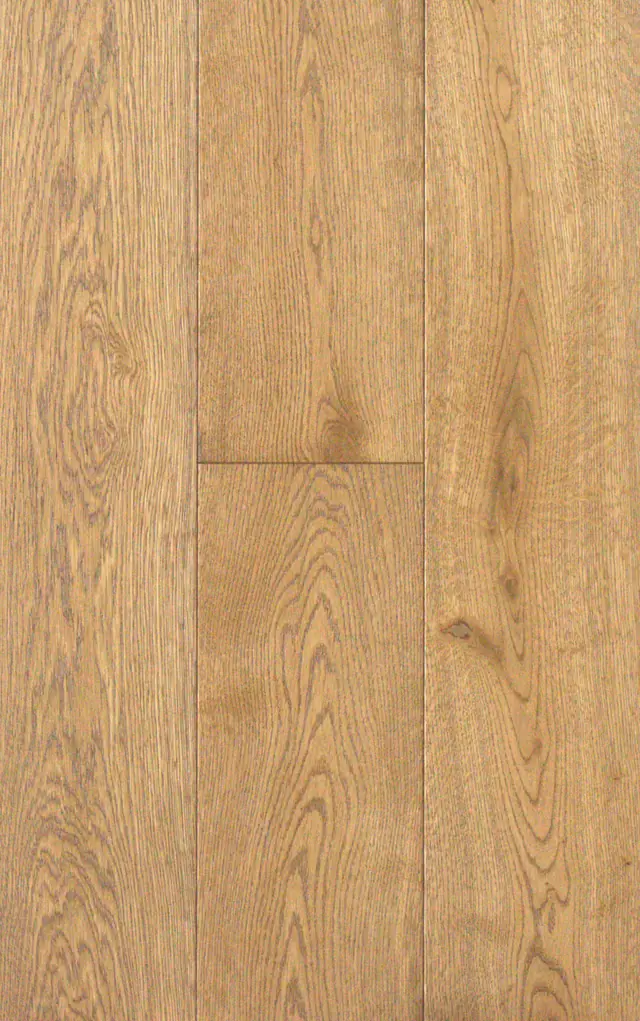
A few floors from the range. Each has its own page with the full specification, a spec sheet and a free sample posted to you.


We would rather understand your room before recommending anything. Order free samples, or send us a photo and tell us about it.