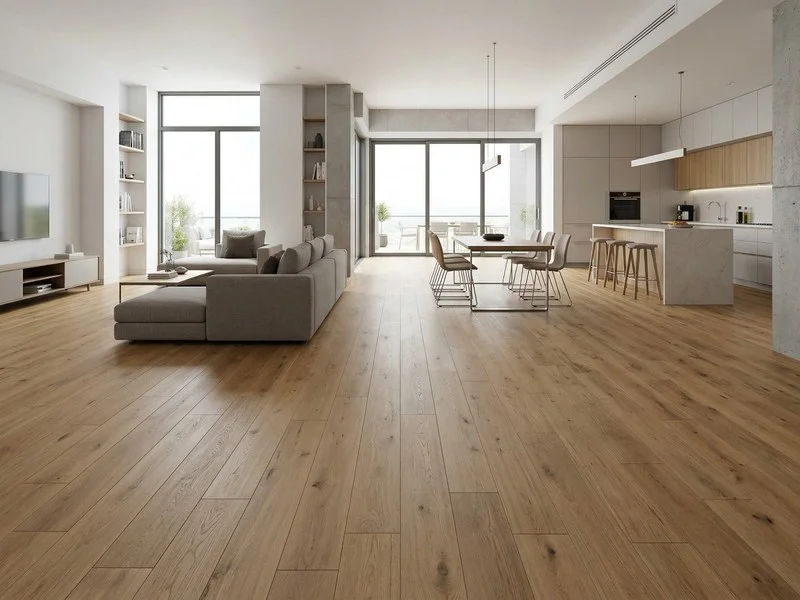
There is a quality of light in Scandinavian interiors that has influenced British domestic design more profoundly than almost any other aesthetic movement of the past thirty years. It is not the furniture (though that has travelled well). It is the understanding of how to make a room feel luminous, calm, and warm simultaneously — and the floor is central to that.
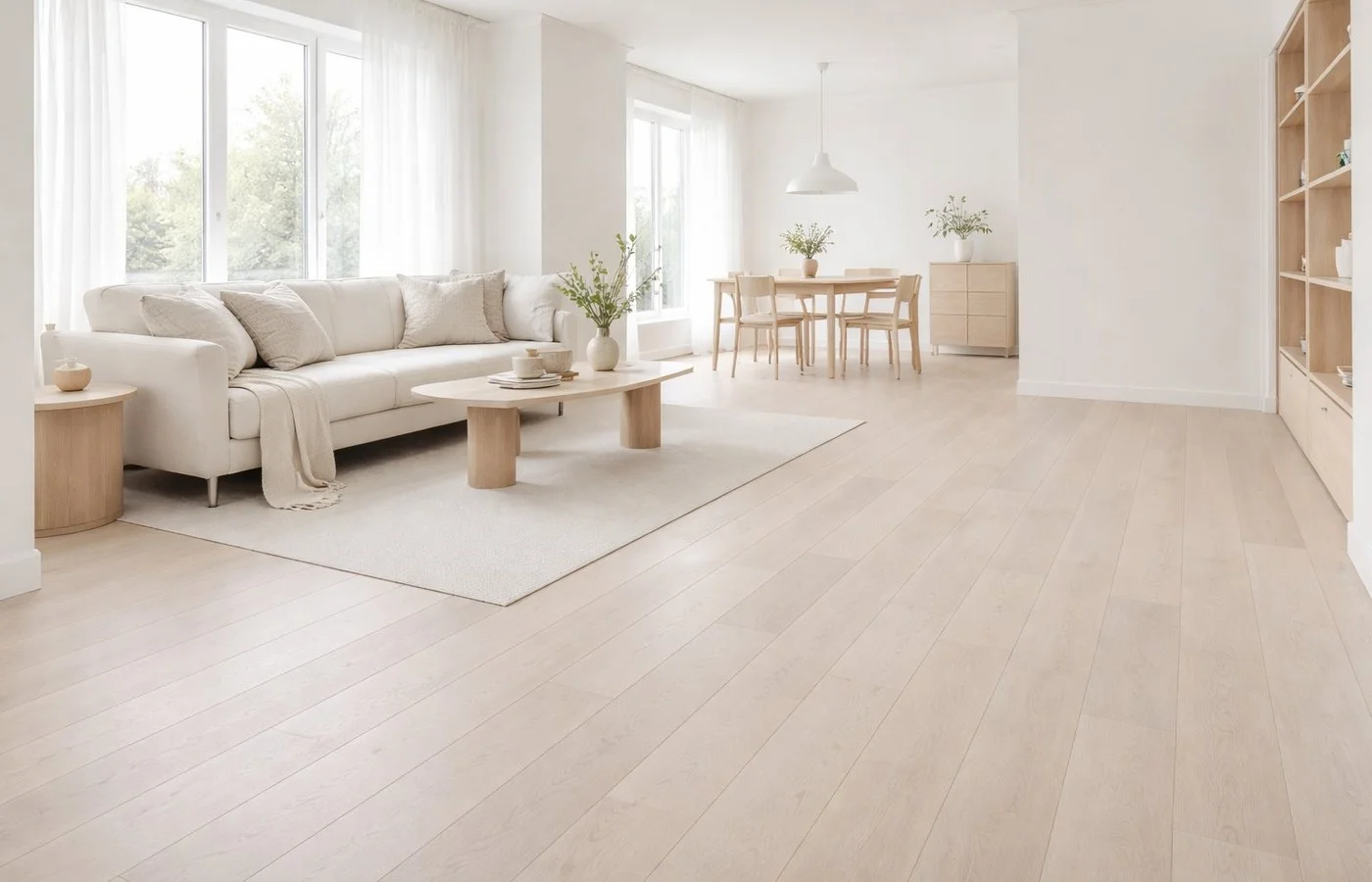
In Nordic interiors, pale oak — lightly oiled, minimally treated, close to its natural state — functions as a neutral that is warmer than stone and cooler than honey-toned hardwood. It does not dominate. It does not call attention to itself. It creates a surface that light moves across rather than stopping at, and it provides a foundation that allows walls, textiles, and objects to breathe.
This is the opposite of the floor as statement piece. The pale oak floor says: everything else in this room matters. And because it says that, everything else in the room can afford to be quieter.
The palette that works most consistently with pale, lightly oiled oak is built from materials rather than colours. Unbleached linen and undyed wool for soft furnishings. Raw plaster, lime render, or matte emulsion for walls. Unsealed stone — particularly pale limestone, travertine, or honed marble — for worktops and splashbacks. Blackened steel, aged iron, and natural rattan for accents.
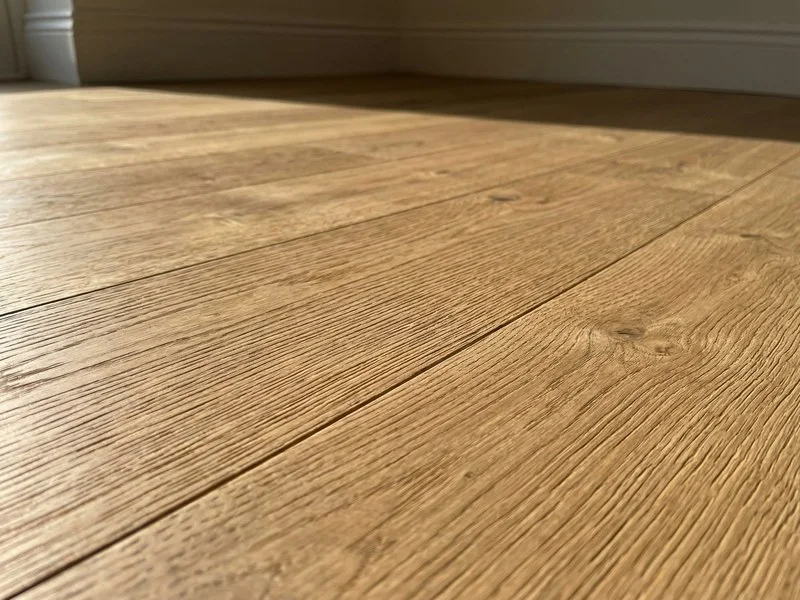
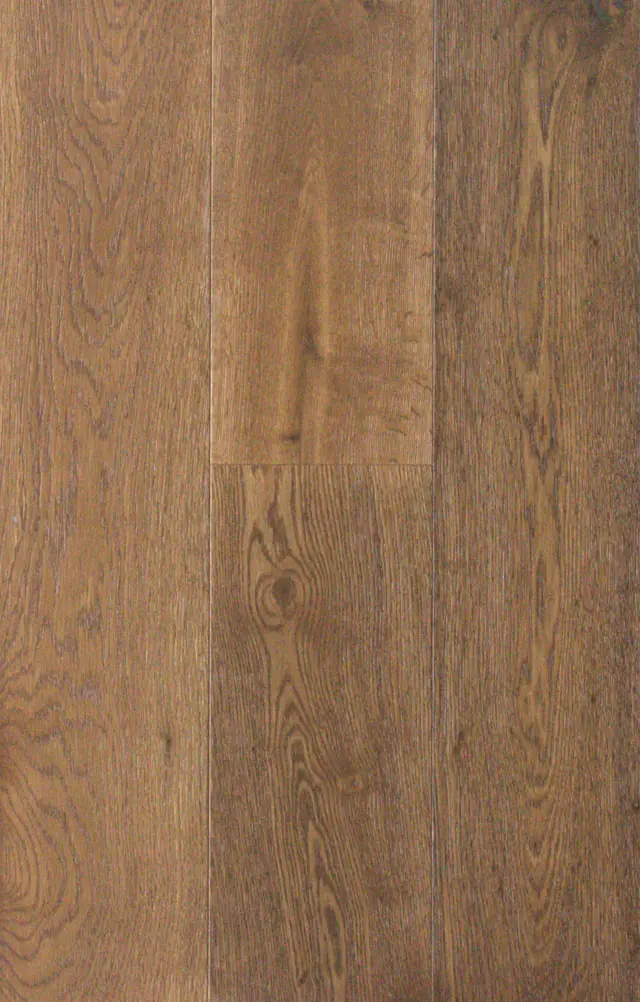
What these materials share is imperfection. They all have surface variation, texture, natural inconsistency. Pale oak belongs in this company. It is not a perfect surface — the grain is visible, the knots are present, the colour shifts slightly plank to plank. That is not a flaw. It is the point.
The Nordic aesthetic does not always translate directly into British homes, which tend to have lower ceilings, smaller windows, and more architectural ornament. But the pale oak floor does translate — and often improves the British context rather than feeling out of place in it.
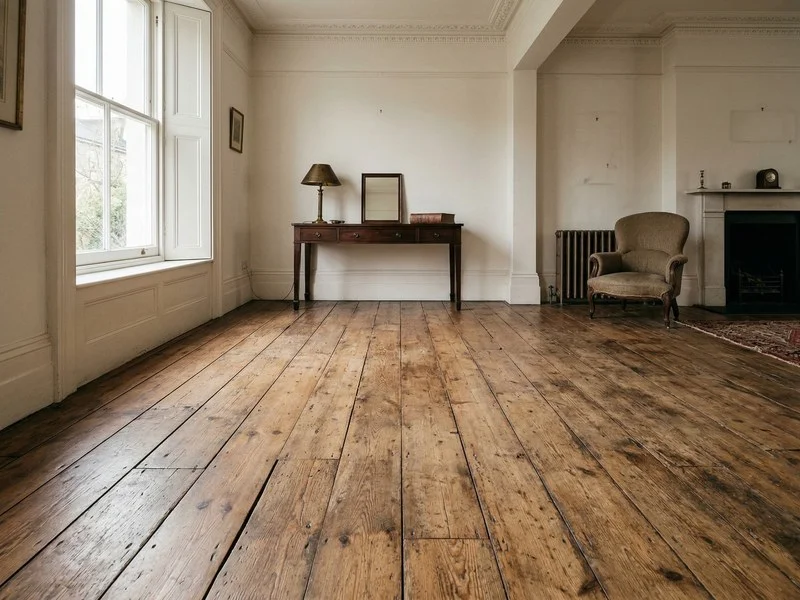
In a Victorian terraced house with original cornicing and sash windows, a pale engineered oak floor in a wide plank flooring or long-board format bridges the period architecture and contemporary living without the floor making any argument of its own. It is an unusually forgiving choice.
A pale oak floor makes a room feel larger and airier — the light, close-grained surface reflects light upward rather than absorbing it. This is particularly effective in London properties where the ground floor receives limited natural light: a pale floor can do more for the perceived brightness of a basement or north-facing kitchen than any amount of artificial lighting.
The trade-off is visibility of dust and fine debris — pale floors show what dark floors hide. This is not a reason to avoid pale oak, but it is a practical reality worth knowing. Regular sweeping (not mopping) is the correct maintenance approach. A hardwax oil finish on pale oak makes spot cleaning easier than lacquer.
Pale oak in herringbone pattern reads as more formal and considered than pale oak in straight-lay — the geometric regularity of the herringbone gives the pattern a visible structure that suits formal rooms and hallways. In open-plan spaces, straight-lay pale oak is quieter and lets the room's other elements lead.
A few floors from the range. Each has its own page with the full specification, a spec sheet and a free sample posted to you.


We would rather understand your room before recommending anything. Order free samples, or send us a photo and tell us about it.