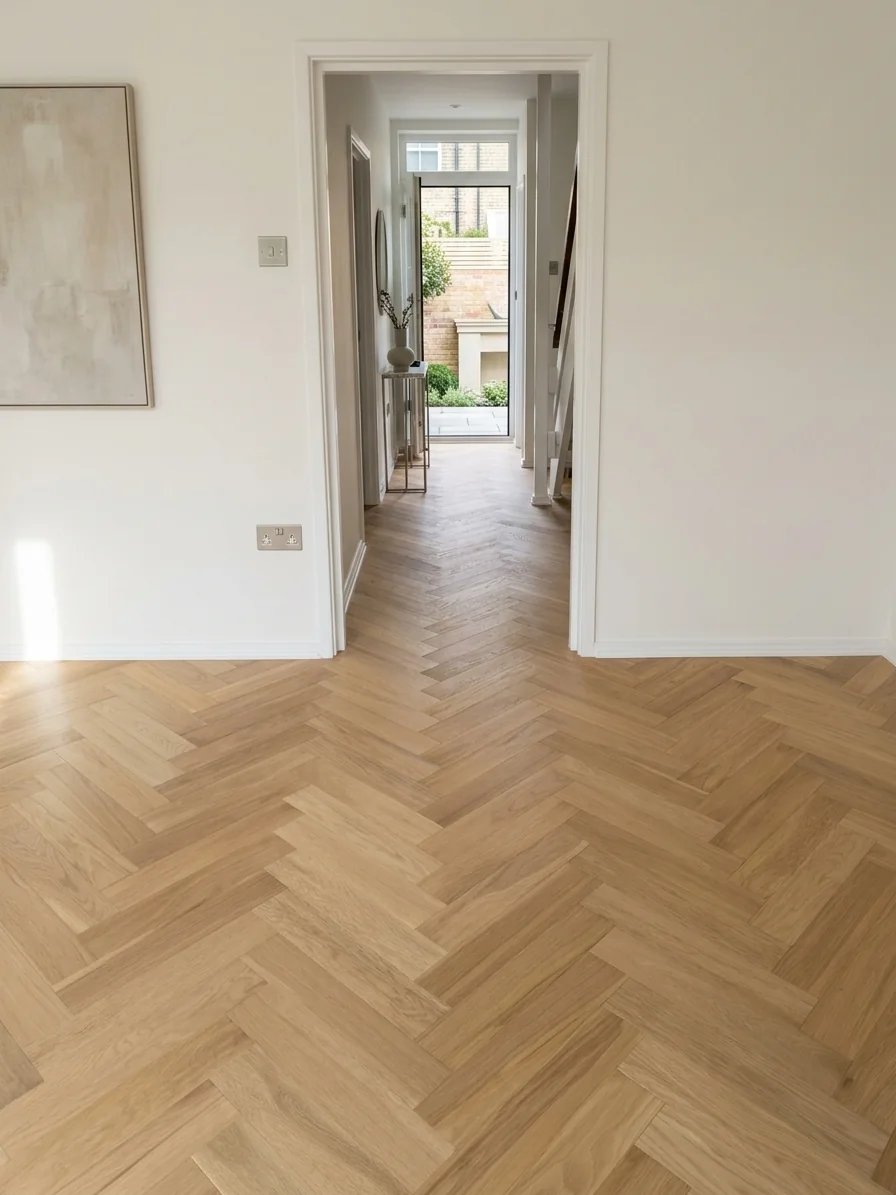
The single-material floor is the element that unifies an open plan space. It removes visual breaks, makes the room read as one, and creates the sense of scale that open plan architecture is designed to achieve. Getting it right — through old and new, across subfloor transitions, in the right format for the space — is what we do every week.
The most common open plan flooring conversation we have is about continuity — running one floor from the existing house into a new rear extension, or matching new flooring in a knocked-through ground floor to what is already in the adjacent room.
An exact match to existing flooring is not always achievable. Products change, batches vary, and the existing floor has aged. We bring sample stock to the property and assess under your actual natural light — not in a showroom under artificial lighting — because the light is the variable that determines whether a match reads as a match or reads as two different floors.
Where a match is not achievable, the most resolved solution is often to relay both rooms in new matching product — creating a genuinely continuous floor rather than a floor with a visible join. This costs more in material but less in visual compromise. We present both options and let the client decide.
Where an adjacent floor must be preserved, we advise on the closest available match and, where the differential in age and tone is significant, on whether a threshold detail is more honest than an attempted match that draws attention to the difference.
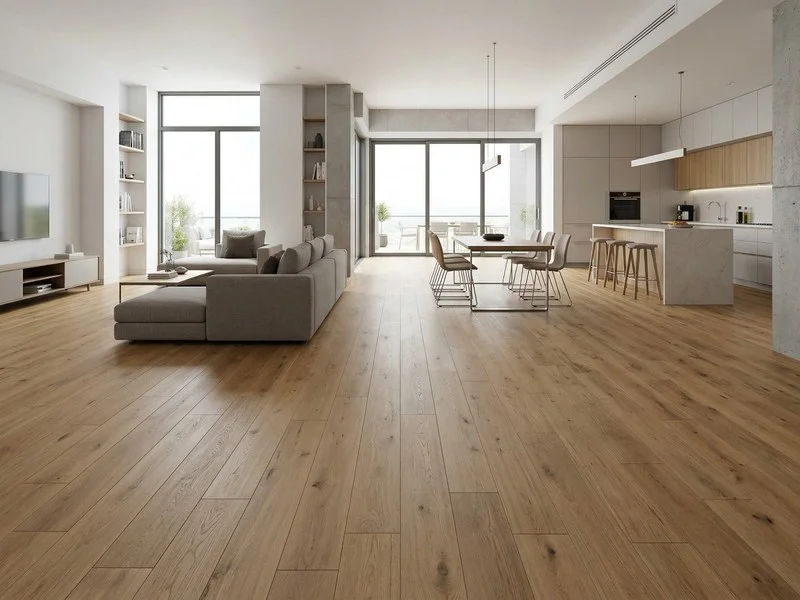
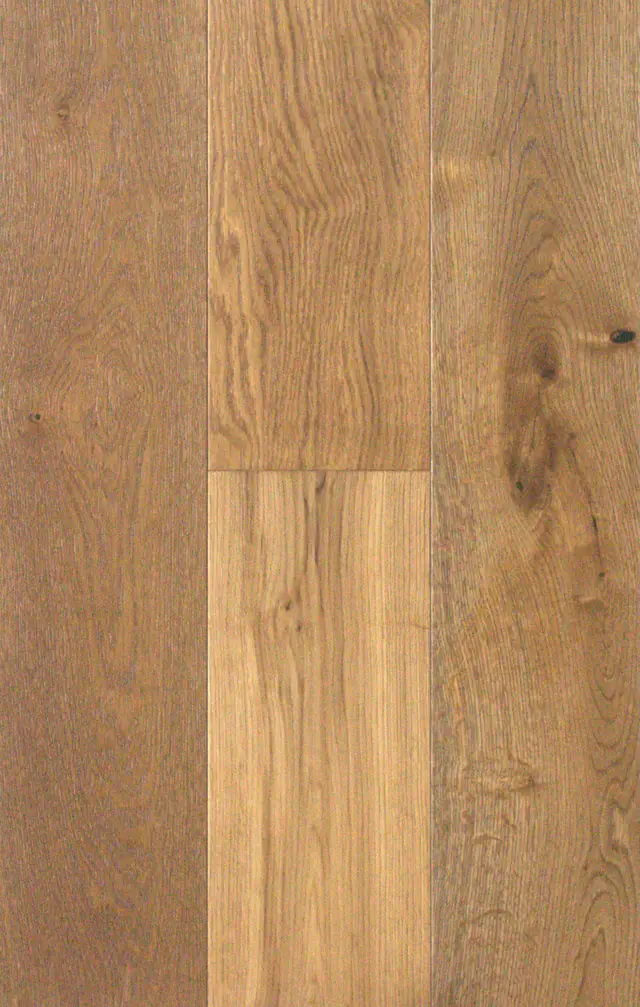
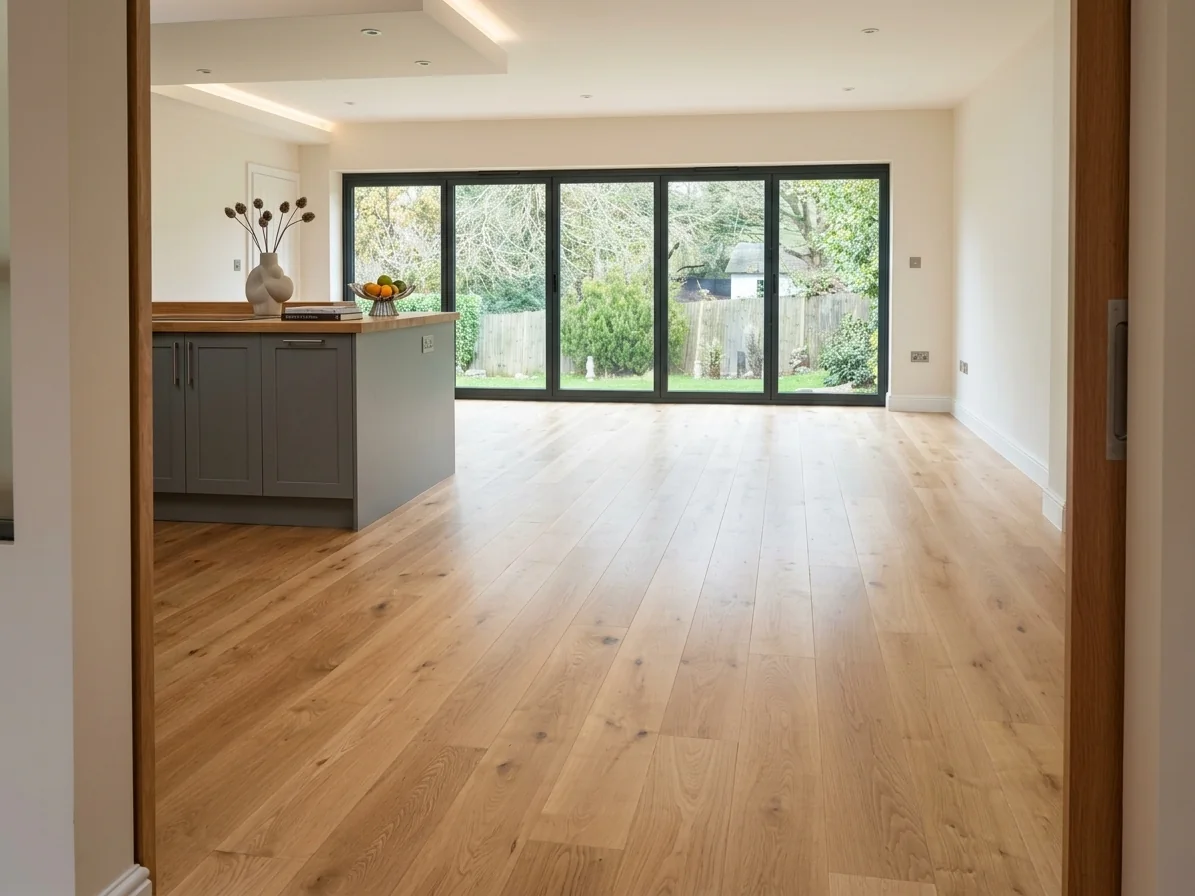
Wide boards suit large open plan spaces. A 90mm board in a 50–60m² kitchen-diner has more joints than the room needs — the pattern becomes the visual subject rather than the background. At 190mm or 220mm, the floor settles and the room reads as architecture, not as a collection of boards. We advise on width based on the actual area and ceiling height.
Wide Plank Guide →In an open plan kitchen-diner-living room, running boards lengthways — along the main axis of the room from front to back — is almost always the correct choice. It draws the eye along the space, makes the room feel deeper, and the boards cross the threshold between zones naturally rather than creating a visual barrier. Running boards across the room can feel like it divides the space into sections.
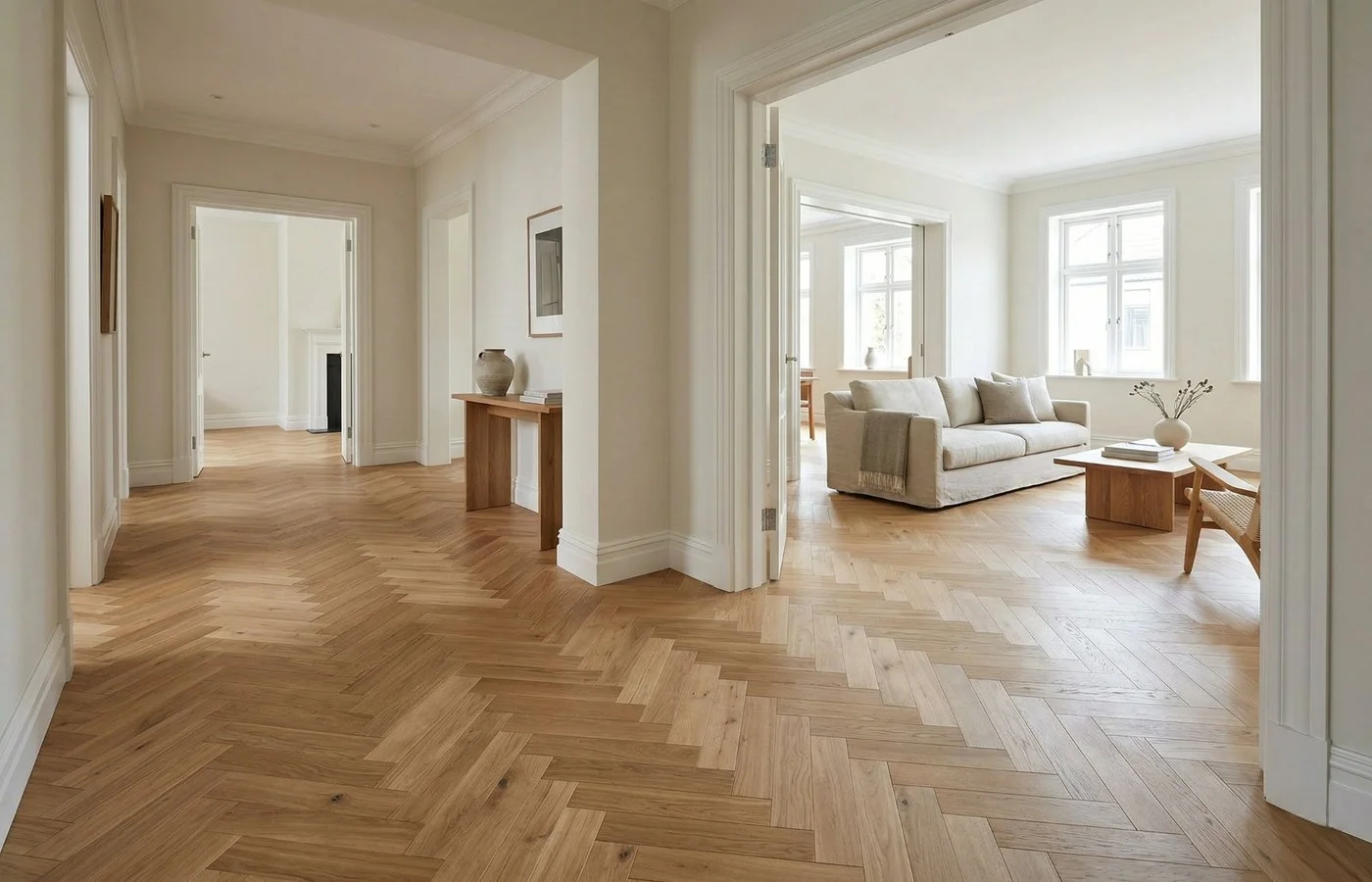
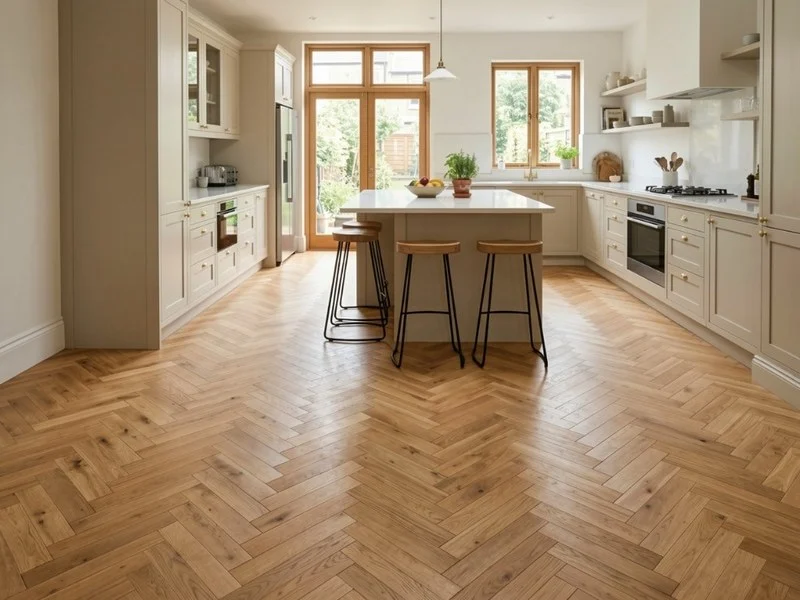
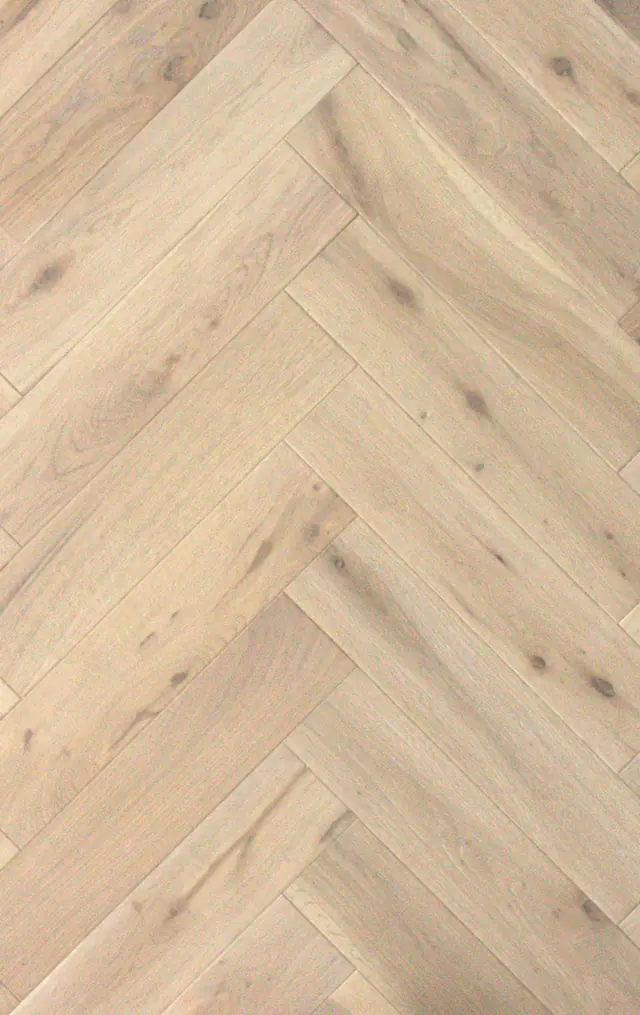
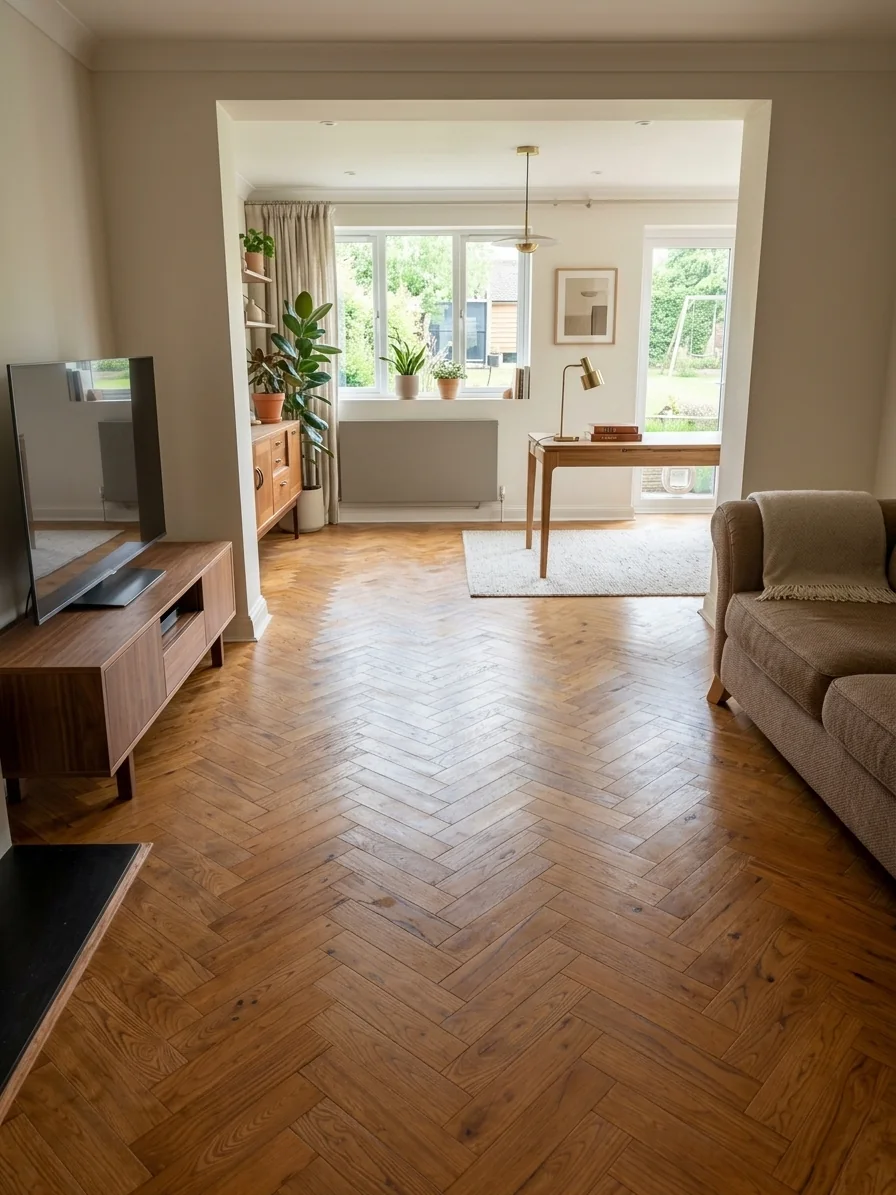
Large herringbone — 143×600mm or 125×600mm blocks — works well in open plan spaces where the pattern is a deliberate design choice. The scale of the block means the pattern reads as a floor treatment rather than a texture, and the diagonal axis creates a dynamic that straight lay cannot achieve. It costs more and requires glue-down on a flat subfloor, but the visual result is distinctive.
Herringbone Flooring →The most technically demanding element of a house-into-extension floor installation is the transition at the structural boundary — where the original suspended timber floor (typically 50–100mm above ground level) meets the new concrete extension slab (typically at or close to ground level).
The level differential must be managed. Options include: a stepped transition with a threshold trim at the join, installing a new timber deck over the existing joists in the original area to bring levels closer, or using a self-levelling compound to raise the extension slab to the required height. The correct approach depends on the actual level difference, the joist height in the original area, and the total depth budget available.
We assess and plan the structural transition at survey stage — not on installation day. Every level change, every junction, and every threshold is detailed in the installation plan before a single board is cut.
Suspended timber subfloor — we check for movement, bounce, and structural integrity. Any boards requiring attention are addressed before the overlay. Engineered oak is installed over the existing floor deck with appropriate fixings or adhesive.
Concrete slab — we test moisture, confirm UFH commissioning is complete, and prepare the surface to the required flatness tolerance. Engineered oak glued down with the correct adhesive for the substrate and heating system.
The join between old and new is planned to fall under a natural threshold — a door frame, a structural element, or a clearly defined zone change. Where a threshold trim is required, we specify it as part of the installation rather than adding it as an afterthought.
One visit covers the existing floor, the new area, the subfloor transition, and a clear recommendation on product and method — before anything is quoted. No assumptions, no surprises.