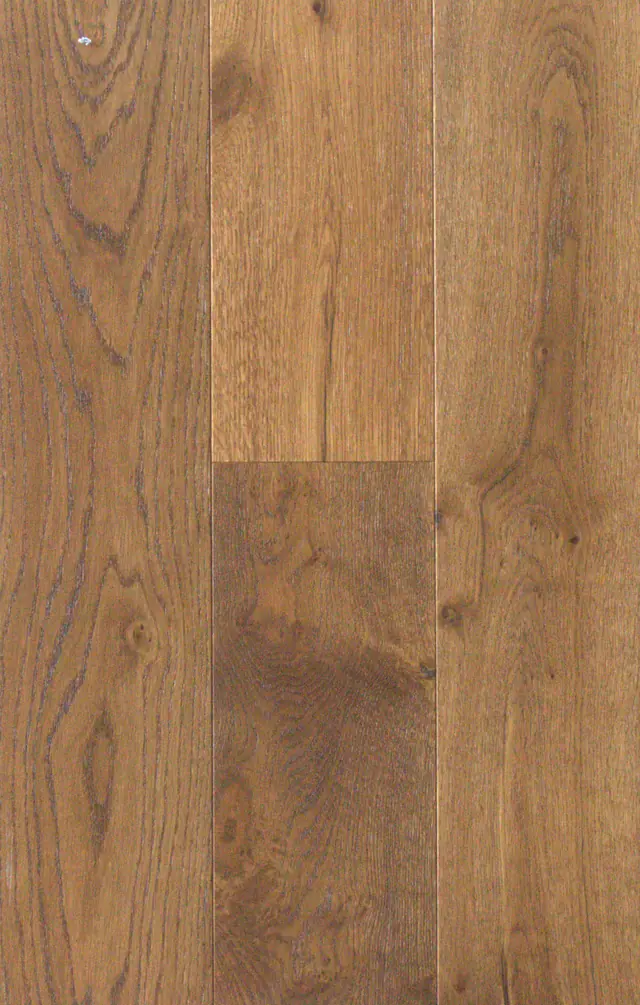
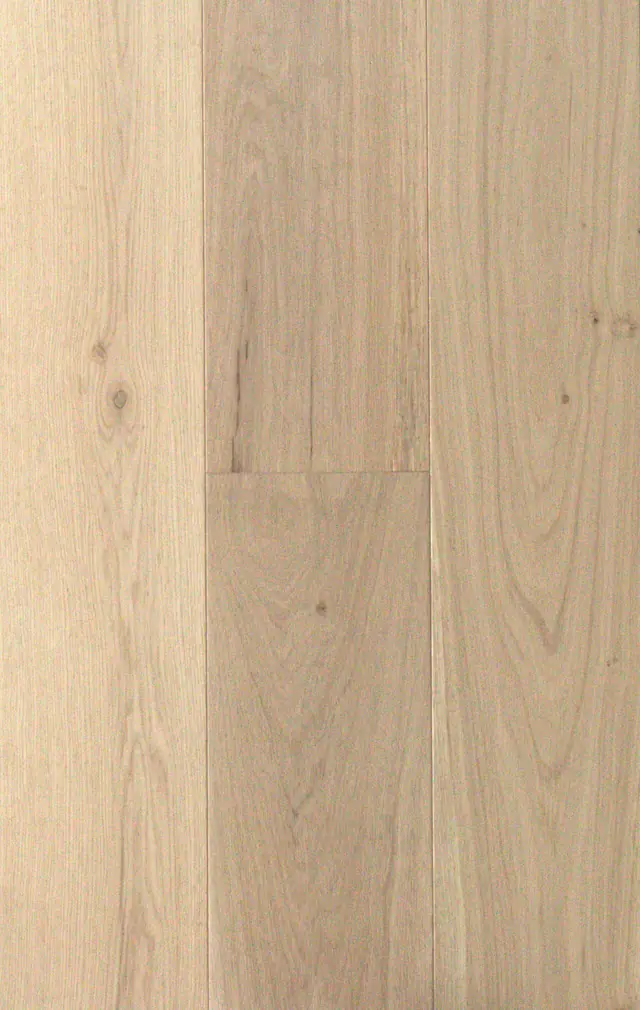
New builds and rear extensions share a specific set of requirements — concrete subfloors, underfloor heating, and a brief that starts from scratch rather than matching what is already there. This is where engineered oak performs at its best. LIGNORA installs across new-build residential, rear extensions, and development projects throughout London and the South East.
New builds and extensions almost always have concrete subfloors — either a ground-bearing slab or a beam-and-block floor with a screed finish. Solid wood is not appropriate on concrete: the moisture in the slab, even when cured, causes movement that solid timber cannot accommodate. Engineered oak, glued directly to the concrete with the correct adhesive, eliminates this problem.
New builds also frequently have underfloor heating — wet or electric. All engineered oak boards in our collection are UFH compatible. The multi-ply core handles the thermal cycling that would cause a solid board to gap and lift. The adhesive specification is chosen for the specific UFH system present.
The result is a floor that performs exactly as expected from day one and continues to do so through seasonal temperature changes, without the gaps, cupping, or creaking that poorly specified floors develop.
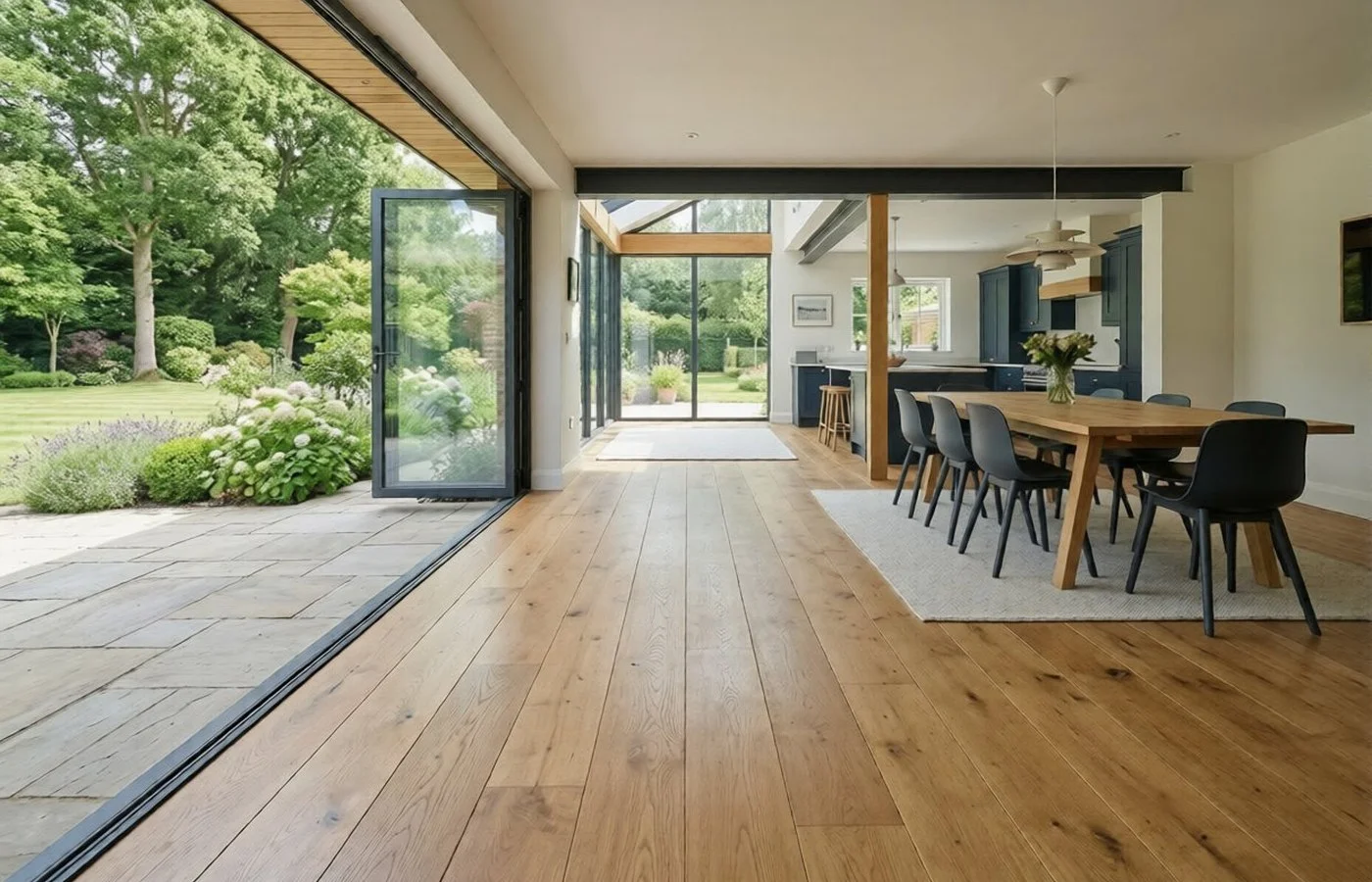
New concrete slabs and screeds require a minimum drying time before any floor is installed. We test with a calibrated moisture meter — typically requiring readings below 75% RH for standard wood floor adhesives. We will not install before the subfloor is ready, and we will tell you what the readings are.
Underfloor heating must be commissioned — run through a controlled warm-up and cool-down cycle — before wood flooring is installed above it. This takes 21–28 days and is often not done in time on developer programmes. We check the commissioning record before installation begins.
New-build screeds are often not as flat as they appear. We assess flatness across the full installation area before any boards are ordered — tolerance is typically 3mm over 1800mm for straight-lay boards, tighter for pattern formats. Grinding or self-levelling compound resolves most irregularities.
In new-build projects, the floor should be specified before the build programme is finalised — not as an afterthought. We join the specification conversation early, provide product samples for approval, and confirm lead times so the installation lands on programme.
We work with architects, interior designers, and developers on residential new-build and development projects across London and the South East. Our process for professional clients is the same as for direct homeowners — a site visit, a clear specification, and an itemised quote with confirmed lead times.
For developments with multiple units, we can provide a single specification across all units and a phased installation programme that fits the handover schedule. We are comfortable working to architect's specifications and can provide samples, product data sheets, and technical information for planning and building regulation submissions.
We do not provide discounted rates for volume based on an expectation of repeat business. We provide competitive rates based on the actual scope of work, and we stand behind what we install.
Whether you are a homeowner extending, a developer fitting out multiple units, or an architect specifying a client's floor — we visit the site, assess the conditions, and provide a clear itemised quote. No assumptions, no surprises.