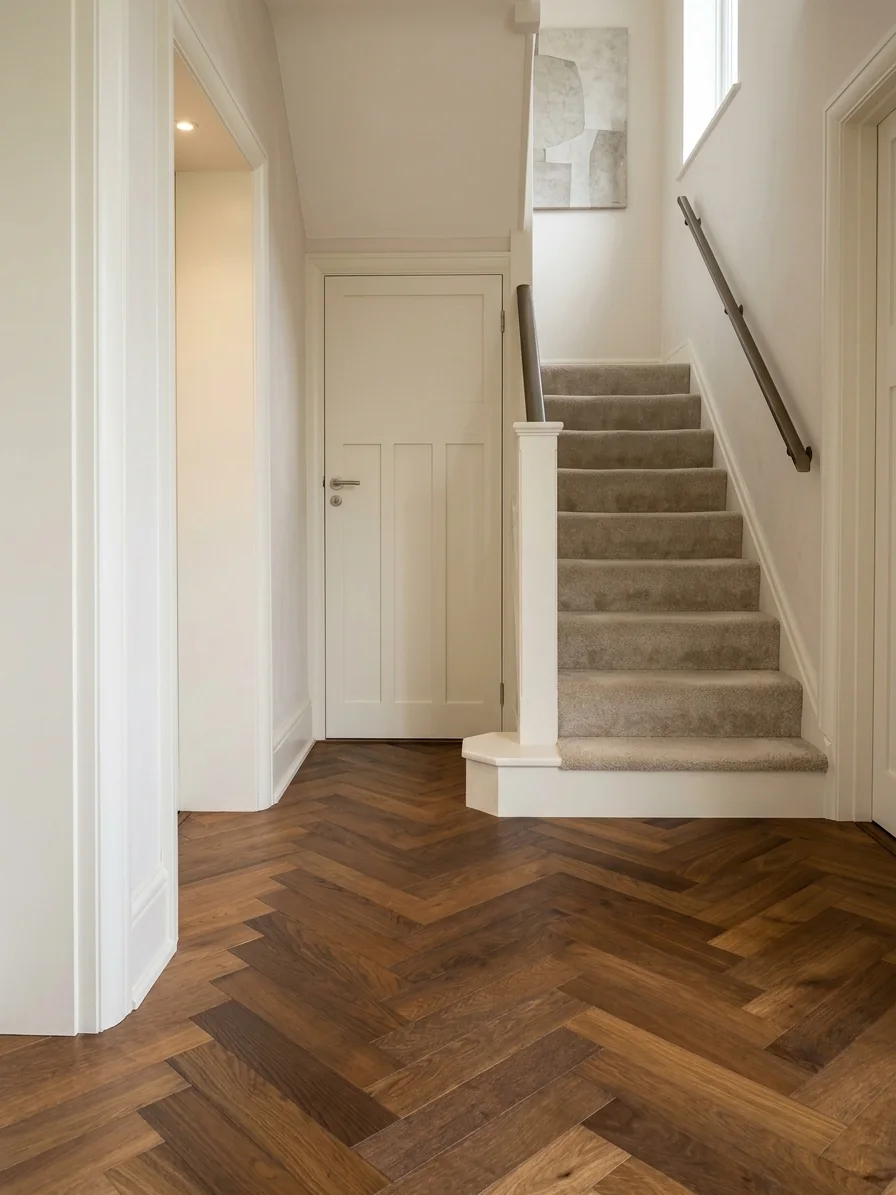
Georgian, Victorian, Edwardian, and interwar properties account for the majority of our work. Period homes have specific requirements — subfloor conditions that vary room to room, original boards worth preserving, and proportions that certain floor formats suit better than others. This is what we do, and have done, across London and the South East.
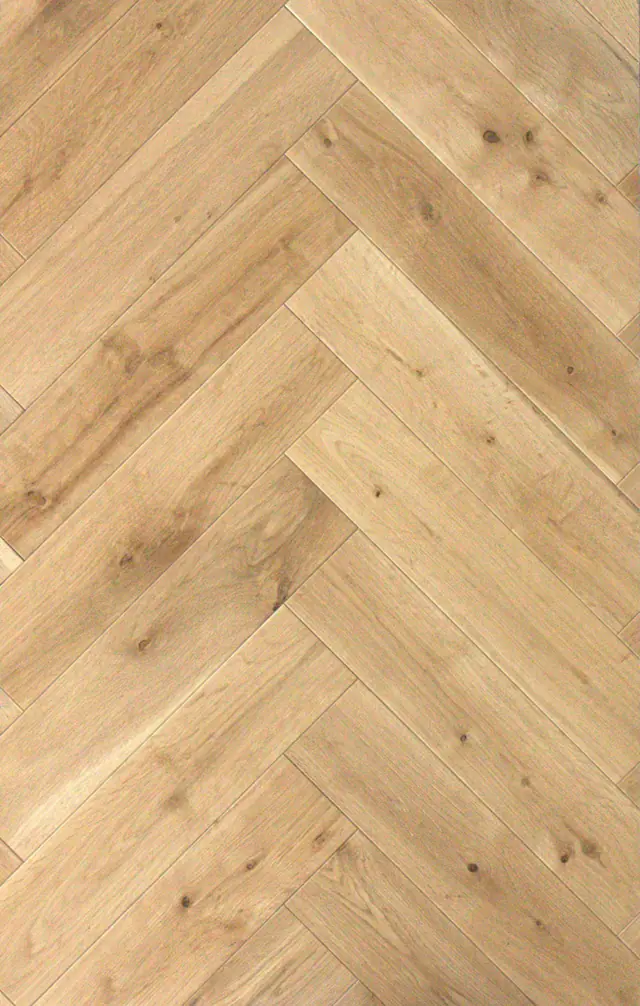
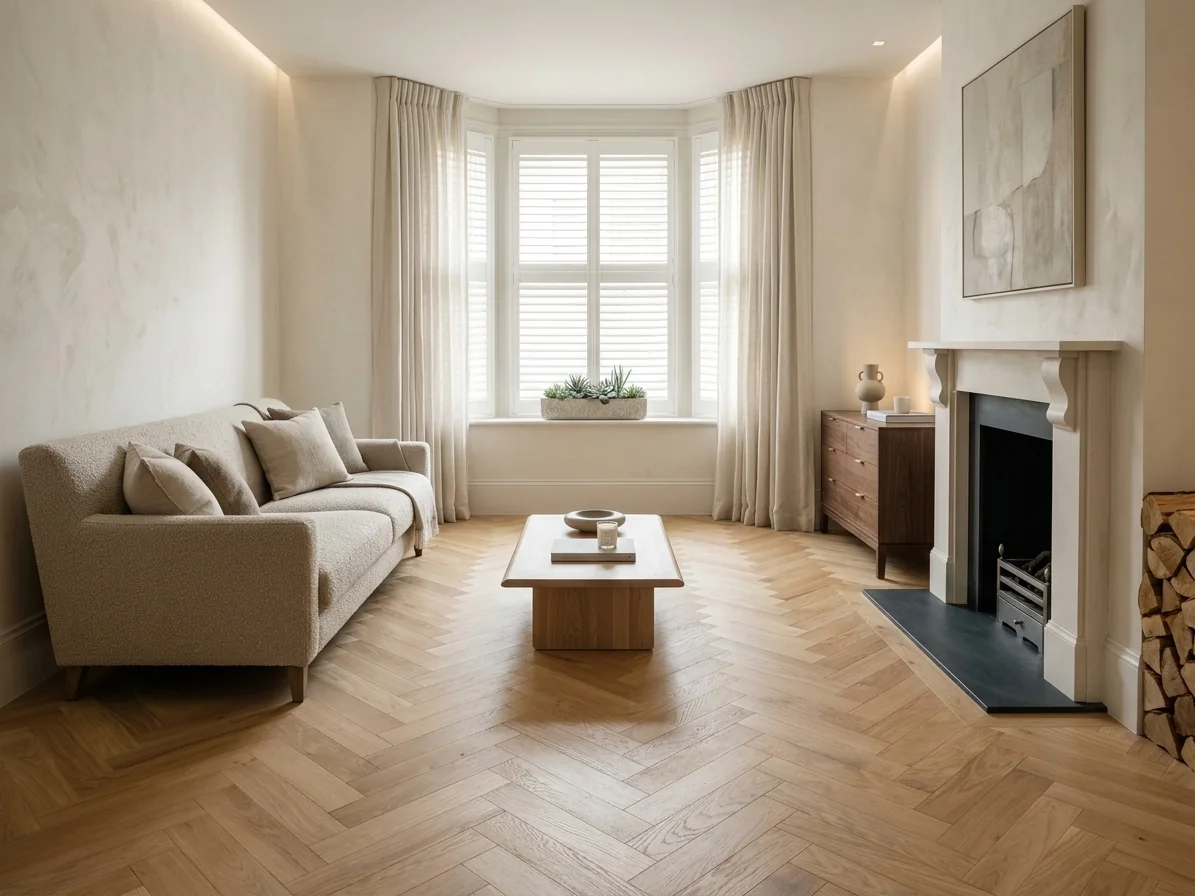
Wide, unadorned boards in pale oak suit Georgian proportions — the architecture is formal, the detail is in the cornice and the door case, not the floor. Herringbone parquet in reception rooms is also historically correct. Engineered oak at 190mm or wider, in a natural or pale oiled finish, reads well in Georgian interiors.
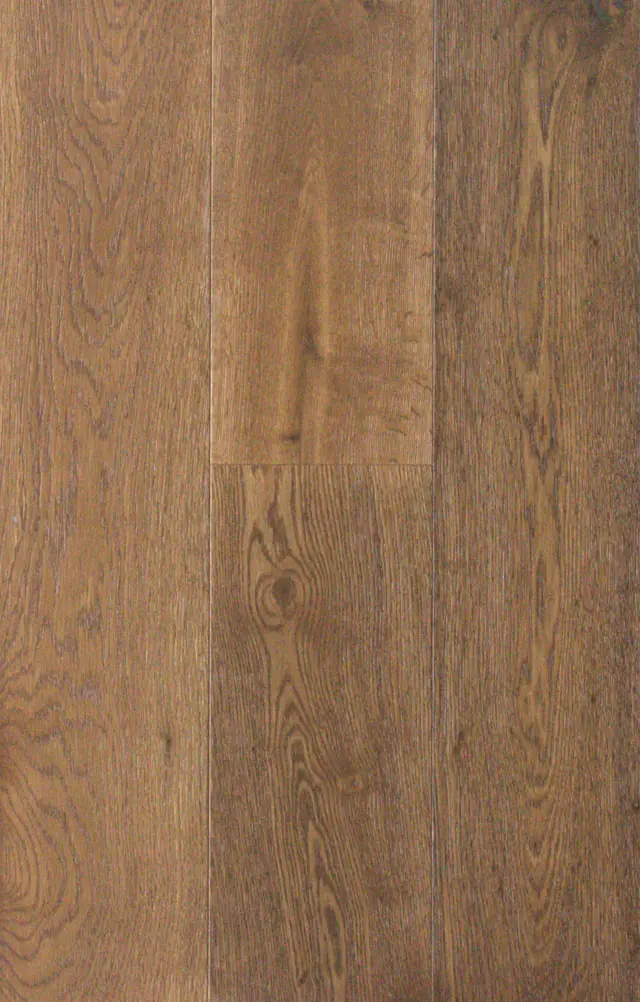
Wide Plank • Pale Finish • HerringboneThe most common period for our restoration work. Original pine boards under carpets are worth assessing before replacing. Where they are beyond restoration, engineered oak in a warm, mid-tone finish at 140–190mm is appropriate. Herringbone parquet in hallways and reception rooms is architecturally correct. Avoid very pale Nordic finishes — they read anachronistically in Victorian rooms.
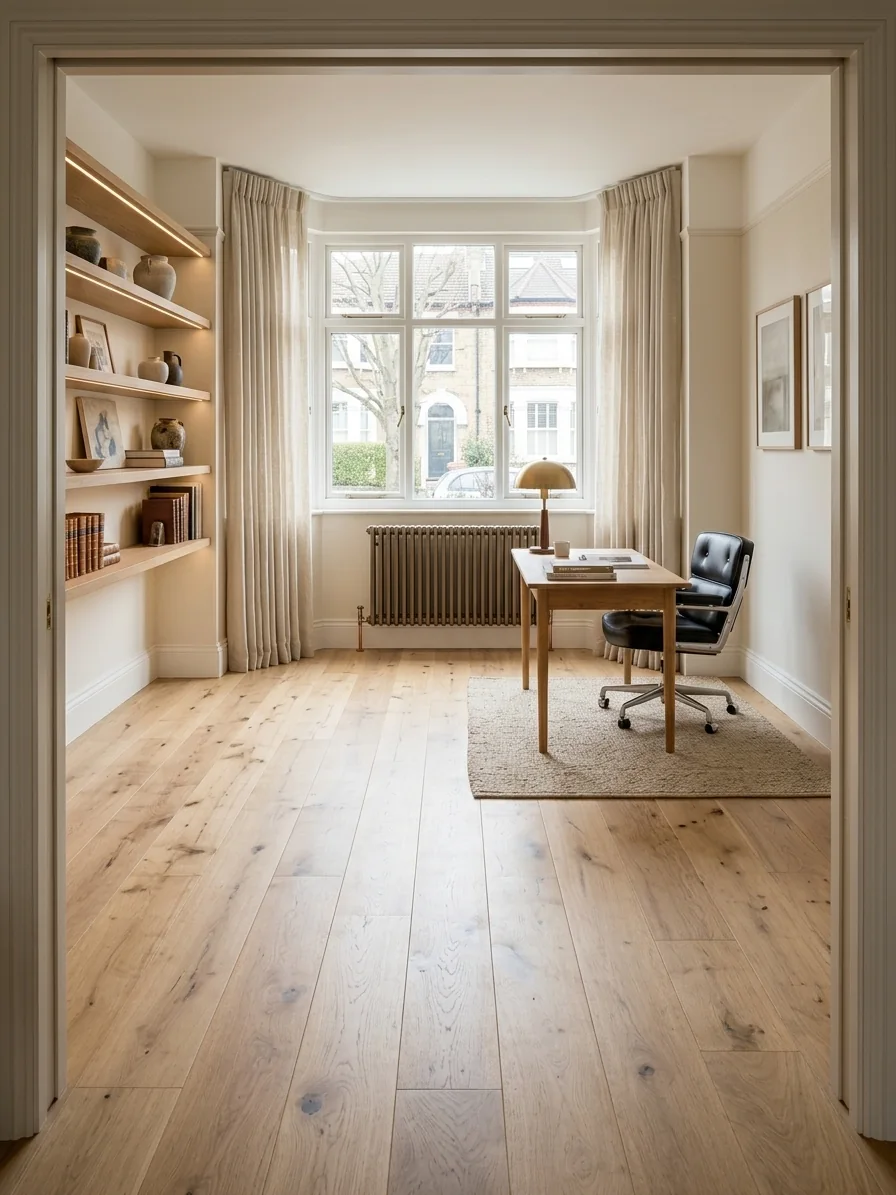
Mid-Tone Oak • Herringbone • Restoration FirstEdwardian houses often have better-quality original timber than Victorian — pitch pine and Scots pine in good condition are common. Wider boards, lighter proportions, and larger rooms than typical Victorian terraces make engineered oak at 190mm+ with a natural oil finish a strong choice. Parquet is less prevalent but appropriate in grander Edwardian properties.
Natural Oak • Wide Format • Restore If PossibleInterwar properties introduced the timber floor as a visible design element — parquet blocks in reception rooms, strip flooring in bedrooms. 1930s finger parquet in oak or pine is one of the most common restoration jobs we carry out. Where original parquet is present, restoration is nearly always the right answer. Where it is not, herringbone or straight-lay oak at 90–140mm suits the scale of these rooms.
Parquet Restoration • 90–140mm BoardsTimber subfloors in period properties vary — some boards are sound, others have movement, bounce, or rot at joist ends. We assess the subfloor at survey stage, not at installation day. Surprises at installation are avoidable if the survey is thorough. We will always tell you what we find before quoting.
The most common conversation we have in period properties: is there anything worth keeping under the carpet? In many Victorian and Edwardian houses, the answer is yes. We assess the boards before the carpet is up — a decision about restoration vs replacement should never be made from above a carpet. We provide a clear opinion on which route makes sense.
Listed building consent may be required for works that affect the fabric of the building — including floor removal in some cases. We advise on what requires consent and what does not, and work with clients who are managing a listed building application. We do not recommend any work that would compromise a listing.
Period properties are often renovated room by room over many years. Matching new flooring to existing — or to flooring that was laid a decade ago — is one of the most technically demanding parts of our work. We carry sample stock and assess in the property under natural light before committing to a specification.
Period properties were built before central heating. Original solid timber floors were stable in an unheated, relatively humid environment. Today's heating changes the moisture balance significantly. Engineered oak handles this better than solid wood in most period homes — we explain the relevant factors at survey stage.
In period properties, the staircase and hall floor should read as one material. We treat the staircase as part of the same installation — matching oak treads, landing floors, and risers to the floor below. Full details on our staircase and joinery page.
Original boards sanded, filled and refinished. Victorian pine, Edwardian oak, interwar parquet — we restore what is there before recommending replacement.
Sand & Restore →Original finger block parquet re-adhered, levelled, sanded and finished. We match replacement blocks from period stock where blocks are missing.
Parquet Restoration →Oak treads and landing floors matched to the floor below. In period properties, the staircase and hall floor should read as a single continuous material.
Staircase & Joinery →Genuinely reclaimed antique oak and Victorian pine for period properties where authenticity of material matters as much as the finish.
Reclaimed Flooring →We visit the property, assess what's there — original boards, subfloor condition, staircase — and advise on the right approach before any cost is committed. One conversation, honest advice.