"GUIDE"
Complete Guide

Herringbone
Flooring Guide

Everything you need to know before specifying a herringbone floor — board sizes, patterns, costs, fixing methods, finishes, and what to ask an installer. Written from direct installation experience, not flooring industry generalities.

Board Sizes

Choosing the Right
Board Size

The most common herringbone board size in London properties is 60-90mm wide by 300-450mm long. Narrower boards produce a finer, more traditional texture — closer to Victorian finger parquet. Wider boards produce a bolder, more contemporary herringbone. The ratio of width to length affects how the pattern reads: a 1:5 ratio (e.g. 75x375mm) produces the classic herringbone proportions; a 1:3 ratio produces a blockier, more graphic pattern.

For a standard London reception room or hallway, 75x300mm or 90x450mm are the most commonly specified sizes. Below 60mm, the pattern becomes very fine and requires significantly more installation time. Above 120mm, the boards are wide enough that the pattern starts to read more like wide plank than herringbone.

Thickness matters separately. 14-20mm engineered oak is the standard range. Above UFH, 14-18mm is recommended. On timber subfloors where secret-nailing is possible, thicker boards can be used — but for most London herringbone installations on concrete, 14-18mm glue-down is the correct specification.

Traditional Scale

60-75mm Width

Fine, detailed herringbone closest to period finger parquet. More installation time per m2. Suited to smaller rooms and period hallways where a delicate pattern scale is appropriate.

Most Common

75-90mm Width

The sweet spot for most London properties. Fine enough to read as classic herringbone, bold enough to be visible from a standing position. The most commonly specified range for reception rooms and hallways.

Contemporary

90-120mm Width

A bolder, more graphic herringbone. Works well in larger rooms and open-plan spaces where a finer pattern would be lost. More frequently specified in contemporary properties than in period homes.

Specification Decisions

Five Choices That
Define the Result

Pattern Orientation

45 vs 90 Degrees

45 degree herringbone (boards at 45 degrees to the walls) is the classic orientation — period-appropriate and versatile. 90 degree herringbone (boards running parallel to walls) is more geometric and contemporary. The datum line for each is set differently, so the decision must be made before installation begins.

Oak Grade

Prime vs Character

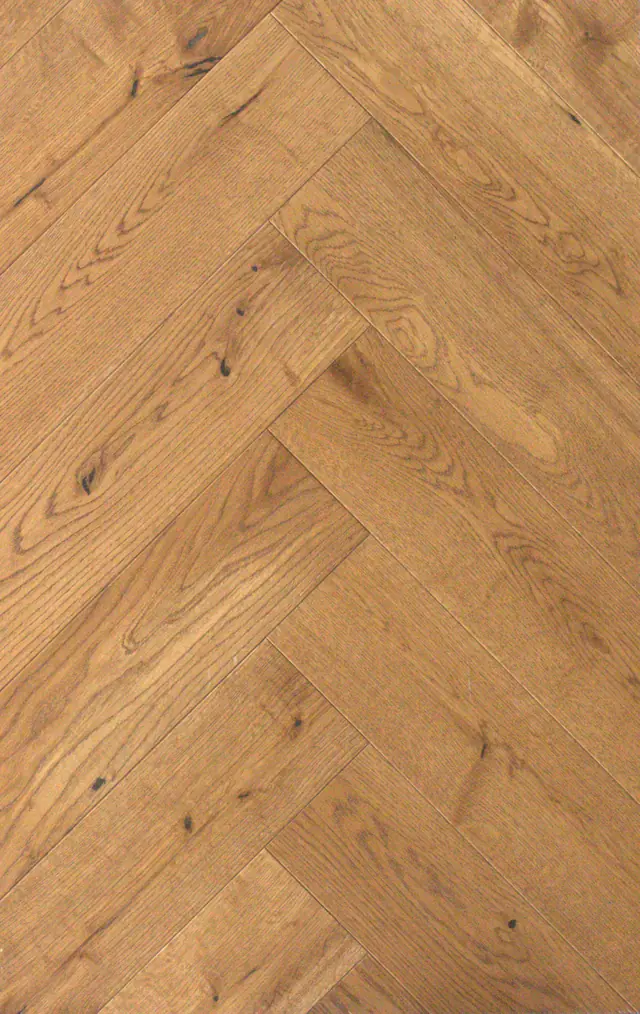
Prime grade oak has tight, even grain with minimal knots or character markings. Character grade has visible knots, grain variation, and natural movement. Both are correct choices — prime suits formal, contemporary spaces; character suits period properties and rooms where you want the floor to feel lived-in. Character grade costs less.

Tone

Natural, Smoked, or Stained

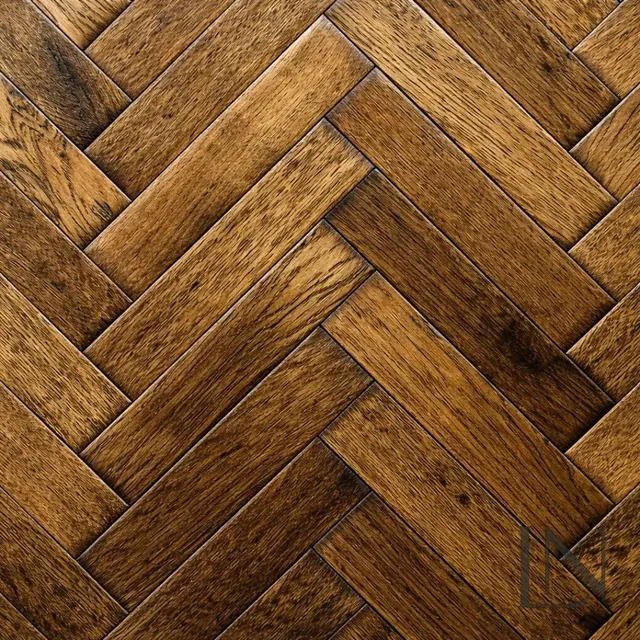
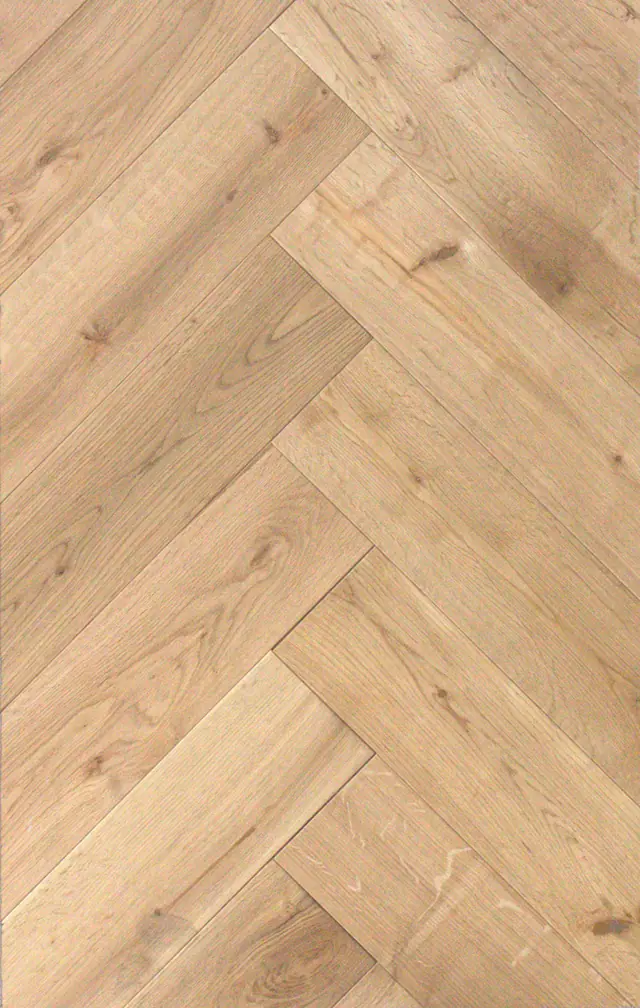
Natural oak has a warm golden tone. Smoked oak is given depth and darkness through a smoking process that penetrates the grain. Stained oak has a surface colour that can range from grey-washed to near-black. Always assess samples in the actual room at different times of day before committing. The same board reads differently under north and south light.

Fixing Method

Glue-Down or Secret-Nail

Herringbone on concrete subfloors is always glue-down — full-spread adhesive across the entire board face. On timber subfloors, secret-nail is possible where the boards are thick enough. Glue-down produces a more stable result for herringbone at any scale; it is our standard recommendation for herringbone regardless of subfloor type.

Finish

Oil or Lacquer

Hardwax oil produces a natural, penetrating finish that shows the grain depth of the oak and can be spot-repaired. Lacquer produces a surface film that is more durable and more liquid-resistant, but requires a full sand-back when eventually worn. For herringbone in hallways and family kitchens, lacquer is more practical. For reception rooms, oil.

Border

Framed or Flow-Through

A herringbone field framed by a straight-lay border adds a formal quality suited to reception rooms. Flow-through herringbone — run continuously through doorways without borders — makes a space feel larger and more connected. The border decision should be made when the pattern layout is first discussed, before the datum line is set.

Getting Quotes

What to Ask
an Installer

When comparing herringbone installation quotes, the questions that matter most are not about price. A quote without answers to these questions cannot be reliably compared to one that has them:

  • Will you set a datum line before installation begins — and from what reference point?
  • How long will the floor acclimatise in the property before installation begins?
  • What is the moisture content of the subfloor and does it require a DPM?
  • Is the subfloor levelling included in this quote or charged additionally?
  • Will your own employed team install this floor, or will it be subcontracted?
"GUIDE"
Ready to Specify?

Get a Herringbone Quote
for Your Home.

Free home visit. We set the datum from the right sightline, assess the subfloor, and give you an itemised quote within 2-3 working days.

Book Your Free Home Visit →Installation Service