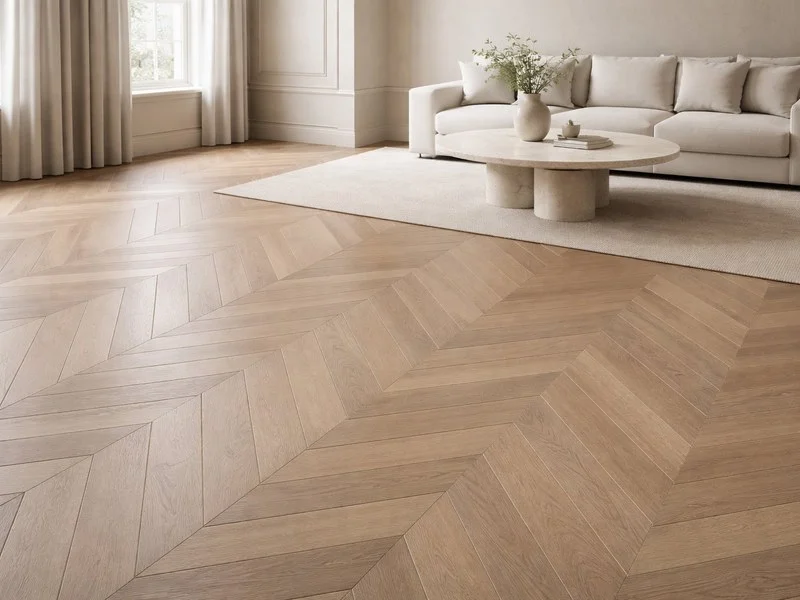
The staircase is the vertical extension of the floor. When they share the same material, the same finish, and — in the best cases — the same laying logic, the house reads as a single considered object. When they do not, the disconnection is noticed even if it is not consciously identified.
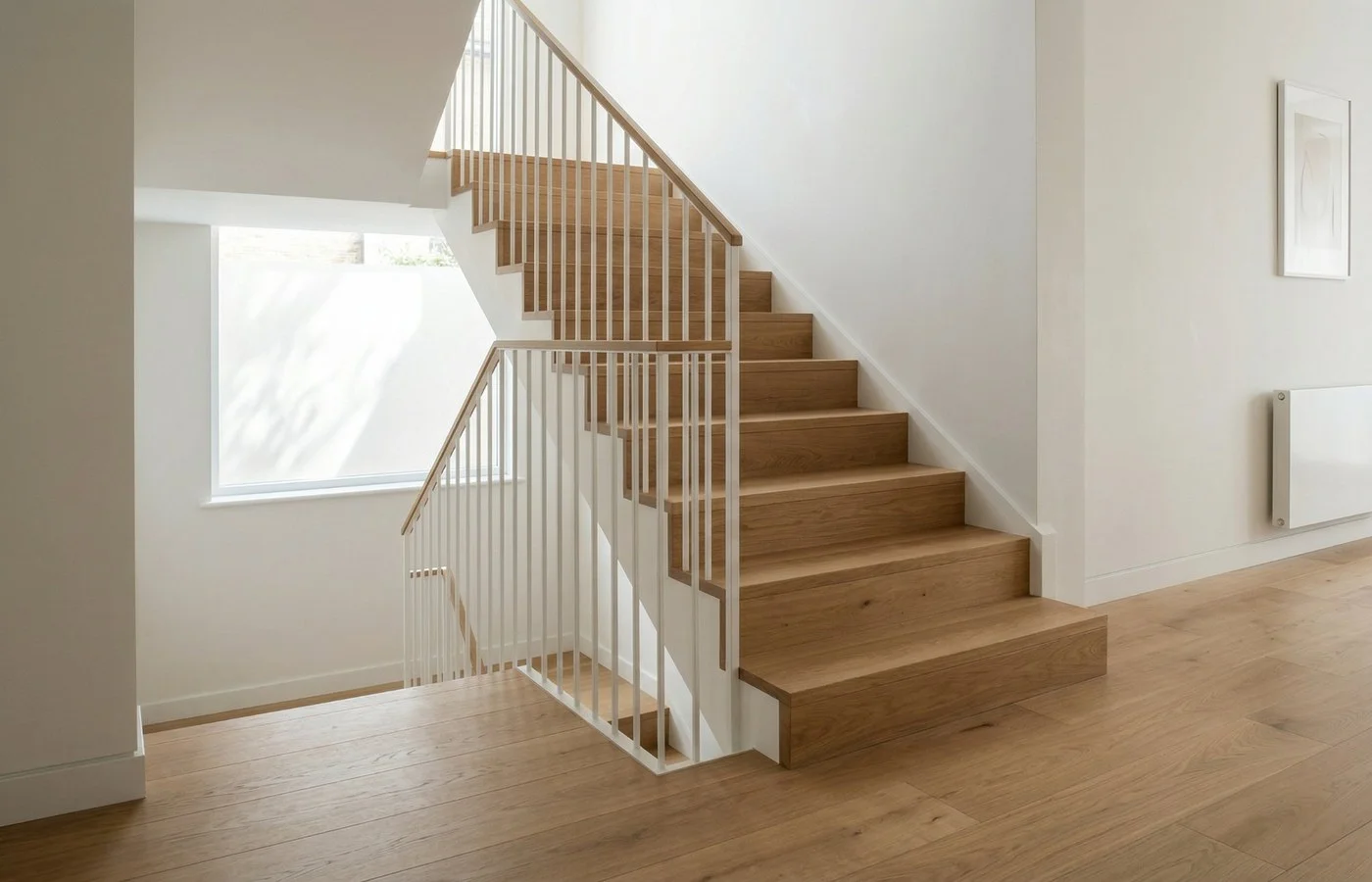
The most direct relationship between staircase and floor is the one where the tread material matches the floor material precisely — same species, same grade, same finish. In an engineered oak floor, this means engineered oak stair treads. In a solid hardwood floor, solid hardwood treads. The visual effect is of continuity: the floor rises with you as you move through the house.
The technical challenge is that stair treads take concentrated, repetitive impact loading that a floor does not — the same point is struck hundreds of times a day. This means the finish on treads needs to be more durable, and the timber used for treads should be harder rather than softer within the oak range. A prime grade European oak tread in a hardwax oil finish will perform well in this application.
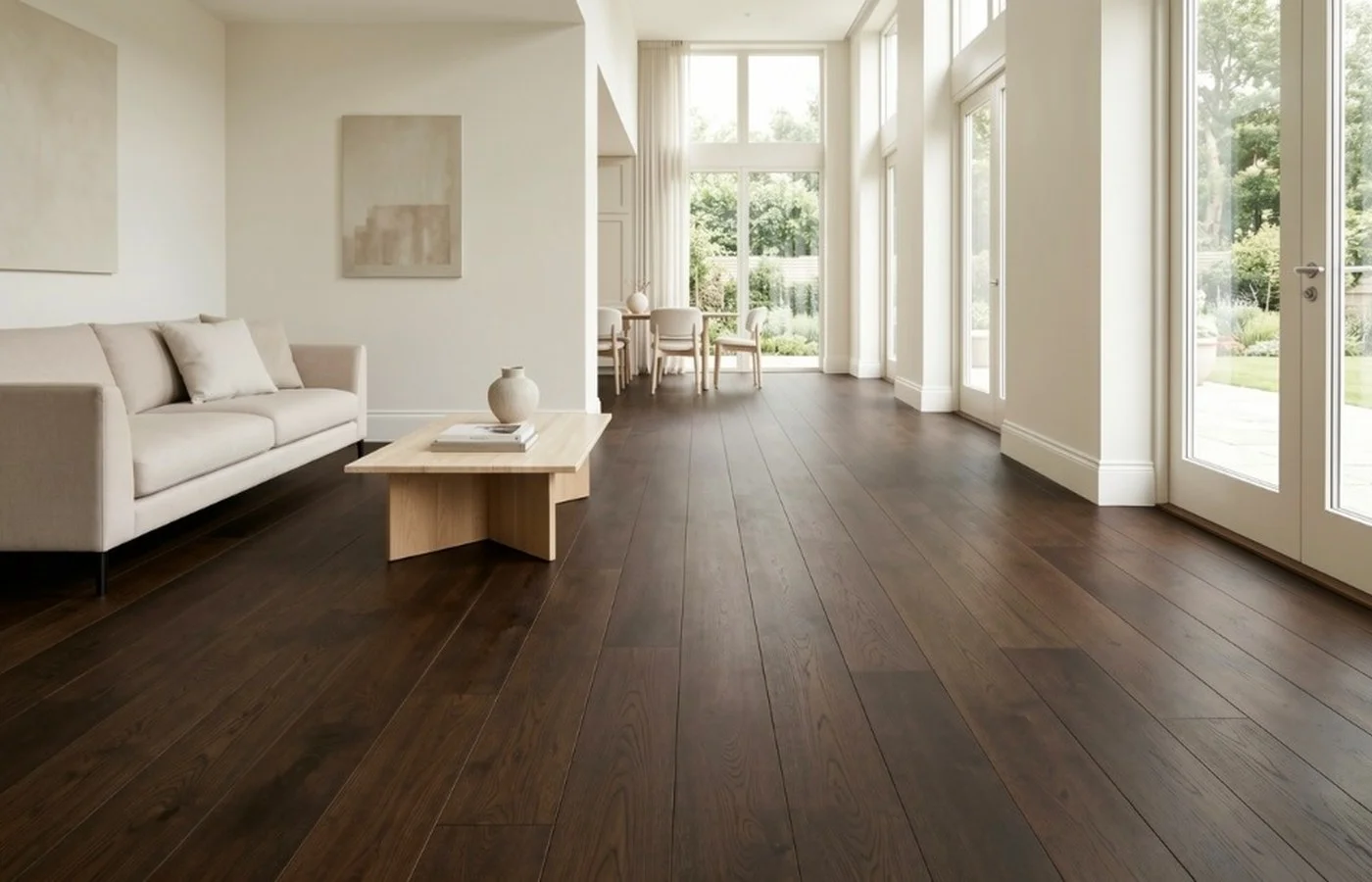
Not every staircase needs to match the floor exactly. In some cases — where the staircase is a feature in its own right, or where the architecture of the house calls for differentiation — a complementary rather than matching approach works better. The floor in a smoked grey oak, the treads in a natural or lightly oiled oak, both in the same species and grain type: the difference is present but the relationship is clear.
What almost never works is a complete disconnection: a dark stained floor with bright pine treads, or a pale contemporary floor with an original Victorian staircase left untouched. The house looks unfinished.
The riser — the vertical face of the step — is almost always an afterthought. By the time it is considered, the tread specification has been set and the installation programme is already fixed. This is the wrong order. The riser decision should be made at the same time as the tread decision, because the two together define the visual character of the staircase.
In a period property — Victorian, Edwardian, inter-war — painted white risers are almost always the correct answer. White risers in the same tone as the skirting boards connect the staircase to the joinery of the house. Oak risers in these properties can look heavy and can make the staircase read as a piece of furniture rather than part of the architecture.
In a contemporary property — particularly one where the staircase is being replaced as part of a renovation — oak risers matched to the treads can be exactly right. The staircase reads as a single material object, the connection between floors made explicit rather than disguised. See our staircase service for how we specify and fit both.
A few floors from the range. Each has its own page with the full specification, a spec sheet and a free sample posted to you.
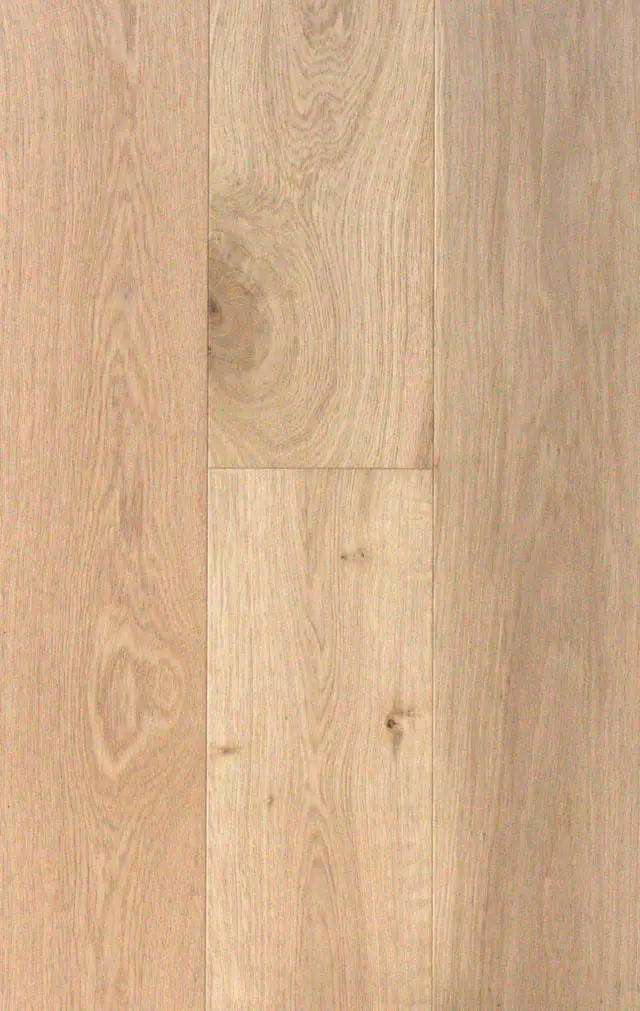


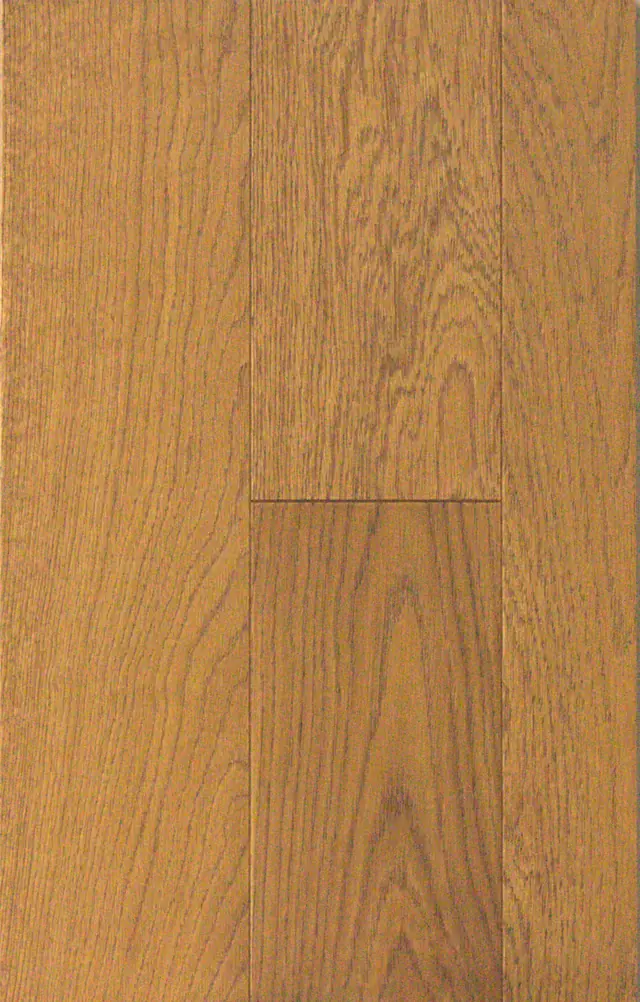
We would rather understand your room before recommending anything. Order free samples, or send us a photo and tell us about it.