In most pre-war London homes, the original floor is still there. Beneath the carpet, the underlay, the hardboard overlay, the vinyl — the Victorian pine or Edwardian oak floorboards that were laid when the house was built remain largely intact. They have not been replaced. They have simply been covered. What lives beneath is often worth saving.
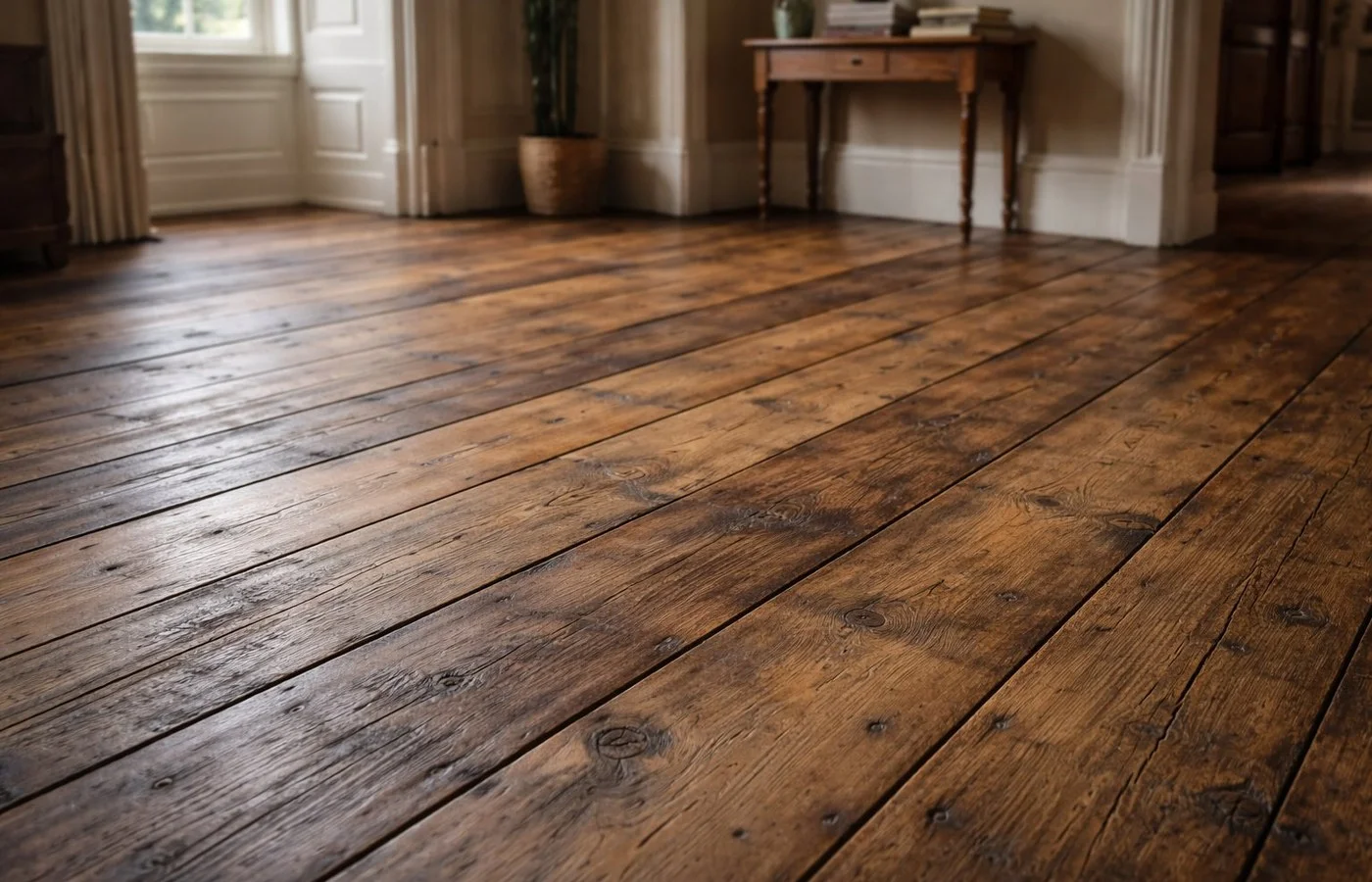
Victorian and Edwardian softwood floors are almost always in better condition than their owners expect. The boarding was laid green and has dried and settled over a century, which means the gaps between boards are natural and stable rather than problematic. The surface will be marked, stained, and worn — but rarely beyond recovery.
The boards themselves are typically pine — usually slow-grown, tight-grained Baltic pine that is denser and more stable than most modern softwood. In rooms that were considered secondary — kitchens, servants' quarters, upper floors — the boarding may be narrower and more utilitarian. In ground-floor reception rooms, the boards are often wide, well-matched, and of genuinely good quality.
A professional restoration begins with assessment — lifting a corner of the covering material to understand what is present, checking for structural movement, identifying any boards that need replacing before the main work begins. Then the floor is sanded in stages, moving from coarse to fine abrasion, to remove the accumulated surface damage and expose clean, fresh wood underneath.
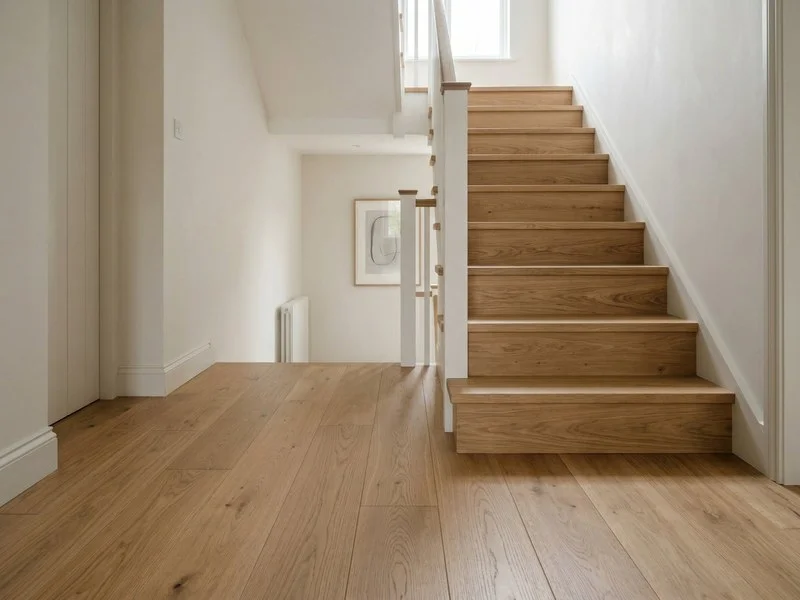
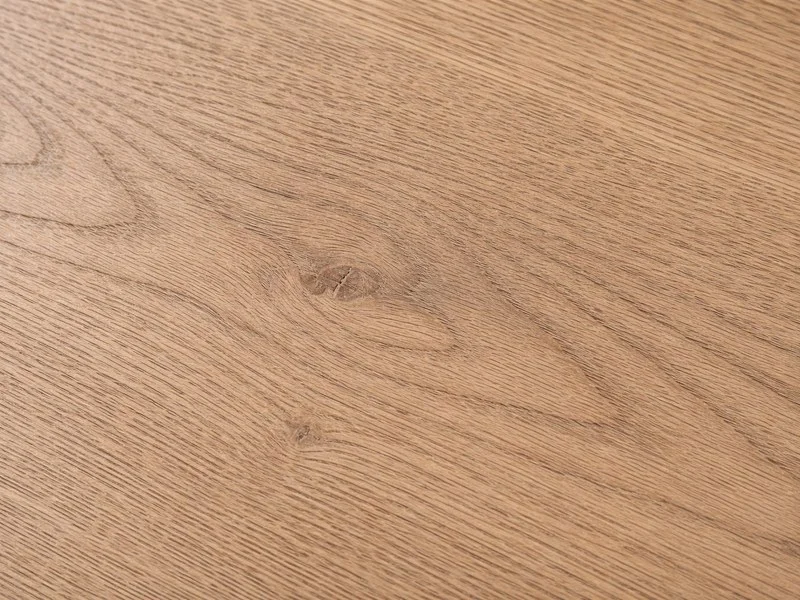
The finishing stage is where character is introduced or preserved. A clear oil allows the natural variation of the pine to show — its warm honey tone, the variation between boards, the visible grain. A stain can shift the floor towards a cooler, more contemporary grey-brown, or deepen it towards something richer and darker. The choice depends entirely on the room and the aesthetic direction of the house.
Original boards cannot be bought. They are a record of how the house was built — the timber that was available, the craftsmen who laid it, the way the material has aged and changed over a century of habitation. Restoring them rather than replacing them is not just an aesthetic choice. It is an acknowledgement that the house has a history worth preserving.
And they are, typically, better boards than anything being manufactured today.
Before deciding whether to restore or replace, the existing floor needs to be assessed for three things: remaining board thickness above the joist level, structural integrity (no rot, no significant movement between boards), and the nature of the existing finish (wax, oil, lacquer, or paint). Each of these affects whether restoration is appropriate and how it should be approached.
Board thickness is the most critical constraint. Victorian pine boards are typically 22–28mm thick. A floor that has been sanded two or three times already may have only 10–12mm remaining above the top of the joist — enough for one more sand if done conservatively. Below 8mm, sanding becomes a risk. We measure this at the home visit.
If your floor is suitable for restoration, our sand and restore service covers the full process — from the initial assessment through to the final finish coat. We carry out home consultations across London and the South East.
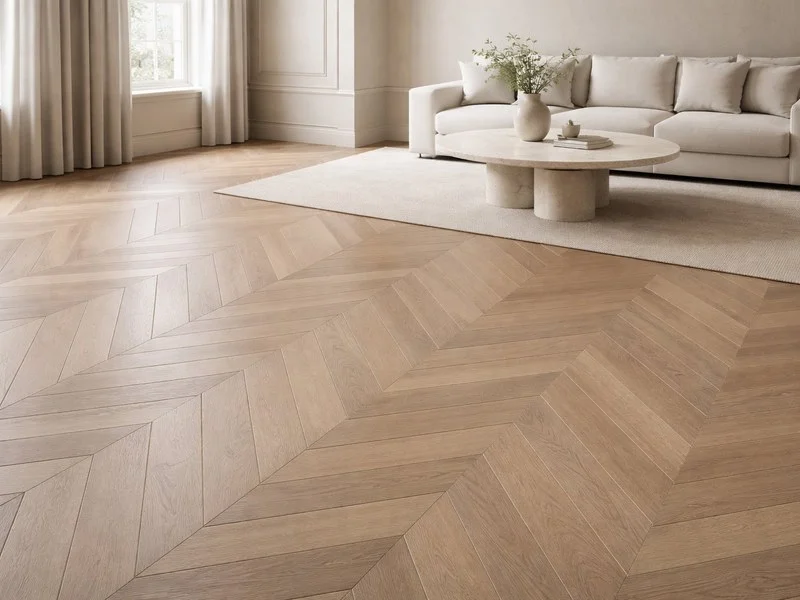
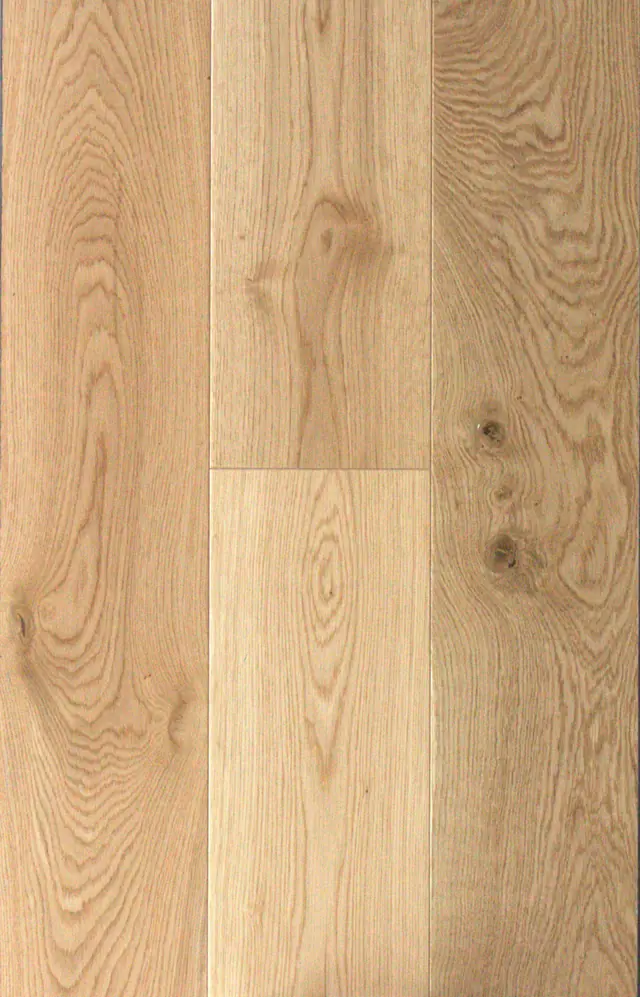
A few floors from the range. Each has its own page with the full specification, a spec sheet and a free sample posted to you.



We would rather understand your room before recommending anything. Order free samples, or send us a photo and tell us about it.